Biblical names often carry deep spiritual meanings, and the name Joshua is a powerful example of how a name can reflect faith, hope, and God’s saving power. The name Joshua comes from the Hebrew name Yehoshua, commonly understood to mean “The Lord is salvation” or “Yahweh saves.” This meaning connects Joshua’s name with one of the Bible’s central themes: God’s power to rescue, guide, and deliver His people.
In the Old Testament, Joshua was the faithful assistant of Moses who later became the leader of the Israelites. After Moses’ death, God chose Joshua to lead the people into the Promised Land, as described in the Book of Joshua. His story highlights courage, obedience, trust in God, and perseverance during difficult times.
One of the most memorable verses associated with Joshua is Joshua 1:9, where God encourages him to be strong and courageous because He will be with him wherever he goes. The name Joshua also has an important connection to the name Jesus, which comes from the Greek form of the same Hebrew name. This connection adds another layer of spiritual significance for Christian readers.
What Is the Joshua Meaning in Bible? A Quick Overview

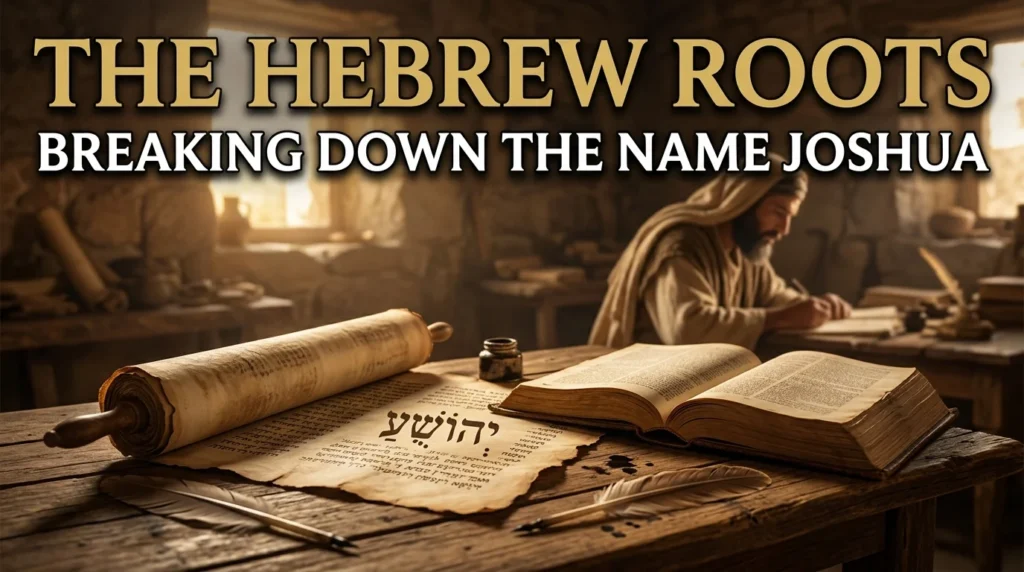
At its core, the Joshua meaning in Bible is “The Lord is Salvation” or “Yahweh Saves.” The name comes from the Hebrew word Yehoshua (יְהוֹשֻׁעַ), which combines two elements:
- Yahweh the personal name of God used throughout the Old Testament
- Yasha a Hebrew verb meaning “to save” or “to deliver”
Put those together, and you get a name that essentially proclaims a theological truth every time it’s spoken: salvation belongs to God alone.
This isn’t a random combination either. In ancient Hebrew culture, names weren’t just labelsthey were statements of identity, destiny, and often prophecy. Parents chose names carefully, believing they could shape a child’s character or calling. So when Joshua’s name was given, it wasn’t by accident. It pointed directly to his life’s purpose.
The Short Answer
If you’re looking for a quick summary of the Joshua meaning in Bible, here it is:
- Hebrew origin: Yehoshua (יְהוֹשֻׁעַ)
- Literal meaning: “The Lord is Salvation” or “Yahweh Saves”
- Shortened form: Yeshua, which later became “Jesus” in Greek
- Symbolic meaning: Deliverance, leadership, faith, and God’s saving power
Now let’s unpack all of that in more detail.
The Hebrew Roots: Breaking Down the Name Joshua
To really grasp the Joshua meaning in Bible, you need to understand a bit of Hebrew linguistics. Don’t worrythis won’t feel like a boring language lesson. It’s actually fascinating once you see how it all connects.
Yehoshua: The Original Hebrew Name
The original form of Joshua in Hebrew is Yehoshua. This name appears throughout the Old Testament, especially in the books of Exodus, Numbers, Deuteronomy, and of course, the Book of Joshua itself.
The name is built from:
- Yeho- a shortened form of “Yahweh,” referring to God’s covenant name
- -shua derived from the root “yasha,” meaning to save, rescue, or deliver
So when you say “Yehoshua,” you’re essentially saying “Yahweh is salvation” or “Yahweh saves.”
From Hoshea to Joshua: A Name Change with Meaning
Here’s a detail many people miss. Joshua wasn’t always called Joshua. In Numbers 13:16, we learn that Moses actually changed his name:
Moses gave Hoshea son of Nun the name Joshua.
His original name, Hoshea, simply meant “salvation” or “he saves”without the direct reference to God. Moses added the “Yeho” prefix, transforming the name into something that explicitly credited God as the source of salvation.
This wasn’t just a cosmetic change. It was a theological statement. Moses was essentially saying, “Your victories won’t come from your own strengththey’ll come from the Lord.” This small but powerful edit set the tone for Joshua’s entire leadership journey.
The Connection Between Joshua and Jesus
One of the most fascinating parts of exploring the Joshua meaning in Bible is discovering its direct link to the name Jesus.
Here’s how it works:
- Hebrew: Yehoshua (Joshua)
- Shortened Hebrew/Aramaic form: Yeshua
- Greek translation: Iesous
- English translation: Jesus
That’s rightJesus and Joshua share the exact same root name. When the New Testament was translated from Hebrew and Aramaic into Greek, “Yeshua” became “Iesous,” which eventually became “Jesus” in English.
This is why some Bible scholars point out that Joshua, in a sense, foreshadows Jesus. Both led their people toward a “promised” deliveranceJoshua leading the Israelites into the Promised Land, and Jesus leading believers toward spiritual salvation.
Who Was Joshua in the Bible? Understanding the Man Behind the Name
Names carry meaning, but stories carry weight. To truly appreciate the Joshua meaning in Bible, you need to know who Joshua actually was and what he accomplished.
Joshua’s Background
Joshua was the son of Nun, from the team of Ephraim. He first appears in Scripture during the Israelites’ journey through the wilderness after their exodus from Egypt. He served as:
- Moses’ personal assistant and closest aide
- A military commander who led Israel’s army against the Amalekites (Exodus 17)
- One of the twelve spies sent to scout the Promised Land (Numbers 13)
- Moses’ divinely appointed successor (Deuteronomy 31:23)
The Twelve Spies: Joshua’s Defining Moment of Faith
One of the most important stories involving Joshua happened long before he became Israel’s leader. Moses sent twelve spies into Canaan to scout the land God had promised the Israelites. Ten of them came back terrified, spreading fear about giants and fortified cities.
Only two spiesJoshua and Calebreturned with a different report. They believed God would deliver the land into Israel’s hands, regardless of how intimidating the obstacles looked.
This moment reveals something essential about Joshua’s character. His name meant “the Lord saves,” and his faith matched that meaning. He didn’t trust in the size of his army or the strength of Israel’s weapons. He trusted in God’s promise.
Leading Israel Into the Promised Land
After Moses died, God appointed Joshua to lead the Israelites into Canaan. This wasn’t a small task. It involved:
- Crossing the Jordan River during flood season
- Conquering the fortified city of Jericho
- Leading military campaigns across the land
- Dividing the territory among the twelve team of Israel
Throughout the Book of Joshua, one phrase repeats again and again: God’s command to “be strong and courageous.” This wasn’t empty encouragementit was a reminder rooted in the very meaning of Joshua’s name. Salvation and victory weren’t going to come from Joshua’s own strength. They would come from the Lord.
Why the Joshua Meaning in Bible Matters Today
You might be wondering why any of this matters outside of ancient history. Here’s the thing: names in the Bible often carry lessons that apply directly to modern life.
A Reminder That Salvation Isn’t Self-Made
The Joshua meaning in Bible teaches a timeless truth: real deliverance doesn’t come from human effort alone. Joshua faced walled cities, powerful armies, and seemingly impossible odds. Yet his name reminded himand everyone who called him by itthat God was the source of victory.
This principle still applies today. Whether someone is facing a personal battle, a career setback, or a spiritual struggle, the message behind Joshua’s name offers encouragement: help often comes from something greater than personal willpower.
A Symbol of Courageous Leadership
Joshua’s story also offers a blueprint for leadership rooted in faith rather than fear. Consider these qualities he demonstrated:
- Obedience He followed God’s instructions precisely, even when they seemed unconventional (like marching around Jericho for seven days).
- Courage He stepped into Moses’ shoes despite enormous pressure and responsibility.
- Faith under pressure He trusted God’s promises even when surrounded by doubt from others.
- Consistency He remained faithful throughout his life, famously declaring in Joshua 24:15, “As for me and my household, we will serve the Lord.”
These traits make Joshua one of the most respected figures in the Old Testament, and they explain why his name remains popular across cultures and generations.
Why Parents Still Choose the Name Joshua
If you’re considering naming a child Joshua, you’re in good company. It’s consistently ranked among the most popular boy names in English-speaking countries. Parents are often drawn to:
- Its strong, meaningful origin
- Its connection to biblical courage and faith
- Its link to the name Jesus
- Its timeless, classic sound
Knowing the Joshua meaning in Bible adds an extra layer of significance for families who want a name with spiritual depth.
Joshua in Different Bible Translations and Languages
Names can shift slightly depending on translation, and Joshua is no exception. Here’s how it appears across different versions:
- Hebrew: Yehoshua (יְהוֹשֻׁעַ)
- Greek (Septuagint and New Testament): Iesous
- Latin (Vulgate): Iosue or Iesus
- English: Joshua
- Spanish: Josué
- Arabic: Yusha
Interestingly, in the New Testament, the Greek name “Iesous” is used both for Jesus Christ and for the Old Testament figure Joshua (see Acts 7:45 and Hebrews 4:8, where “Joshua” appears as “Jesus” in some older English translations). This overlap has led many scholars to explore the symbolic parallel between the two.
Key Bible Verses That Highlight the Joshua Meaning
If you want to study this topic further, here are some essential verses connected to Joshua’s name and story:
- Numbers 13:16 – Moses renames Hoshea to Joshua
- Exodus 17:9-13 – Joshua leads Israel’s army against the Amalekites
- Deuteronomy 31:7-8 – Moses commissions Joshua as his successor
- Joshua 1:9 – God tells Joshua to “be strong and courageous”
- Joshua 6 – The fall of Jericho
- Joshua 24:15 – Joshua’s famous declaration of faith
Reading these passages in context gives you a fuller picture of how Joshua’s name and character aligned throughout his life.
Common Misconceptions About the Name Joshua
Let’s clear up a few myths that often come up when people research the Joshua meaning in Bible.
Misconception 1: Joshua and Jesus Are Unrelated Names
As we covered earlier, this isn’t true. Both names trace back to the same Hebrew root, “Yeshua.” They’re linguistically connected, even though they’re used for two very different figures in Scripture.
Misconception 2: Joshua Means “Warrior”
While Joshua was indeed a military leader, his name doesn’t literally mean “warrior” or “fighter.” Its actual meaning centers on salvation and deliverance, not combat.
Misconception 3: The Name Was Random
Some assume biblical names were simply passed down without much thought. In Joshua’s case, his name was intentionally changed by Moses to reflect a theological truthproof that names in Scripture often carried deep, deliberate meaning.
How to Apply the Meaning of Joshua to Your Own Life
Understanding a Bible name isn’t just an academic exerciseit can offer real encouragement. Here are a few takeaways inspired by the Joshua meaning in Bible:
- Trust beyond your own strength. Like Joshua, you don’t have to rely solely on your own abilities to overcome challenges.
- Stay courageous in uncertain situations. Joshua’s story shows that fear doesn’t have to control your decisions.
- Remember that names and words carry weight. Just as Joshua’s name shaped his identity, the words you speak over yourself and others matter.
- Lean on faith during transitions. Joshua stepped into a massive leadership role after Moses’ death. His story is a reminder that new seasons of life often require trust, not just talent.
Frequently Asked Questions About Joshua Meaning in Bible
1. What does the name Joshua mean in the Bible?
The Joshua meaning in Bible is “The Lord is Salvation” or “Yahweh Saves,” derived from the Hebrew name Yehoshua.
2. Is Joshua a Hebrew or Greek name?
Joshua is originally a Hebrew name (Yehoshua). It later took on a Greek form, “Iesous,” which became “Jesus” in English.
3. Why did Moses change Joshua’s name?
Moses changed Joshua’s original name, Hoshea, to Yehoshua to emphasize that salvation and victory would come from God, not human strength alone.
4. Is Joshua related to the name Jesus?
Yes. Both names come from the same Hebrew root, “Yeshua,” meaning salvation. Joshua and Jesus are essentially different forms of the same original name.
5. What is Joshua known for in the Bible?
Joshua is best known for leading the Israelites into the Promised Land, conquering Jericho, and succeeding Moses as Israel’s leader.
6. What lesson can we learn from Joshua’s story?
Joshua’s life teaches courage, obedience, and reliance on God rather than personal strength, especially during difficult or uncertain circumstances.
7. Is Joshua a popular biblical name today?
Yes, Joshua remains a popular name in many countries due to its strong meaning, biblical roots, and connection to faith and courage.
Final Thoughts
At its heart, the Joshua meaning in Bible is a powerful reminder that true deliverance comes from God. From its Hebrew origins as “Yehoshua” to its connection with the name Jesus, this name carries centuries of spiritual significance.
Joshua’s lifefrom spy to soldier to national leaderreflects the very promise embedded in his name. He faced walls, armies, and uncertainty, yet consistently pointed back to God’s faithfulness rather than his own strength.

Hi, I’m Daniel Foster, a writer at GrasePath.com. I enjoy exploring the deeper meanings of biblical words, names, symbols, and verses to help readers better understand Scripture. My goal is to present accurate, easy-to-read, and well-researched content that makes the Bible more accessible for everyone. Through every article, I strive to provide clear explanations, meaningful insights, and trustworthy information to support your faith and Bible study journey.