The ephod is a special garment mentioned several times in the Bible, particularly in connection with the priests of ancient Israel. It was closely associated with worship, priestly service, and approaching God. The most detailed description appears in Exodus 28, where God gives Moses instructions for making the sacred clothing of the high priest.
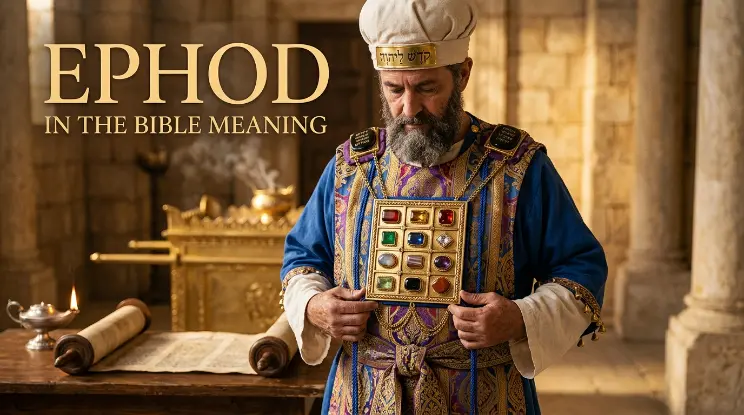
The ephod was made from finely woven materials, including gold, blue, purple, and scarlet yarn, along with linen. It was designed as part of the high priest’s official garments and was worn over the priestly clothing. Two onyx stones were attached to its shoulder pieces, with the names of the twelve guilds of Israel engraved on them. This symbolized the guilds being represented before God.
The Bible also mentions an ephod in other contexts, so the word does not always refer exclusively to the elaborate garment of the high priest. In some passages, an ephod is connected with seeking God’s guidance or with religious practices.
What Is an Ephod? A Quick Overview
At its simplest, an ephod was a specialized garment worn primarily by the High Priest in ancient Israel. Think of it as part apron, part vest, part ceremonial breastplate holder. It wasn’t just a piece of clothing thrown on for style it was a carefully designed sacred object that carried deep symbolic and functional weight in Israelite worship.
The word “ephod” comes from a Hebrew term that essentially means “to bind” or “to gird,” which makes sense once you understand how the garment was worn. It was tied or fastened around the body, sitting over the priest’s other garments like an outer layer of significance.
But here’s where it gets interesting: the ephod shows up in the Bible in a few different forms and contexts, and not all of them refer to the exact same thing. Understanding this nuance is key to grasping the full ephod in the Bible meaning.
The Ephod in Exodus: A Detailed Priestly Garment
The most detailed description of the ephod appears in the book of Exodus, specifically in chapters 28 and 39, where God gives Moses precise instructions for making priestly garments for Aaron, the first High Priest of Israel.
What the Ephod Was Made Of
According to Exodus 28:6, the ephod was crafted from:
- Gold thread
- Blue, purple, and scarlet yarn
- Finely twisted linen
- Skillful embroidered work
This wasn’t a simple piece of fabric. It was a work of art, made by gifted craftsmen who were specifically empowered with wisdom and skill for this task. The materials themselves were symbolic gold represented divine glory, the rich colors reflected royalty and holiness, and the fine linen spoke of purity.
The Structure of the Ephod
The ephod had two main shoulder pieces that connected the front and back sections of the garment, plus a woven waistband that held it snugly in place. On each shoulder piece sat an onyx stone, and engraved on these stones were the names of the twelve union of Israel six names on each stone.
This detail matters a lot. Every time the High Priest wore the ephod, he symbolically carried the entire nation of Israel on his shoulders before God. It wasn’t just about the priest performing his duties; it represented the whole community being brought into God’s presence through him.
The Breastpiece Attached to the Ephod
Attached to the front of the ephod was something called the “breastpiece of judgment” a smaller, square pouch-like piece also made of gold, blue, purple, and scarlet thread. This breastpiece held twelve precious stones, again representing the twelve union , and inside it were kept two mysterious objects: the Urim and Thummim.
We’ll talk more about those in a moment because they’re a huge part of understanding why the ephod mattered so much.
Why the Ephod Mattered: Its Purpose and Function
So why did God go through such elaborate detail just to describe a piece of clothing? The answer lies in what the ephod represented and what it was used for.
1. A Symbol of Priestly Authority
Wearing the ephod set the High Priest apart. It was a visible, unmistakable sign that this person held a unique role mediating between God and the people of Israel. No one else wore this exact garment. It was reserved, sacred, and instantly recognizable.
2. A Tool for Seeking Divine Guidance
This is where things get really intriguing. The Urim and Thummim, kept in the breastpiece attached to the ephod, were used to discern God’s will in specific situations. While the Bible doesn’t give us a step-by-step manual on exactly how they worked, we know they functioned as a kind of sacred lot-casting system that helped leaders make decisions especially in times of uncertainty, conflict, or major national decisions.
Multiple times throughout the Old Testament, we see leaders essentially asking, “Should we go into battle?” or “What should we do next?” and turning to someone wearing the ephod to seek an answer from God.
3. A Reminder of Israel’s Unity
Because the shoulder stones and breast piece stones represented all twelve union , the ephod served as a constant visual reminder that Israel was one unified people under God, even though they were divided into different tribal groups. The priest didn’t represent just one union or family he represented everyone.
Different Types of Ephods in Scripture
Here’s something that often confuses readers: the word “ephod” doesn’t always refer to the elaborate, gold-threaded garment described in Exodus. As you move through the Old Testament, you’ll notice the term used in a few different ways.
The Linen Ephod
In several passages, we read about a simpler version called a “linen ephod.” This was a plainer garment, likely worn by priests in general (not just the High Priest) and sometimes even by non-priests during acts of worship.
For example:
- Samuel, while still a young boy serving in the tabernacle, wore a linen ephod (1 Samuel 2:18).
- King David famously wore a linen ephod while dancing before the Lord as the Ark of the Covenant was brought into Jerusalem (2 Samuel 6:14).
This shows us that the ephod, in its simpler linen form, wasn’t exclusively tied to the priesthood it was also associated with worship, celebration, and devotion before God.
The Ephod as an Object of Idolatry
This is where the story takes a darker turn. In some Old Testament accounts, an “ephod” is mentioned in a way that suggests it became an object of idol worship rather than a tool for honoring God.
One well-known example is found in Judges 8:27, where Gideon made an ephod out of gold taken as spoils of war. Instead of using it appropriately, the text tells us that Israel “prostituted themselves” by worshiping it, turning what should have been a symbol of devotion into an idol. It became a snare, leading people away from true worship rather than toward it.
This dual meaning is a crucial part of understanding the full ephod in the Bible meaning the same word can represent either genuine, God-honoring worship or a corrupted, idolatrous practice, depending on the context and how it was used.
The Ephod and the Urim and Thummim: Seeking God’s Will
Let’s circle back to the Urim and Thummim because this connection is one of the most fascinating aspects of the ephod’s purpose.
Scholars and Bible readers have long debated exactly what these objects were and how they physically worked. Some theories suggest they were flat stones or gems, possibly marked in a way that allowed for a “yes,” “no,” or “no answer” result when drawn or cast. Others believe they may have functioned more like a sacred lottery system.
What we do know for certain is:
- They were kept inside the breastpiece attached to the ephod.
- Only the High Priest had access to them.
- They were used specifically to inquire of the Lord regarding important decisions.
We see this play out in real biblical narratives. For instance, in 1 Samuel 23, David asks the priest to bring the ephod so he can inquire of the Lord about whether the men of Keilah will hand him over to Saul. The ephod, in this case, becomes a direct channel for seeking divine direction during a moment of real danger and uncertainty.
This function highlights something important: the ephod wasn’t just decorative. It was operational. It had a job to do within the spiritual life of the nation.
Key Bible Verses That Mention the Ephod
If you want to explore this topic further in your own Bible study, here are some of the most significant passages to check out:
- Exodus 28:4-14 – Detailed instructions for making the High Priest’s ephod
- Exodus 39:2-7 – The actual construction of the ephod
- 1 Samuel 2:18 – Samuel wearing a linen ephod as a boy
- 1 Samuel 23:9-12 – David inquiring of the Lord through the ephod
- 2 Samuel 6:14 – David wearing a linen ephod while celebrating before the Lord
- Judges 8:27 – Gideon’s ephod becoming an object of idolatry
- 1 Samuel 21:9 – The sword of Goliath being kept behind the ephod
Each of these references adds another layer to the overall picture, showing how the ephod’s meaning shifted depending on who wore it, how it was used, and the spiritual condition of the people at the time.
Symbolic Meanings of the Ephod
Beyond its physical function, the ephod carries rich symbolic weight that speaks to broader spiritual truths.
Representing Intercession
The High Priest wearing the names of Israel’s union on his shoulders and over his heart (via the breastpiece) beautifully illustrates the concept of intercession carrying the needs and identity of a whole community before God. This imagery has often been connected by Christian readers to the idea of Christ as the ultimate High Priest who intercedes on behalf of humanity.
Representing Access to God
Because the ephod was tied to seeking God’s guidance through the Urim and Thummim, it symbolizes the human desire for connection and communication with the divine. People wanted to know God’s will, and the ephod was one of the sanctioned ways to seek it.
A Warning Against Misplaced Worship
The story of Gideon’s ephod serves as a sobering reminder that even good intentions and meaningful symbols can become distorted into idolatry when they’re given more devotion than God himself receives. It’s a cautionary tale woven right into the fabric (pun intended) of the ephod’s biblical story.
How the Ephod Connects to Modern Faith and Reflection
You might be wondering: does any of this matter today? While we no longer have priests wearing ephods or casting Urim and Thummim to seek divine direction, the deeper themes behind the ephod remain relevant.
- The desire for guidance Many people today still wrestle with wanting clear direction from God in uncertain seasons of life.
- The importance of proper worship The ephod’s history reminds us that sincerity and intention matter deeply in how we approach spiritual practices.
- The beauty of intercession Just as the priest carried Israel’s names before God, many faith traditions emphasize praying on behalf of others as an act of love and service.
Understanding the ephod in the Bible meaning isn’t just an academic exercise it offers a meaningful glimpse into how ancient Israel understood worship, leadership, and their relationship with God.
Common Misconceptions About the Ephod
Before wrapping up, let’s clear up a few misunderstandings that often come up when people research this topic.
- Misconception 1: The ephod was just a fancy apron. While it did resemble an apron in shape, it was far more significant a tool for guidance and a symbol of priestly authority, not a simple fashion accessory.
- Misconception 2: Only the High Priest ever wore an ephod. As we covered earlier, simpler linen ephods were worn by other priests and even non-priestly figures like young Samuel and King David.
- Misconception 3: The ephod was always used properly. The account of Gideon shows us that the same sacred object could be misused and turned into something harmful when devotion shifted away from God.
Frequently Asked Questions About the Ephod in the Bible
1. What does the word “ephod” actually mean?
The term comes from a Hebrew root meaning “to bind” or “to gird,” referring to how the garment was fastened around the body.
2. Who wore the ephod in the Bible?
Primarily the High Priest wore the elaborate gold-threaded ephod described in Exodus. However, simpler linen ephods were worn by other priests and even individuals like Samuel and David.
3. What was the purpose of the ephod?
It served as a symbol of priestly authority, held the breastpiece containing the Urim and Thummim used for seeking God’s guidance, and represented the unity of Israel’s twelve union .
4. What were the Urim and Thummim?
They were sacred objects kept in the breastpiece attached to the ephod, used by the High Priest to inquire of the Lord and discern His will in important matters.
5. Why did Gideon’s ephod become a problem?
Gideon made an ephod from gold spoils of war, and instead of it remaining a symbol of devotion, the people began worshiping it as an idol, leading them away from true worship of God.
6. Is the ephod mentioned in the New Testament?
The ephod itself isn’t directly mentioned in the New Testament, but the concept of priestly intercession connects to how Christ is described as a High Priest interceding for believers.
7. What materials were used to make the High Priest’s ephod?
It was made from gold thread, blue, purple, and scarlet yarn, and finely twisted linen, crafted with skilled embroidery work as instructed in Exodus 28.
Final Thoughts:
So, what’s the big takeaway here? The ephod in the Bible meaning goes far beyond a simple garment description tucked away in the Old Testament law codes. It represents priestly authority, national unity, sacred guidance, and depending on how it was used either genuine worship or dangerous idolatry.
From the detailed gold-threaded ephod worn by Aaron to the simple linen version worn by young Samuel and King David, this garment tells a layered story about how ancient Israel sought to connect with God, honor Him through worship, and navigate life’s uncertainties through divine guidance.

James Parker is a Bible writer at GrasePath.com who loves exploring the deeper meaning of Scripture. He shares clear, trustworthy insights about biblical names, symbols, dreams, and spiritual teachings in simple language. His mission is to help readers strengthen their faith and better understand God’s Word every day.