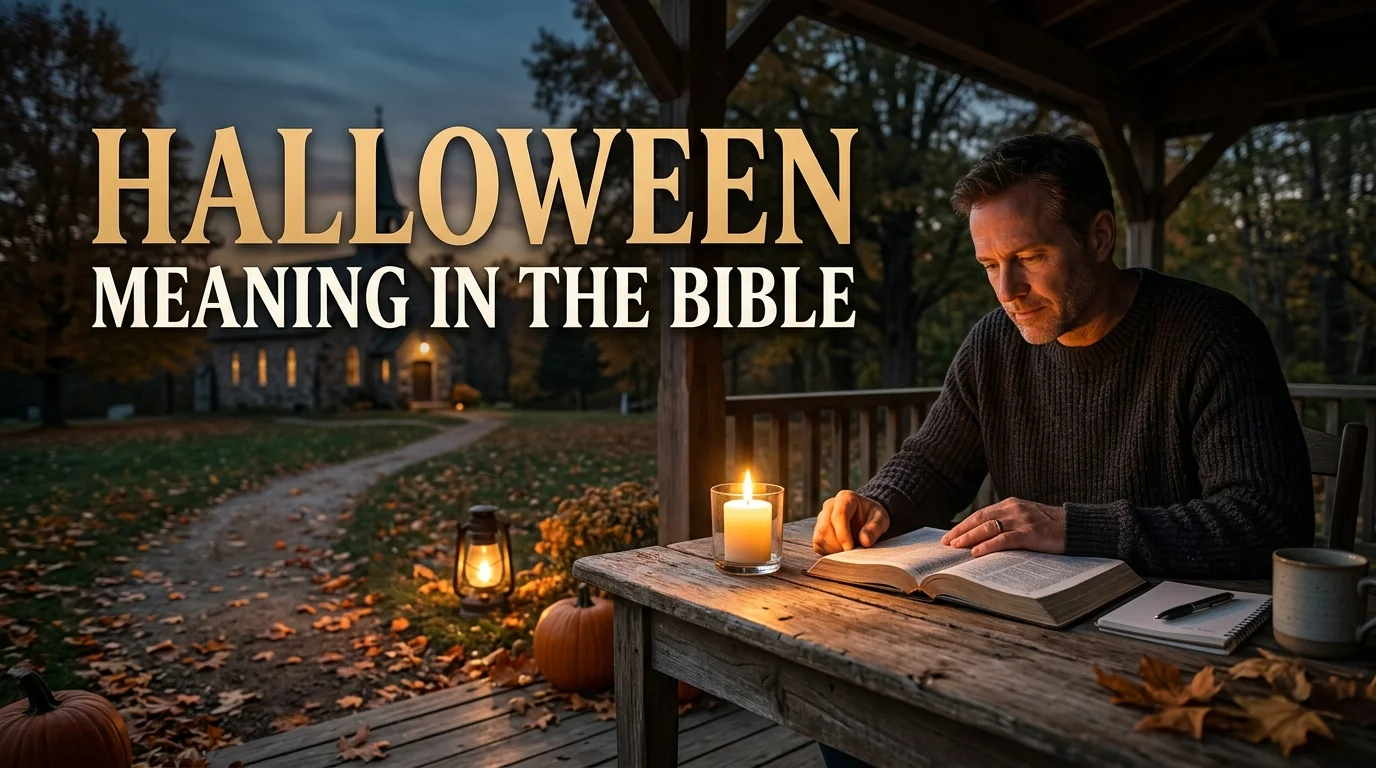
Every October, millions of families carve pumpkins, dress up in costumes, and head out for trick-or-treating. But behind the candy and costumes, a quieter question tends to surface in Christian homes and church pews: what is the halloween meaning in bible terms? Is Halloween a harmless tradition, or does it carry spiritual weight that believers should think twice about?
If you’ve ever paused with a bag of candy in hand, wondering whether Scripture has anything to say about this holiday, you’re not alone. This question comes up every fall in Bible studies, parenting forums, and family group chats. The truth is, the word “Halloween” never appears in the Bible not once. But that doesn’t mean the topic is off-limits or that Christians can’t find meaningful guidance from Scripture on how to approach it.
In this article, we’ll dig into the real history behind Halloween, explore what the Bible actually says (and doesn’t say) about it, and look at how different Christian traditions have responded to this holiday over the centuries.
Understanding the Halloween Meaning in Bible Context
To understand the halloween meaning in bible discussions, it helps to start with a simple fact: Halloween as we know it today is a fairly recent, blended holiday. It didn’t spring fully formed from ancient Israel or from the pages of Scripture. Instead, it’s a patchwork of several older traditions that merged together over hundreds of years.
Where Halloween Actually Came From
Most historians trace Halloween’s roots to three main sources:
- Samhain an ancient Celtic festival marking the end of harvest season and the beginning of winter, believed by some pre-Christian communities to be a time when the boundary between the living and the dead grew thin.
- All Saints’ Day and All Hallows’ Eve a Christian holiday established by the early church to honor saints and martyrs, observed on November 1st. The night before became known as “All Hallows’ Eve,” which eventually shortened to “Halloween.”
- All Souls’ Day a day set aside in some Christian traditions to pray for the souls of the departed, observed on November 2nd.
Over centuries, folk customs, regional superstitions, and immigrant traditions (especially from Ireland and Scotland) blended with these religious observances. By the time Halloween reached mainstream American culture in the 20th century, it had transformed into the costume-and-candy holiday most people recognize today.
Why People Search for the Biblical Meaning of Halloween
Given this mixed history, it’s easy to see why so many Christians want clarity. Some worry that Halloween glorifies death, darkness, or occult practices. Others see it as nothing more than a fun community tradition that’s long since lost any spiritual significance. Because the Bible doesn’t mention Halloween by name, believers often turn to broader biblical principles to decide how they feel about it which is exactly what we’ll explore next.
Does the Bible Directly Mention Halloween?
Let’s address this clearly: no, the Bible does not mention Halloween, trick-or-treating, jack-o’-lanterns, or costumes in the way we think of them today. Halloween as a cultural event developed centuries after the biblical texts were written, so you won’t find a chapter and verse that says “thou shalt” or “thou shalt not” celebrate it.
This absence of a direct reference is actually important to understand. It means that any biblical guidance on Halloween is drawn from principles, not direct commands. This is similar to how Christians approach other modern questions the Bible doesn’t address by name like social media use or specific entertainment choices. Believers look at the values and warnings found in Scripture and apply them to the situation at hand.
Biblical Principles Often Applied to Halloween
Even though Halloween isn’t named directly, several biblical themes commonly come up in these discussions:
- Warnings against occult practices passages like Deuteronomy 18:10-12 caution against divination, sorcery, and consulting the dead.
- Instructions about idolatry and pagan worship many Old Testament passages address Israel’s temptation to adopt the religious practices of surrounding nations.
- Teachings on light versus darkness New Testament passages, such as Ephesians 5:8-11, encourage believers to walk as “children of light” and avoid participating in “the unfruitful works of darkness.”
- Freedom in Christ and personal conviction passages like Romans 14 discuss how believers can hold different personal convictions about disputable matters without judging one another.
These four themes form the backbone of nearly every Christian conversation about Halloween’s spiritual meaning.
What the Old Testament Says About Practices Linked to Halloween
Since Halloween’s ancient roots include festivals tied to death, spirits, and the changing seasons, many Christians look to the Old Testament’s warnings about occult practices when weighing in on the holiday.
Deuteronomy and the Warning Against Divination
One of the most frequently cited passages is Deuteronomy 18:10-12, which lists a series of practices the Israelites were instructed to avoid, including sorcery, witchcraft, and attempting to communicate with the dead. For Christians who take a cautious view of Halloween, this passage is often used to explain why themes like fortune-telling, séances, or occult imagery feel spiritually uncomfortable, even in a modern, secularized celebration.
Leviticus and Israel’s Call to Be Set Apart
Leviticus repeatedly emphasizes that Israel was called to be distinct from the surrounding nations, particularly in matters of worship and ritual practice. Some believers apply this same principle today, suggesting that Christians should be thoughtful about which cultural practices they adopt, especially ones with pagan or spiritual origins.
A Balanced Perspective
It’s worth noting that not all Old Testament scholars or pastors interpret these passages as directly applicable to modern Halloween festivities. Many argue that trick-or-treating, costume parties, and pumpkin carving today are almost entirely stripped of their ancient religious significance and function more like secular, cultural traditions similar to how many pagan-origin customs (like Christmas trees or Easter eggs) have been absorbed into mainstream culture without carrying their original spiritual weight for most participants.
New Testament Insights on Light, Darkness, and Christian Liberty
The New Testament doesn’t discuss Halloween, but it offers principles that many Christians find helpful when deciding how to approach it personally or as a family.
Walking as Children of Light
Ephesians 5:8-11 encourages believers to live as “children of light” and to have nothing to do with the “unfruitful works of darkness.” For some Christians, this passage supports avoiding anything associated with fear, death imagery, or occult symbolism including certain Halloween decorations or costumes.
Romans 14: A Passage About Personal Conviction
Perhaps the most balanced New Testament guidance comes from Romans 14, where Paul discusses how believers may hold different views on disputable matters like what to eat or which days to observe as special. He encourages Christians to act according to their own conscience, without judging others who see things differently, as long as their actions are done with a clear conscience before God.
This passage is often cited by pastors encouraging grace and flexibility around Halloween. Some families choose to skip it entirely; others host “harvest festivals” or “trunk-or-treat” events at church as an alternative; and others participate in traditional trick-or-treating without any spiritual concern at all.
1 Corinthians and the Idea of “All Things Being Permissible”
In 1 Corinthians 10:23, Paul writes that “all things are lawful,” but not all things are beneficial or build others up. This nuance shows up frequently in Halloween discussions many believers conclude that participating isn’t inherently sinful, but that individual conscience, community context, and personal conviction should guide the decision.
Different Christian Perspectives on Halloween
Because the Bible doesn’t give a direct verdict, Christian communities have landed in several different places on this question. Understanding these perspectives can help you form your own informed opinion.
1. Full Avoidance
Some Christians choose to avoid Halloween entirely, viewing its pagan roots and imagery of death, witches, or ghosts as incompatible with their faith. Families in this camp often plan quiet nights at home, family game nights, or alternative activities that don’t reference Halloween symbolism at all.
2. Redeeming the Holiday Through Alternatives
Many churches host fall festivals, harvest parties, or trunk-or-treat events, which allow kids to dress up and collect candy in a controlled, community-centered environment, often paired with Bible-based games, worship, or teaching. This approach tries to keep the fun of the holiday while distancing it from darker themes.
3. Full Participation With Discernment
Other Christians see no conflict at all in participating in mainstream Halloween activities trick-or-treating, costumes, pumpkin carving as long as families avoid explicitly occult, violent, or disturbing imagery. They view the holiday as a secular cultural event rather than a spiritual one, similar to how many people celebrate it without any religious framing whatsoever.
4. Missional Engagement
Some churches and families intentionally use Halloween night as an opportunity to build relationships with neighbors, hand out candy alongside encouraging notes, or invite people to community events turning a night many spend indoors avoiding the holiday into a chance for outreach and connection.
Common Symbols of Halloween and Their Historical Roots
Understanding where specific Halloween symbols come from can help you decide how you personally feel about them.
- Jack-o’-lanterns Rooted in Irish folklore about a man named “Stingy Jack” who tricked the devil; carved turnips (later pumpkins) were used to ward off wandering spirits.
- Costumes Believed to originate from the practice of disguising oneself to avoid being recognized by roaming spirits during Samhain.
- Trick-or-treating Evolved from medieval “souling,” where the low-income would go door-to-door offering prayers for the dead in exchange for food.
- Black cats and witches Associated with medieval superstitions and folklore about witchcraft, later popularized in pop culture and media.
- Skeletons and ghosts Tied to All Souls’ Day traditions honoring and remembering the deceased.
Knowing this history allows families to make informed choices about which elements feel appropriate for their household and which don’t.
Practical Tips for Christian Families Navigating Halloween
If you’re trying to figure out how to approach Halloween as a Christian, here are some practical, balanced tips that many families find helpful:
- Study the topic together as a family. Reading relevant Bible passages as a household can help everyone understand the reasoning behind whatever choice you make.
- Focus on community and connection. Whether through trick-or-treating, a church event, or a quiet night in, use the opportunity to build relationships with neighbors or strengthen family bonds.
- Choose costumes thoughtfully. Many families avoid costumes tied to violence, death, or the occult, opting instead for fun, lighthearted, or even faith-inspired characters.
- Talk openly with your kids. Explain the history behind the holiday in an age-appropriate way, and invite questions rather than shutting down curiosity.
- Respect other believers’ choices. Since the Bible doesn’t give a direct command, extend grace to Christians who land differently on this issue than you do.
- Consider your local church’s traditions. Many congregations offer alternative events that might align well with your family’s values while still letting kids enjoy dressing up and collecting treats.
Halloween Meaning in Bible Studies: A Balanced Takeaway
When it comes to the halloween meaning in bible discussions, the most honest conclusion is this: Scripture doesn’t hand down a direct ruling on the holiday, because it didn’t exist in its modern form during biblical times. What the Bible does offer is a framework principles about avoiding occult practices, walking in the light, respecting personal conscience, and extending grace to other believers.
This means thoughtful, Bible-reading Christians can and do land in different places on Halloween, and that’s not a contradiction it’s exactly what Romans 14 anticipates. Some will skip it, some will redeem it through church events, and others will participate freely with discernment. What matters most, according to Scripture, isn’t necessarily the holiday itself, but the heart and conscience behind how each person or family chooses to engage with it.
Frequently Asked Questions About Halloween Meaning in the Bible
1. Does the Bible say Halloween is a sin?
No, the Bible does not explicitly call Halloween a sin. It doesn’t mention the holiday at all, since it developed long after biblical times. Christians draw on broader principles about idolatry, occult practices, and personal conscience to form their own views.
2. What Bible verse talks about Halloween?
There isn’t a specific verse about Halloween itself, but passages like Deuteronomy 18:10-12 and Ephesians 5:8-11 are commonly referenced when discussing the spiritual themes connected to the holiday.
3. Is it wrong for Christians to celebrate Halloween?
This depends on personal conviction and church tradition. Some Christians avoid it due to its pagan roots, while others see modern Halloween as a secular cultural event they can participate in with discernment.
4. Where did Halloween originally come from?
Halloween traces back to the ancient Celtic festival of Samhain, along with the Christian observances of All Saints’ Day and All Souls’ Day, which blended together over centuries into the holiday celebrated today.
5. Can Christians take their kids trick-or-treating?
Many Christian families do, often choosing costumes and activities that align with their values. Others prefer alternative events like church-hosted fall festivals or trunk-or-treats.
6. What does the Bible say about dressing up in costumes?
The Bible doesn’t address costumes directly. Concerns usually center on what a costume represents rather than the act of dressing up itself, particularly around imagery tied to death, violence, or the occult.
7. What is a good Christian alternative to Halloween?
Many churches offer harvest festivals, fall parties, or trunk-or-treat events, which allow for costumes and candy in a community setting often paired with encouraging or faith-based activities.
Final Thoughts
Understanding the halloween meaning in bible terms comes down to recognizing what Scripture actually addresses and what it leaves to personal discernment. The Bible doesn’t mention Halloween by name, but it offers timeless principles about avoiding harmful spiritual practices, walking in the light, and respecting the conscience of fellow believers. Whether your family chooses to fully participate, celebrate an alternative, or skip the holiday altogether, the most important thing is approaching the decision thoughtfully, prayerfully, and with grace toward others who see it differently.
Meta Description:

James Parker is a Bible writer at GrasePath.com who loves exploring the deeper meaning of Scripture. He shares clear, trustworthy insights about biblical names, symbols, dreams, and spiritual teachings in simple language. His mission is to help readers strengthen their faith and better understand God’s Word every day.