If you’ve ever wondered about the mary name meaning bible enthusiasts and parents search for so often, you’re about to get the full picture. Few names carry the weight, history, and spiritual significance that “Mary” does.
It’s a name that has echoed through centuries, spoken in prayers, sung in hymns, and passed down through generations of families who wanted to honor something sacred.
You’re expecting a baby girl, researching your family tree, studying scripture, or simply curious about where this timeless name came from, this guide will walk you through everything the biblical roots, the Hebrew origins, the symbolic meaning, and why Mary remains one of the most cherished names in the world today.
Quick Overview: What Does Mary Mean in the Bible?

Before we go deep, here’s the short answer many people are looking for.
The name Mary is widely believed to mean “bitter,” “beloved,” “wished-for child,” or “rebellious.” It comes from the Hebrew name Miriam (or Miryam), which was later translated into Greek as Maria or Mariam, and eventually into the English “Mary.”
Biblical scholars don’t fully agree on a single definitive meaning, and that’s part of what makes this name so fascinating. Depending on which root word you trace it back to, you get slightly different interpretations but all of them carry emotional and spiritual depth.
Key Meanings Associated With Mary:
- Bitter – possibly linked to sorrow or hardship
- Beloved – a term of deep affection
- Wished-for child – suggesting a long-awaited blessing
- Rebellious or defiant – tied to strength of will
- Sea of bitterness or drop of the sea – poetic interpretations from later scholars
Now let’s break down exactly where these meanings come from and why the name became so central to biblical history.
The Hebrew Origins of the Name Mary
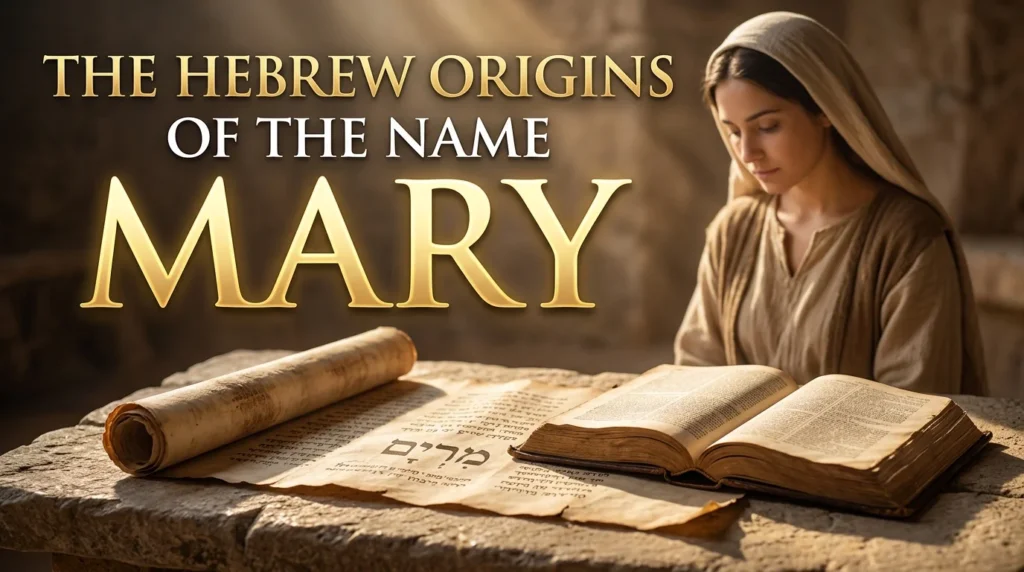
To really understand the mary name meaning bible connection, you have to go back to its root: the Hebrew name Miriam (מִרְיָם).
Miriam appears in the Old Testament long before the New Testament’s Mary ever enters the story. She was the sister of Moses and Aaron, and she played a crucial role in Israel’s history including helping protect infant Moses when he was placed in a basket on the Nile River.
Linguists have proposed several possible origins for Miriam:
- From the Hebrew root “marah” meaning “bitter” or “bitterness.” This is one of the most commonly cited interpretations.
- From an Egyptian root since Miriam was born and raised in Egypt, some scholars believe the name may derive from an Egyptian word meaning “beloved” or “beloved of God.”
- From “mry” an Egyptian term meaning “beloved,” which lines up with the theory that Hebrew families living in Egypt sometimes adopted Egyptian-influenced names.
So even at the earliest linguistic level, there’s a beautiful tension in the name a mix of “bitterness” and “belovedness.” Some scholars poetically describe Mary as meaning “bitterly beloved” or someone whose love is deep enough to withstand sorrow.
This duality feels especially fitting once you look at the story of Mary, the mother of Jesus, who experienced both profound joy and profound grief throughout her life.
From Miriam to Mary: How the Name Evolved
Names rarely stay exactly the same as they cross cultures and centuries. Here’s the linguistic journey:
- Hebrew: Miriam / Miryam
- Greek (Septuagint & New Testament): Maria / Mariam
- Latin (Vulgate Bible): Maria
- English: Mary
As the Bible was translated from Hebrew to Greek and later to Latin, the name shifted slightly in spelling and pronunciation but retained its core identity. By the time English translations became widespread, “Mary” had become the standard form used in Western Christianity.
This is why you’ll often see both “Miriam” and “Mary” referenced in biblical scholarship they’re essentially the same name at different points in its linguistic evolution.
Mary in the Bible: Who Were the Biblical Marys?
Here’s something that surprises a lot of people: there isn’t just one Mary in the Bible. In fact, several important women share this name, which is part of why the name became so widespread among early Christians.
1. Mary, the Mother of Jesus
This is the most well-known Mary in scripture. According to the Gospels of Matthew and Luke, Mary was a young woman from Nazareth who was visited by the angel Gabriel and told she would conceive and give birth to Jesus, the Son of God an event known as the Annunciation.
Mary’s story is central to Christian theology. She’s portrayed as humble, faithful, and willing to accept an extraordinary calling despite the social risks involved (being unmarried and pregnant in her culture and time). Her response to the angel often summarized as complete trust and surrender to God’s plan has made her a symbol of faith and obedience for centuries.
2. Mary Magdalene
Mary Magdalene is another significant figure, known for being one of Jesus’s most devoted followers. She’s mentioned in all four Gospels and is traditionally recognized as the first person to witness Jesus’s resurrection. Her devotion and courage have made her one of the most discussed women in biblical history.
3. Mary of Bethany
Sister to Martha and Lazarus, Mary of Bethany is remembered for sitting at Jesus’s feet to listen to his teachings a moment often referenced as an example of prioritizing spiritual devotion over distraction.
4. Mary, Mother of James and Joses
This Mary is mentioned in the Gospels as one of the women present at the crucifixion and later at the tomb of Jesus.
5. Mary, Mother of John Mark
Referenced in the Book of Acts, this Mary hosted early Christian gatherings in her home in Jerusalem.
With so many notable women sharing the same name, it’s easy to see why “Mary” became deeply woven into Christian tradition and, eventually, into naming customs across the Western world.
The Symbolic Meaning of Mary in Christian Tradition
Beyond the literal linguistic meaning, Mary carries enormous symbolic weight in Christian theology particularly Mary, the mother of Jesus.
Here are some of the core themes associated with her:
- Purity and grace Mary is often depicted as a model of moral and spiritual purity.
- Obedience and faith Her willingness to accept God’s plan, even without fully understanding it, is seen as an example of trust.
- Motherhood and compassion Mary is frequently invoked as a maternal, comforting figure.
- Sorrow and endurance Her presence at the crucifixion connects her to themes of grief and perseverance.
- Intercession In Catholic and Orthodox traditions, Mary is often approached in prayer as someone who can intercede on behalf of believers.
This is part of why the name Mary has remained popular for so long it’s not just a name, it’s a name loaded with meaning, devotion, and history.
Why Mary Became One of the Most Popular Names in History
Once you understand the mary name meaning bible background, it becomes much easier to see why this name spread so widely across cultures and centuries.
Here’s a quick breakdown of the reasons:
- Religious significance – Naming a daughter Mary was historically seen as a way to honor the mother of Jesus.
- Cross-cultural adaptability – The name easily transformed into variations across different languages (see below).
- Simplicity and elegance – Mary is short, easy to pronounce, and timeless in sound.
- Royal and historical figures – Numerous queens, saints, and historical women named Mary added to the name’s prestige (Mary Queen of Scots, Mary I of England, and more).
- Multi-denominational appeal – Unlike some biblical names tied strictly to one tradition, Mary is respected across Catholic, Protestant, and Orthodox Christianity.
Variations of Mary Around the World
Because the name has traveled through so many languages and cultures, you’ll find dozens of beautiful variations, including:
- Maria – Spanish, Italian, Portuguese, German
- Marie – French
- Mariam – Arabic, Armenian
- Miriam – Hebrew (original form)
- Maryam – Arabic (also used in Islamic tradition, referring to Mary, mother of Jesus, who is deeply honored in Islam as well)
- Marion – French/English
- Mara – Scandinavian, Irish
- Molly – English (originally a nickname for Mary)
- Polly – English (also historically linked to Mary)
- Masha – Russian
- Marisol – Spanish (combination name)
It’s worth noting that Mary as Maryam holds major significance in Islam as well. She’s the only woman mentioned by name in the Quran, and an entire chapter (Surah Maryam) is dedicated to her story. This cross-religious reverence is rare and speaks to just how universally respected this figure and name have become.
The Emotional and Spiritual Weight Behind the Name
Names often carry more than just linguistic meaning they carry emotional resonance. When parents choose the name Mary today, they’re often drawing on centuries of association with:
- Gentle strength
- Quiet faith
- Maternal warmth
- Historical elegance
- Spiritual depth
Even in secular contexts, Mary is often perceived as a graceful, classic, and dignified name one that doesn’t feel trendy or fleeting, but timeless.
Fun Facts About the Name Mary
To round things out, here are a few interesting tidbits:
- Mary has consistently ranked among the top baby names in English-speaking countries for centuries, though it has recently been replaced in popularity by newer trends.
- The name inspired countless works of art, music, and literature from Renaissance paintings to modern songs.
- “Ave Maria,” one of the most famous pieces of religious music in history, is a direct tribute to Mary, the mother of Jesus.
- Several countries have national holidays or feast days dedicated to Mary, especially in Catholic-majority nations.
- The nickname “Molly” evolved from “Mary” through a linguistic pattern common in medieval England, where L-sounds were often substituted for R-sounds in nicknames.
Choosing Mary as a Name Today
If you’re considering the name Mary for a child, here are a few things worth thinking about:
- It pairs well with many middle names from traditional (Mary Elizabeth) to modern (Mary Wren).
- It has strong nickname options Mia, Molly, Mari, May, Polly.
- It carries built-in meaning you won’t need to explain why you chose it; its history speaks for itself.
- It works across cultures thanks to its many international variations, the name travels well.
Many parents today choose Mary specifically because of its biblical roots, wanting to pass down a name associated with faith, humility, and grace.
Final Thoughts
So, what’s the real takeaway when it comes to the mary name meaning bible search so many people are curious about? At its core, Mary is a name rooted in Hebrew tradition, likely meaning “bitter,” “beloved,” or “wished-for child” and it’s a name that gained extraordinary spiritual weight through its association with several remarkable women in scripture, most notably Mary, the mother of Jesus.
It’s a name that has survived translation, migration, and centuries of cultural change without losing its identity or its meaning. Few names can claim that kind of staying power.
Frequently Asked Questions About the Name Mary
1. What does the name Mary mean in the Bible?
The name Mary is generally believed to mean “bitter,” “beloved,” or “wished-for child.” It comes from the Hebrew name Miriam, which carries these layered meanings depending on the linguistic root scholars reference.
2. Is Mary a Hebrew or Greek name?
Mary originated as the Hebrew name Miriam. It was later translated into Greek as Maria or Mariam, and eventually became “Mary” in English through Latin influence.
3. Who was the first Mary mentioned in the Bible?
While Mary, the mother of Jesus, is the most famous, the earliest biblical figure with this name (as Miriam) is Miriam, the sister of Moses and Aaron, who appears in the Old Testament.
4. Why is Mary such a popular name in Christianity?
Mary is popular largely because of her association with Mary, the mother of Jesus, who holds deep theological and symbolic significance in Christianity as a model of faith, humility, and grace.
5. What is the difference between Mary and Miriam?
Mary and Miriam are essentially the same name at different stages of linguistic development. Miriam is the original Hebrew form, while Mary is the English form that evolved through Greek and Latin translations.
6. Does Mary mean “bitter” in the Bible?
This is one popular interpretation, tied to the Hebrew root “marah.” However, other scholars argue for meanings like “beloved” or “wished-for child,” so there isn’t a single universally agreed-upon definition.
7. Is Mary mentioned in religions other than Christianity?
Yes. Mary, referred to as Maryam, is highly honored in Islam as well. She’s the only woman named directly in the Quran, and an entire chapter is dedicated to her story.

Hi, I’m Daniel Foster, a writer at GrasePath.com. I enjoy exploring the deeper meanings of biblical words, names, symbols, and verses to help readers better understand Scripture. My goal is to present accurate, easy-to-read, and well-researched content that makes the Bible more accessible for everyone. Through every article, I strive to provide clear explanations, meaningful insights, and trustworthy information to support your faith and Bible study journey.