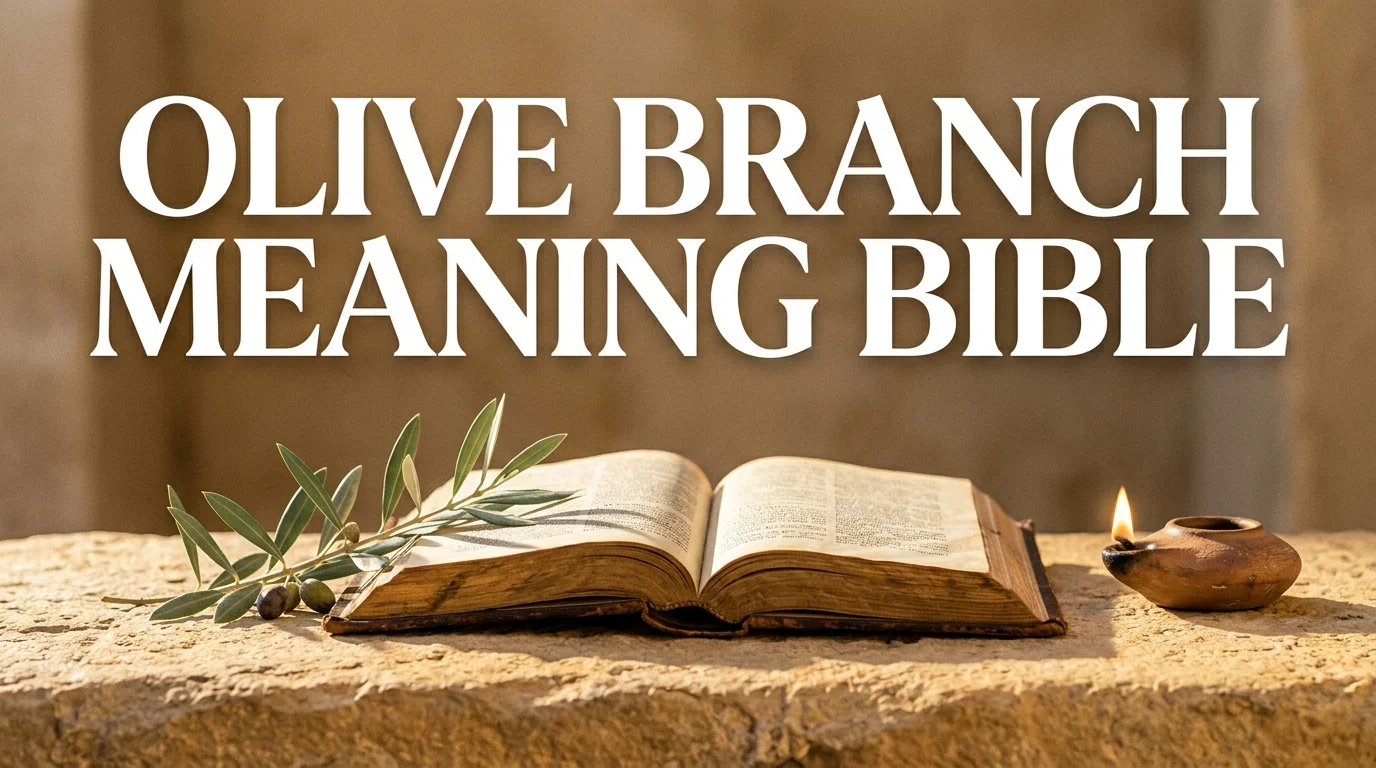
Have you ever wondered why an olive branch is one of the most recognized symbols of peace in the entire world? From ancient scripture to modern flags and peace treaties, this small green branch carries a message that has survived thousands of years.
If you’ve been searching for the true olive branch meaning bible reference, you’re about to discover a story that’s far richer than most people realize.
The olive branch isn’t just a pretty image tucked into a Bible story. It’s a symbol woven through Scripture that speaks of God’s mercy, His faithfulness, and His desire to restore what was broken.
What Is the Olive Branch Meaning in the Bible?
At its core, the olive branch meaning bible connection centers on one unforgettable moment: the story of Noah and the great flood. In the Book of Genesis, after the floodwaters began to recede, Noah sent out a dove to find dry land. On its second flight, the dove returned with a freshly plucked olive leaf in its beak.
“Then the dove came to him in the evening, and behold, in her mouth was a freshly plucked olive leaf. So Noah knew that the waters had receded from the earth.” (Genesis 8:11)
This single image became one of the most enduring symbols in human history. The olive leaf told Noah and by extension, all of humanity that the judgment had passed and life could begin again. From this moment forward, the olive branch became forever linked with:
- Peace after conflict or judgment
- Hope for a new beginning
- God’s mercy toward His creation
- Restoration and renewal
It’s fascinating that such a small detail in a much larger story would go on to shape symbolism across cultures, religions, and even modern political systems.
The Story of Noah’s Ark and the Dove
To really understand the olive branch’s significance, it helps to revisit the full context of the story.
According to Genesis, humanity had become deeply corrupt, and God chose to send a flood to cleanse the earth. Noah, described as righteous and blameless, was instructed to build an ark to preserve his family and pairs of every living creature. After 40 days and nights of rain, the waters covered the earth for months before finally beginning to recede.
Noah needed a way to know when it was safe to leave the ark. So he sent out a raven, which flew back and forth but didn’t bring any useful sign. Then he sent a dove.
The First Dove Flight
The first time Noah released the dove, it found nowhere to land because water still covered the ground. It returned to the ark with nothing.
The Second Dove Flight
Seven days later, Noah sent the dove out again. This time, it came back carrying a freshly plucked olive leaf. This was the turning point visible, tangible proof that trees were growing again and the earth was becoming livable.
The Third Dove Flight
After another seven days, Noah sent the dove a third time, and it didn’t return at all. This confirmed that the earth had dried enough to sustain life once more.
The olive leaf specifically not just any leaf is significant because olive trees were common in the region and known for their resilience. An olive tree can survive and regrow even after being damaged, which makes it a fitting symbol of endurance and renewal.
Why an Olive Branch and Not Another Symbol?
You might be wondering why the olive branch became the chosen symbol instead of some other plant. There are a few compelling reasons rooted in both biology and biblical culture.
Olive Trees Were Deeply Woven Into Ancient Life
In the ancient Near East, olive trees weren’t just decorative they were essential to survival. Olive oil was used for:
- Cooking and food preservation
- Anointing kings, priests, and prophets
- Fueling lamps for light
- Medicinal and healing purposes
- Religious ceremonies and offerings
Because olive oil represented provision, healing, and consecration, the olive tree itself carried deep spiritual weight long before the flood story was written down.
Olive Trees Symbolize Longevity and Resilience
Unlike many other trees, olive trees can live for hundreds even thousands of years. They’re known for regrowing from their roots even after being cut down or burned. This resilience made the olive tree a natural symbol of endurance, hope, and life continuing against the odds.
The Olive Branch Represented a Return to Normal Life
For Noah, seeing that olive leaf meant far more than just “the water is going down.” It meant vegetation was growing again, life was returning, and the world he once knew was being restored. It was proof that after judgment, life could flourish again.
Olive Branch Symbolism Throughout the Bible
While the story of Noah is the most famous reference, the olive tree and its branches appear throughout Scripture in ways that build on this symbolism of peace and blessing.
Olive Oil and Anointing
Throughout the Old Testament, olive oil was used to anoint kings, priests, and sacred objects. This act symbolized being set apart for God’s purposes and receiving His favor and empowerment. The connection between the olive tree and divine blessing runs deep.
The Olive Tree as a Symbol of Israel
In several prophetic books, Israel itself is compared to an olive tree, representing steady growth, divine favor, and a covenant relationship with God. The imagery suggests strength that comes not from human effort but from being rooted in something greater.
Olive Branches in the Book of Revelation
Interestingly, olive branches appear again near the end of the Bible. In the Book of Revelation, two witnesses are described using olive tree imagery to represent God’s ongoing presence and testimony on earth, tying the beginning and end of Scripture together with this same symbol.
Peace and Reconciliation
Beyond individual passages, the broader theme carried by the olive branch throughout Scripture is one of peace between God and humanity. It represents a shift from judgment to mercy, from separation to reconciliation.
The Olive Branch as a Universal Symbol of Peace
What’s remarkable about the olive branch meaning bible origin story is how far its influence has spread beyond religious texts. Today, the olive branch is recognized worldwide as a symbol of peace, even by people who’ve never read Genesis.
Here are just a few examples of how the symbol shows up in modern life:
- The United Nations flag features olive branches wrapped around a world map, symbolizing global peace and cooperation.
- Peace treaties and diplomatic gestures are often described as “extending an olive branch,” meaning to offer reconciliation after conflict.
- National flags and emblems, including those of several countries, incorporate olive branches to represent peace and unity.
- Everyday language still uses the phrase “extend an olive branch” to describe someone offering to make peace after an argument or disagreement.
It’s a beautiful reminder of how a single ancient story can shape global culture thousands of years later.
Lessons We Can Learn From the Olive Branch’s Meaning
Beyond the historical and symbolic value, there are practical, heartfelt lessons we can draw from this story that still apply to everyday life.
1. Hope Often Arrives in Small Signs
Noah didn’t receive a grand announcement that the flood was over. He received a single leaf. This teaches us that hope doesn’t always arrive with fanfare sometimes it shows up in small, quiet signs that we have to be watching for.
2. Patience Is Part of Restoration
Notice that Noah waited seven days between each dove flight. Restoration wasn’t instant. This mirrors real life healing, forgiveness, and new beginnings often take time, and that’s okay.
3. Peace Follows Obedience and Faith
Noah’s willingness to trust God’s instructions, even when the situation seemed impossible, ultimately led to renewal. There’s a lesson here about trusting a process even when we can’t see the full outcome yet.
4. Even After Judgment, Mercy Is Possible
The flood represented judgment, but the olive branch represented mercy immediately following it. This reflects a consistent theme throughout Scripture: God’s discipline is never the end of the story grace and restoration follow.
5. Small Gestures Can Rebuild Broken Relationships
Just as the olive branch symbolized reconciliation between God and humanity, offering a small gesture of peace in our own relationships can go a long way toward healing conflict.
How the Olive Branch Meaning Applies Today
You don’t have to be religious to appreciate the emotional weight of this symbol. Think about the last time you had a disagreement with a friend, coworker, or family member. Extending an “olive branch” whether it’s an apology, a kind word, or simply reaching out first mirrors exactly what this ancient symbol represents.
In a world that often feels divided, the olive branch reminds us that peace is always possible, even after seasons of conflict or hardship. It’s a symbol that transcends religion, culture, and time.
Some modern applications include:
- Using the phrase in personal relationships to signal a desire to reconcile
- Referencing it in weddings, sermons, or ceremonies about unity
- Including olive branch imagery in artwork, jewelry, or home décor as a reminder of hope
- Teaching children the story as an early lesson in patience and faith
Common Misunderstandings About the Olive Branch’s Meaning
Because this symbol has been used so widely, a few misconceptions have developed over time. Let’s clear a few of them up.
Misconception 1: The olive branch itself has magical power. In the biblical account, the olive leaf wasn’t magical it was simply a natural sign of the world’s recovery. Its power comes from what it represents, not the leaf itself.
Misconception 2: The dove and olive branch are always shown together in Scripture. While the popular image combines both, later biblical references to peace or restoration don’t always include both symbols together. The dove and olive branch pairing became iconic mostly through art and tradition.
Misconception 3: The olive branch only appears once in the Bible. As we covered earlier, olive imagery reappears throughout Scripture from anointing oil to prophetic comparisons to Israel to imagery in Revelation.
Frequently Asked Questions About Olive Branch Meaning in the Bible
1. What does the olive branch mean in the Bible?
The olive branch symbolizes peace, hope, and restoration. It first appears in Genesis when a dove brings Noah an olive leaf, signaling that the floodwaters had receded and life on earth was beginning again.
2. Why did the dove bring back an olive branch instead of another plant?
Olive trees were common, resilient, and deeply significant in ancient culture. Their ability to regrow after damage made them a fitting symbol of endurance, renewal, and life continuing after hardship.
3. What does “extending an olive branch” mean today?
In modern language, “extending an olive branch” means offering peace or reconciliation, usually after a disagreement or conflict, echoing the biblical symbolism of restored relationships.
4. Is the olive branch mentioned anywhere else in the Bible besides Noah’s Ark?
Yes. Olive oil and olive tree imagery appear throughout Scripture, including anointing practices, comparisons to Israel, and symbolic references in the Book of Revelation.
5. What is the spiritual meaning behind the olive branch?
Spiritually, the olive branch represents God’s mercy following judgment, the possibility of renewal after hardship, and the restoration of a right relationship between God and humanity.
6. Why is the olive branch used as a global symbol of peace today?
Because of its powerful biblical origin, the olive branch became a widely recognized symbol of peace across cultures, appearing on flags, emblems, and in diplomatic language worldwide.
7. What can we learn from the olive branch story in our daily lives?
The story teaches patience, hope in small signs, and the importance of extending grace and reconciliation, even after conflict or difficult seasons.
Final Thoughts
The story behind the olive branch meaning bible reference is so much more than a nice detail in the Noah’s Ark story. It’s a powerful symbol that speaks to some of the deepest human experiences waiting through hardship, longing for peace, and trusting that restoration is possible even after devastating loss.
From a single leaf brought back by a dove, an entire legacy of hope and reconciliation was born one that continues to influence how we think about peace today, thousands of years later. Whether you encounter the olive branch in Scripture, in art, or simply in everyday conversation, its message remains the same: after every storm, there is the possibility of new beginnings.

Hi, I’m Daniel Foster, a writer at GrasePath.com. I enjoy exploring the deeper meanings of biblical words, names, symbols, and verses to help readers better understand Scripture. My goal is to present accurate, easy-to-read, and well-researched content that makes the Bible more accessible for everyone. Through every article, I strive to provide clear explanations, meaningful insights, and trustworthy information to support your faith and Bible study journey.