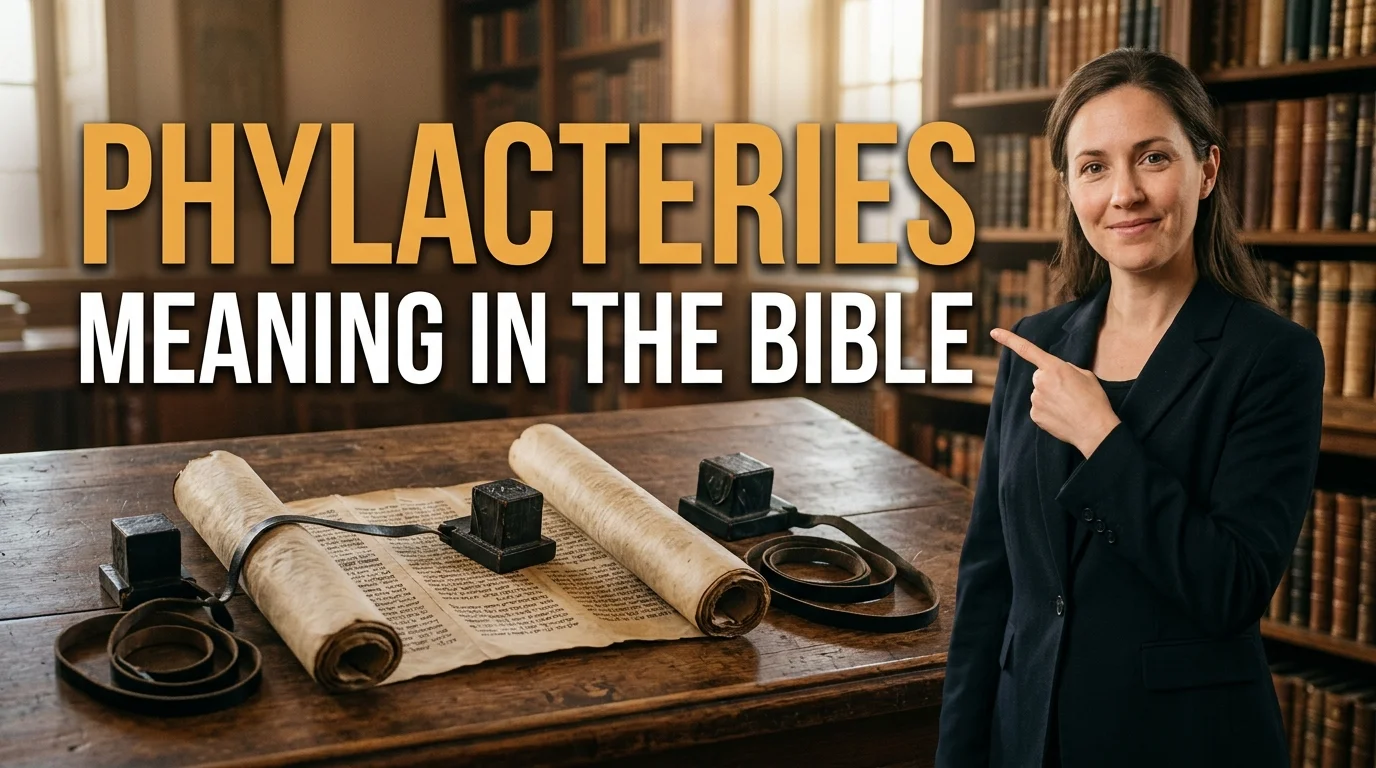
Some biblical words have deep historical and spiritual meanings that may not be immediately clear to modern readers. Phylacteries is one such term, appearing in discussions about Jewish religious practices during the time of Jesus. In the Bible, phylacteries refer to small leather boxes containing passages from Scripture, traditionally worn by Jewish men on their arms and foreheads during prayer.
These objects are connected to God’s instructions in Deuteronomy 6:6–8 and Deuteronomy 11:18, which encourage His people to keep His commandments close to their hearts and minds. The practice developed as a physical way of remembering and honoring God’s Word.
The term appears specifically in Matthew 23:5, where Jesus criticizes certain religious leaders for making their phylacteries broad to attract attention and appear more religious before others. His message was not that remembering Scripture was wrong, but that outward displays of devotion should not replace genuine faith, humility, and obedience.
What Are Phylacteries? A Simple Definition
At its core, the word “phylacteries” refers to small leather boxes containing scripture verses, worn by observant Jewish men during prayer. These boxes are strapped to the forehead and the arm using leather straps, following a literal interpretation of a command found in the Torah.
The word itself comes from the Greek term phylakterion, which means “a safeguard” or “an amulet.” This Greek word was used to translate the Hebrew term tefillin, which is the word Jewish people actually use to describe these prayer items today. So when you see “phylacteries” in an English Bible translation, know that it’s referring to tefillin, a practice that’s still very much alive in Jewish religious life.
Here’s a quick breakdown of what phylacteries physically consist of:
- Two small black boxes made of leather, called batim in Hebrew (meaning “houses”)
- Tiny scrolls of parchment inside each box, handwritten with specific Bible verses
- Leather straps, called retzuot, used to bind the boxes to the body
- One box for the head (worn on the forehead)
- One box for the arm (worn on the bicep, close to the heart)
This isn’t a random fashion choice or superstition. It’s a deeply symbolic act rooted in obedience to a specific biblical command, and understanding that command is key to understanding the whole practice.
The Biblical Origin of Phylacteries
To really grasp the meaning of phylacteries in the Bible, we need to travel back to the book of Deuteronomy. This is where the instruction that inspired the practice first appears.
The Command in Deuteronomy 6:8
One of the most famous passages in the entire Torah is what Jewish tradition calls the Shema, found in Deuteronomy 6:4-9. It begins with the declaration, “Hear, O Israel: The LORD our God, the LORD is one.” Immediately after this statement of faith, God gives instructions on how His people should keep His words close to their hearts and minds.
Deuteronomy 6:8 says believers should “bind them as a sign on your hand and let them be as frontlets between your eyes.” This verse, along with a nearly identical one in Deuteronomy 11:18, is the foundational text behind the entire phylacteries tradition.
Similar Commands in Exodus
The instruction isn’t limited to Deuteronomy. Similar language appears in Exodus 13:9 and Exodus 13:16, both tied to the story of the Israelites’ deliverance from Egypt. In these passages, the people are told to remember God’s mighty acts of redemption by keeping a “sign on your hand” and a “memorial between your eyes.”
Notice something interesting here: none of these passages use the word “phylacteries” directly. The word only appears later, in the New Testament, as a description of how this Old Testament command came to be practiced literally by Jewish teachers and religious leaders during the Second Temple period.
Literal vs. Symbolic Interpretation
This raises an important question that scholars and rabbis have debated for centuries: were these verses meant to be taken literally, or were they simply poetic language meant to express the idea of keeping God’s law close to one’s heart and actions?
- Literal interpretation: Jewish tradition, especially the Pharisees and later Rabbinic Judaism, took these verses literally, developing the tefillin as physical objects worn on the body.
- Symbolic interpretation: Many scholars argue the original intent was purely metaphorical, similar to saying someone should “keep something close to their heart” today, without literally attaching an object to their body.
Both views have merit, and honestly, this kind of debate is common throughout biblical interpretation. What we do know for certain is that by the time of Jesus, the literal practice of wearing phylacteries was well established among religious Jews, particularly the Pharisees.
Phylacteries in the New Testament: What Jesus Actually Said
Now we get to the passage most people are actually curious about when they search for the phylacteries meaning in the Bible: Matthew 23:5.
Matthew 23:5 in Context
In Matthew 23, Jesus delivers a series of strong warnings against the religious hypocrisy of some scribes and Pharisees. He doesn’t condemn the entire group wholesale, but He does call out specific behaviors that had become more about outward appearance than genuine devotion to God.
Jesus states that these religious leaders “do all their deeds to be seen by others,” and He specifically mentions that “they make their phylacteries broad and their fringes long.” This is the only place in the entire Bible where the English word “phylacteries” appears.
Why Jesus Criticized This Practice
Here’s the key thing to understand: Jesus wasn’t necessarily condemning the act of wearing phylacteries itself. Instead, He was criticizing the motivation behind how some people used them. Making the boxes larger and more visible was a way of showing off spiritual devotion publicly, drawing attention and admiration rather than reflecting quiet, humble obedience to God.
Think about it this way:
- Wearing tefillin as a genuine reminder of God’s law = an act of devotion
- Wearing oversized tefillin to appear more holy than others = an act of pride and performance
This distinction matters a lot. Jesus consistently taught that true righteousness comes from the heart, not from external displays meant to impress other people. The phylacteries themselves weren’t the problem; the prideful, attention-seeking motive behind enlarging them was.
A Broader Pattern of Warning Against Religious Show
This wasn’t an isolated critique either. Throughout the Gospels, Jesus repeatedly warned against religious practices done for show. In the Sermon on the Mount, He talks about people who pray loudly on street corners or who make their fasting obvious to others just so people will notice their piety. The phylacteries comment fits neatly into this larger theme: genuine faith isn’t about being seen as righteous, it’s about actually being devoted to God internally.
What’s Actually Written Inside Phylacteries?
This is a detail a lot of people don’t know, and it’s genuinely fascinating. The tiny scrolls tucked inside each phylactery box contain four specific passages of Scripture, handwritten by a trained scribe called a sofer using kosher ink on specially prepared parchment.
The four passages are:
- Exodus 13:1-10 – About consecrating the firstborn and remembering the exodus from Egypt
- Exodus 13:11-16 – Further instructions about the firstborn and wearing signs on the hand and forehead
- Deuteronomy 6:4-9 – The Shema, the central declaration of Jewish monotheism
- Deuteronomy 11:13-21 – A passage about loving God and obeying His commandments
In the head phylactery, these four passages are written on four separate tiny scrolls and placed in four separate compartments inside the box. In the arm phylactery, all four passages are written on a single scroll and placed in one compartment. This distinction actually carries symbolic meaning: the head represents the mind and intellect (each passage is distinct and separate, like organized thoughts), while the arm represents unified action toward God (all four ideas combined into one, driving a single purpose).
How Phylacteries (Tefillin) Are Worn Today
Even though the word “phylacteries” is largely a biblical and historical term, the practice itself, known as tefillin, is still very much alive in modern Judaism. Observant Jewish men (and in some more progressive communities, women as well) wear tefillin during weekday morning prayers, excluding the Sabbath and major festivals.
Here’s a general overview of how the ritual works:
- The arm tefillin is put on first, wrapped around the bicep of the non-dominant arm, with the box facing the heart.
- The leather strap is then wound down the forearm and around the hand, often in a specific pattern that spells out one of God’s names in Hebrew letters.
- The head tefillin is placed on the forehead, positioned above the hairline, centered between the eyes.
- A blessing is recited before putting on each piece.
For many Jewish boys, receiving their first set of tefillin is a meaningful milestone connected to their Bar Mitzvah, symbolizing their entry into full religious responsibility and adulthood.
Why This Ancient Practice Still Matters
You might be wondering why any of this is relevant if you’re not Jewish or don’t practice this tradition yourself. Here’s the thing: understanding the meaning of phylacteries in the Bible offers valuable insight into a much bigger spiritual principle that applies to everyone, regardless of religious background.
Lesson 1: God’s Word Should Shape Our Thoughts and Actions
The original command in Deuteronomy wasn’t really about leather boxes. It was about making sure God’s teachings genuinely influence how we think (symbolized by the forehead) and how we act (symbolized by the hand). Whether or not someone physically wears tefillin, the underlying principle, letting truth guide your mind and your behavior, is universally meaningful.
Lesson 2: Beware of Empty Religious Performance
Jesus’ warning about oversized phylacteries is a timeless caution against turning faith into a performance. It’s easy, even today, to focus more on how spiritual we appear to others than on cultivating genuine, quiet devotion. This lesson transcends any single religious tradition and speaks to a very human tendency toward seeking approval and admiration.
Lesson 3: Symbols Can Be Powerful, But They’re Not the Point
Physical reminders, whether it’s a cross necklace, a specific prayer routine, or tefillin, can be genuinely helpful tools for keeping faith front and center in daily life. But Jesus’ teaching reminds us that the symbol should never replace the substance. The box on the forehead means nothing if the heart underneath isn’t sincerely devoted.
Common Misunderstandings About Phylacteries
Let’s clear up a few misconceptions that often come up when people research this topic:
- Misconception: Phylacteries are mentioned frequently throughout the Bible. Reality: The actual word only appears once, in Matthew 23:5. The underlying command appears a few times in the Torah, but without using that specific term.
- Misconception: Jesus completely condemned wearing phylacteries. Reality: Jesus criticized the prideful motivation behind making them oversized for attention, not the practice itself.
- Misconception: Phylacteries and tefillin are two different things. Reality: They’re the same object. “Phylacteries” is simply the Greek-derived English term, while “tefillin” is the original Hebrew term still used today.
- Misconception: Only ancient Jews wore these; the practice died out long ago. Reality: Tefillin are still worn daily by many observant Jewish men around the world today.
FAQs About Phylacteries Meaning in the Bible
1. What is the meaning of phylacteries in the Bible?
Phylacteries refer to small leather boxes containing handwritten scripture passages, worn on the forehead and arm by Jewish men during prayer, based on a literal reading of Deuteronomy 6:8. The word appears once in the Bible, in Matthew 23:5.
2. Where in the Bible are phylacteries mentioned?
The exact word “phylacteries” only appears in Matthew 23:5, where Jesus criticizes religious leaders for making them unusually large to attract attention. The underlying practice is rooted in Deuteronomy 6:8 and 11:18, as well as Exodus 13:9 and 13:16.
3. Why did Jesus criticize phylacteries?
Jesus wasn’t condemning phylacteries as objects. He was criticizing the prideful motivation of certain religious leaders who enlarged their phylacteries to appear more devout and gain public admiration, rather than genuinely honoring God.
4. What Bible verses are inside phylacteries?
Traditional tefillin contain four passages: Exodus 13:1-10, Exodus 13:11-16, Deuteronomy 6:4-9, and Deuteronomy 11:13-21. These passages relate to God’s redemption of Israel and the command to love and remember Him.
5. Are phylacteries the same as tefillin?
Yes. “Phylacteries” is the Greek-derived English term used in Bible translations, while “tefillin” is the original Hebrew word still used in modern Jewish practice. They refer to the exact same religious item.
6. Do Christians wear phylacteries?
No, wearing phylacteries is not a Christian practice. It remains a distinctly Jewish tradition rooted in Torah observance. Christians generally interpret the Deuteronomy passage symbolically rather than literally.
7. What is the spiritual lesson behind phylacteries?
The deeper lesson is that God’s word should genuinely shape our thinking and actions, not just serve as an external display of religiousness. Jesus’ warning reminds us that true devotion comes from the heart, not from outward appearances meant to impress others.
Final Thoughts
So, what’s the real takeaway here? The phylacteries meaning in the Bible goes far beyond a simple vocabulary lesson. It connects us to an ancient, meaningful Jewish tradition rooted in a genuine desire to keep God’s commandments close, literally strapped to the mind and the hand. At the same time, it carries a pointed warning from Jesus about the danger of turning sincere devotion into a performance meant to impress others rather than honor God.
You’re a student of the Bible, someone curious about Jewish tradition, or simply someone who stumbled across this unusual word while reading Matthew 23, hopefully this deep dive has given you real clarity. Phylacteries aren’t just relics of an ancient world; they represent a timeless spiritual principle that still challenges all of us today: let your faith be real, not just visible.

James Parker is a Bible writer at GrasePath.com who loves exploring the deeper meaning of Scripture. He shares clear, trustworthy insights about biblical names, symbols, dreams, and spiritual teachings in simple language. His mission is to help readers strengthen their faith and better understand God’s Word every day.