Have you ever stumbled across the word “enmity” while reading your Bible and paused, unsure of exactly what it meant? You’re not alone. It’s one of those words that shows up at pivotal moments in Scripture, yet rarely gets explained in everyday conversation.
Understanding the meaning of enmity in the Bible unlocks some of the richest theological themes in all of Scripture from the Garden of Eden to the cross of Christ.
In this article, we’re going to dig deep into what enmity really means, where it appears in the Bible, why it matters, and how it applies to your life today. Whether you’re a curious reader, a Bible study leader, or someone preparing a sermon or devotional, this guide will give you everything you need to fully grasp this fascinating biblical concept.
Let’s get started.
What Does Enmity Mean?
Before we jump into the biblical context, let’s clarify the basic definition. Enmity is a state of deep hostility, hatred, or opposition between two parties. It’s stronger than simple dislike enmity implies an active, ongoing conflict or antagonism.
In everyday English, we might say two rival companies have “enmity” between them, or that two feuding families have held onto enmity for generations. It’s a word that carries weight, tension, and a sense of irreconcilable difference.
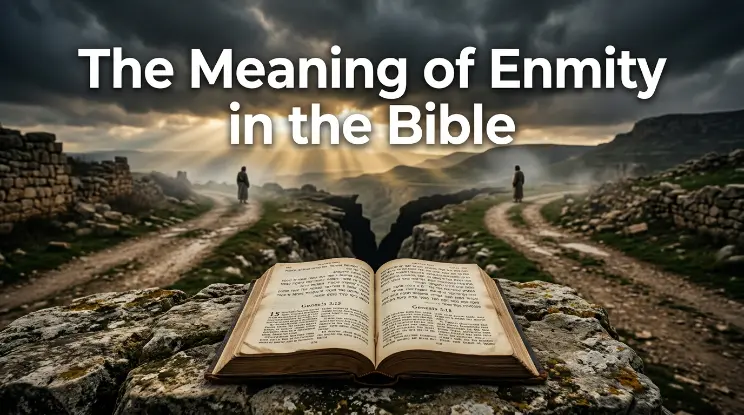
When we talk about the meaning of enmity in the Bible, though, the concept goes far beyond human squabbles. Biblical enmity often describes a spiritual and cosmic conflict one that shapes the entire narrative of Scripture, from Genesis to Revelation.
The Original Hebrew and Greek Words
To really understand enmity in Scripture, it helps to look at the original languages the Bible was written in.
- Hebrew: “eybah” (איבה) – This word appears in the Old Testament and is often translated as “enmity” or “hostility.” It comes from a root word meaning “to be an enemy.”
- Greek: “echthra” (ἔχθρα) – Found in the New Testament, this word also conveys hostility, hatred, or a state of being at odds with someone.
Both words describe more than a passing disagreement. They point to a settled, often deep-rooted opposition the kind of conflict that doesn’t resolve on its own.
The First Mention of Enmity in the Bible: Genesis 3:15
If you want to understand the meaning of enmity in the Bible, there’s no better place to start than its very first appearance Genesis 3:15. This verse comes right after Adam and Eve’s fall into sin, when God confronts the serpent in the Garden of Eden.
God says to the serpent:
“And I will put enmity between you and the woman, and between your offspring and hers; he will crush your head, and you will strike his heel.”
This single verse is often called the Protoevangelium, or the “first gospel,” because many theologians believe it’s the earliest prophecy of Jesus Christ’s eventual victory over Satan through the cross.
Here’s why this moment matters so much:
- It establishes a spiritual conflict. God himself declares that there will be enmity ongoing hostility between the serpent (representing Satan and evil) and humanity.
- It’s not accidental; it’s ordained. God says “I will put enmity,” meaning this opposition is part of His divine plan, not just a natural consequence of sin.
- It points toward redemption. The imagery of the offspring crushing the serpent’s head while being struck on the heel foreshadows Christ’s ultimate triumph over sin and death, even though it would cost Him suffering.
This foundational passage sets the stage for how enmity functions throughout the rest of Scripture: as a real, spiritual battle between good and evil, God and Satan, righteousness and sin.
Enmity Between God and Humanity
One of the most sobering aspects of biblical enmity is that, because of sin, humanity itself was placed in a state of enmity with God. This isn’t a comfortable topic, but it’s essential to understanding the gospel message.
Romans 8:7 – The Mind Set on the Flesh
Paul writes in Romans 8:7:
“For the mind that is set on the flesh is hostile to God, for it does not submit to God’s law; indeed, it cannot.”
The word translated “hostile” here is the same Greek word for enmity echthra. Paul is teaching that apart from Christ, our natural, sinful nature is not just indifferent to God it’s actively opposed to Him.
This might sound harsh, but it explains a lot about human behavior:
- Why people resist truth even when it’s presented clearly
- Why sin feels natural and righteousness feels difficult
- Why reconciliation with God requires more than good intentions it requires a transformation
Ephesians 2:14-16 – Christ Breaks Down the Wall of Hostility
The good news is that the Bible doesn’t leave us stuck in enmity. In Ephesians 2:14-16, Paul explains how Jesus resolves this hostility both between God and humanity, and between different groups of people (in this case, Jews and Gentiles):
“For he himself is our peace, who has made us both one and has broken down in his flesh the dividing wall of hostility… that he might create in himself one new man in place of the two, so making peace, and might reconcile us both to God in one body through the cross, thereby killing the hostility.”
This passage shows that:
- Enmity isn’t just a spiritual abstraction it shows up in real relational and social divisions.
- The cross is the solution to enmity, both vertically (between us and God) and horizontally (between people groups).
- Peace, not hostility, is the goal of the gospel.
Enmity as Spiritual Warfare
Understanding the meaning of enmity in the Bible also means recognizing it as part of an ongoing spiritual battle. This isn’t about physical warfare it’s about the unseen conflict between the kingdom of God and the kingdom of darkness.
James 4:4 – Friendship with the World
James doesn’t mince words when he writes:
“You adulterous people! Do you not know that friendship with the world is enmity with God? Therefore whoever wishes to be a friend of the world makes himself an enemy of God.”
Here, James uses enmity to describe a choice a spiritual allegiance. You can’t be aligned with worldly values and godly values at the same time. This is a challenging but important truth for believers navigating a culture that often pulls them in the opposite direction from biblical living.
The Ongoing Battle Described in Genesis 3:15
Going back to that first mention of enmity, many theologians see it as describing a spiritual war that continues throughout human history a conflict between:
- Satan and his influence in the world
- God’s people and God’s purposes
- Evil and righteousness
This battle plays out in individual hearts, in cultures, and throughout the pages of Scripture from the persecution of Israel to the martyrdom of early Christians to the spiritual struggles believers face today.
Key Examples of Enmity in the Bible
Let’s look at some specific biblical passages and stories that illustrate enmity in action. These examples help ground the abstract concept in real, relatable narratives.
1. Cain and Abel (Genesis 4)
While the word “enmity” isn’t explicitly used here, the story of Cain murdering his brother Abel is often seen as the first human expression of the enmity introduced in Genesis 3:15. Sin bred jealousy, jealousy bred hatred, and hatred led to violence.
2. Esau and Jacob (Genesis 25-33)
The rivalry between these twin brothers sparked by a stolen birthright and blessing created deep hostility that lasted for years. Though their story eventually resolves in reconciliation, it illustrates how enmity can fester within families.
3. The Pharisees and Jesus
Throughout the Gospels, we see growing hostility between Jesus and the religious leaders of His day. Their enmity toward Him wasn’t just personal dislike it was rooted in a rejection of His identity and message, ultimately leading to His crucifixion.
4. Herodias and John the Baptist (Mark 6:19)
Mark records that Herodias “had a grudge against him and wanted to put him to death” a clear example of personal enmity leading to tragic consequences (John’s beheading).
5. The Serpent’s Offspring vs. the Woman’s Offspring
As discussed earlier, this cosmic enmity from Genesis 3:15 is considered by many scholars to be fulfilled ultimately in the ongoing conflict between Satan’s forces and God’s people throughout redemptive history, culminating in Christ’s victory.
The Resolution of Enmity Through Christ
Here’s where the story turns from tragic to triumphant. While the Bible is honest about the reality and depth of enmity between God and humanity, between people groups, and in the spiritual realm it also offers a powerful resolution.
Colossians 1:21-22 – Once Alienated, Now Reconciled
Paul writes:
“And you, who once were alienated and hostile in mind, doing evil deeds, he has now reconciled in his body of flesh by his death, in order to present you holy and blameless and above reproach before him.”
This passage captures the heart of the gospel: we were once in a state of hostility (enmity) toward God, but through Christ’s sacrificial death, that enmity is dismantled and replaced with reconciliation.
What This Means Practically
For believers, understanding that Christ has resolved the ultimate enmity between us and God has several practical implications:
- Freedom from spiritual hostility. You’re no longer God’s enemy you’re His child, adopted through faith in Christ.
- A call to pursue peace with others. Since Christ broke down walls of hostility, believers are called to be peacemakers rather than people who nurse grudges or hostility.
- Hope in spiritual battles. While enmity with evil forces continues, believers can find confidence knowing. That ultimate victory has already been secured through Christ’s death and resurrection.
Enmity vs. Other Biblical Terms: Clearing Up Confusion
It’s easy to confuse enmity with other related biblical concepts. Here’s a quick breakdown to keep things clear:
- Enmity vs. Anger: Anger is often an emotion a temporary reaction. Enmity is a settled state of hostility that can persist over time, even without active anger in the moment.
- Enmity vs. Sin: Sin is any transgression against God’s law. Enmity can be both a cause and effect of sin sin creates enmity with God, and enmity can drive further sinful behavior.
- Enmity vs. Judgment: Judgment refers to God’s righteous verdict on sin. Enmity describes the relational hostility that exists prior to reconciliation, whereas judgment is a legal or moral pronouncement.
Understanding these distinctions helps clarify why the Bible treats enmity as such a serious, foundational concept it’s not just an emotion, but a state of being that requires resolution.
Why Understanding Enmity Matters for Believers Today
You might be wondering: why does any of this matter in 2026? Here’s why grasping the meaning of enmity in the Bible is still deeply relevant:
- It explains the human condition. Without understanding enmity, it’s hard to fully grasp why humanity struggles with sin, rebellion, and spiritual apathy.
- It highlights the depth of God’s grace. Recognizing that we were once at odds with God makes His reconciliation through Christ all the more powerful and meaningful.
- It equips believers for spiritual discernment. Understanding enmity as an ongoing spiritual reality (per James 4:4) helps Christians recognize when worldly values are pulling them away from God.
- It encourages relational healing. Since Christ broke down walls of hostility, believers are called to actively pursue peace and reconciliation in their own relationships, rather than allowing bitterness to take root.
Practical Tips for Applying This Biblical Truth
Here are a few ways you can apply the concept of enmity to your everyday walk of faith:
- Examine your own heart. Are there areas where you’re holding onto hostility toward God, toward others, or even toward yourself?
- Study Genesis 3:15 in context. Read the surrounding chapters to understand the full weight of the fall and the hope embedded in this early promise.
- Reflect on Ephesians 2 regularly. Let the truth of reconciliation through Christ shape how you view your identity and relationship with God.
- Be a peacemaker. Look for practical ways to break down “walls of hostility” in your relationships, church, or community.
- Stay spiritually alert. Recognize that spiritual enmity (per James 4:4) is real, and guard your heart against worldly values that pull you from godly living.
Frequently Asked Questions About the Meaning of Enmity in the Bible
1. What is the simplest definition of enmity in the Bible?
Enmity in the Bible refers to a deep, active state of hostility or opposition most significantly between God and sinful humanity, and between Satan and God’s people, as first introduced in Genesis 3:15.
2. Where is enmity first mentioned in the Bible?
The first mention of enmity appears in Genesis 3:15, when God declares enmity between the serpent and the woman, and between their offspring, immediately after the fall of Adam and Eve.
3. What is the significance of Genesis 3:15 and enmity?
Genesis 3:15 is often called the Protoevangelium, or “first gospel,” because it foreshadows the ultimate victory of Christ (the woman’s offspring) over Satan (the serpent), despite the suffering Christ would endure.
4. Does the Bible say humans are naturally enemies of God?
Yes. Romans 8:7 explains that a mind set on the flesh is hostile (in enmity) toward God, meaning that apart from Christ, humanity’s natural sinful state is opposed to God’s ways.
5. How does Jesus resolve the enmity between God and humanity?
According to Ephesians 2:14-16 and Colossians 1:21-22, Jesus resolves this enmity through His death on the cross, reconciling believers to God and breaking down hostility between different people groups as well.
6. What does James 4:4 mean by “friendship with the world is enmity with God”?
James is teaching that pursuing worldly values and priorities over godly ones puts a person in spiritual opposition to God you can’t fully align with both the world’s system and God’s kingdom at the same time.
7. Is enmity the same as hatred in the Bible?
Enmity is closely related to hatred but describes more of an ongoing, relational state of hostility rather than just an emotion. It often implies an active, sustained conflict rather than a fleeting feeling.
Final Thoughts: The Meaning of Enmity in the Bible and Why It Still Matters
Understanding the meaning of enmity in the Bible gives us a much richer picture of the biblical story. From the very first pages of Genesis, we see that sin introduced a real, spiritual hostility between humanity and God, and between good and evil forces at work in the world.
But the Bible doesn’t stop at conflict. It moves us toward resolution. Through Jesus Christ, the enmity that once separated us from God has been broken down, replaced with peace, reconciliation, and hope. This is one of the most beautiful threads woven throughout Scripture from the promise in Genesis 3:15 to its fulfillment on the cross.

Hi, I’m Daniel Foster, a writer at GrasePath.com. I enjoy exploring the deeper meanings of biblical words, names, symbols, and verses to help readers better understand Scripture. My goal is to present accurate, easy-to-read, and well-researched content that makes the Bible more accessible for everyone. Through every article, I strive to provide clear explanations, meaningful insights, and trustworthy information to support your faith and Bible study journey.