Have you ever wondered why the strongest people you know often seem the most grounded? Or why some leaders inspire loyalty while others demand it through force? The answer often traces back to a quiet, powerful quality the Bible places at the center of a life that honors God.
The meaning of humility in the Bible goes far beyond polite manners or self-deprecation. It is a radical reorientation of the heartone that sees God rightly, sees ourselves honestly, and sees others as more significant than ourselves.
In a culture that celebrates self-promotion, personal branding, and “living your truth,” biblical humility can feel countercultural, even weak. Yet Scripture consistently presents it as the doorway to wisdom, favor, and genuine greatness.
What Is the Biblical Definition of Humility?
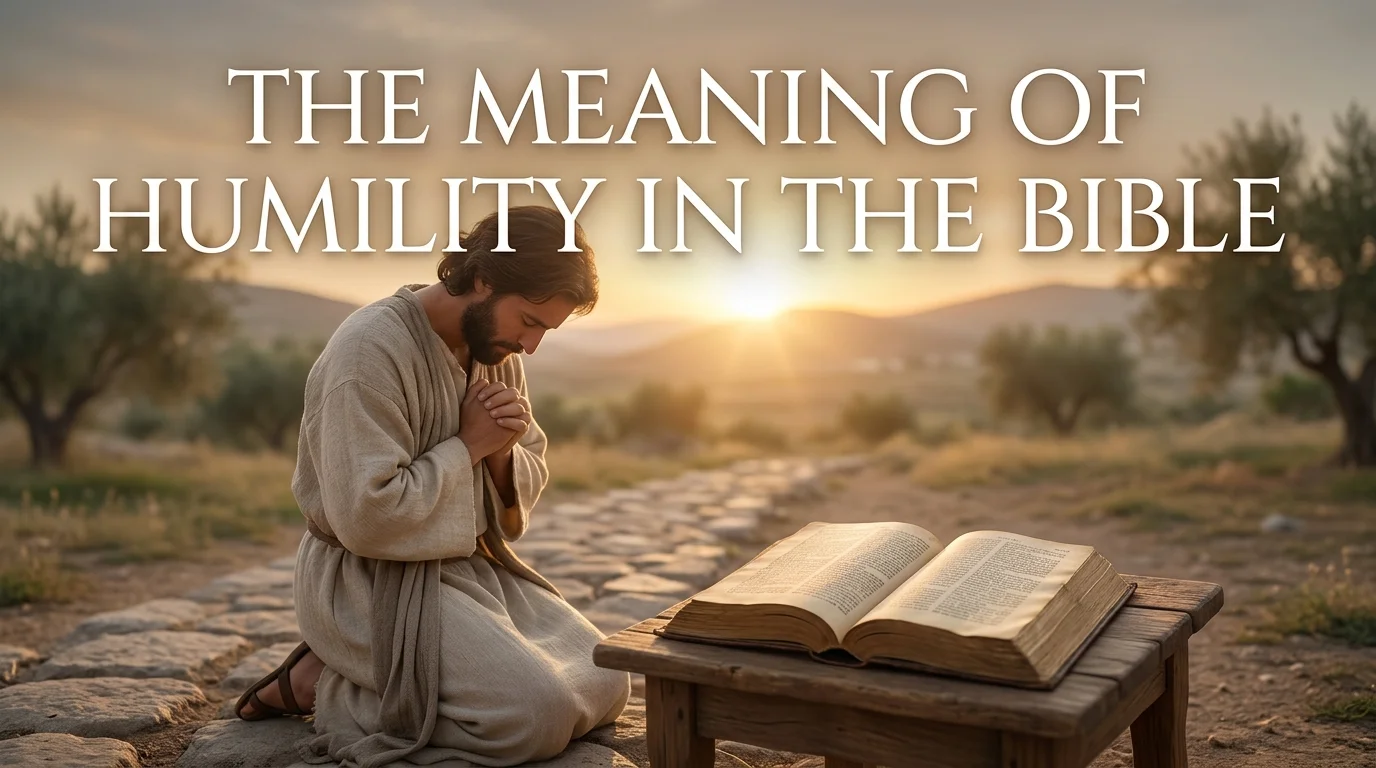
At its core, the meaning of humility in the Bible is lowliness of minda heart attitude that recognizes our complete dependence on God and refuses to exalt self. The Greek word most often translated “humility” is tapeinophrosynē, which literally means “lowliness of mind.” It is not an outward performance but an inward posture.
In the Old Testament, Hebrew words such as ʿānāw and ʿānî carry ideas of being lowly, afflicted, or meek. These terms often describe people in humble circumstances, yet they also point to a character quality: a willingness to submit to God rather than insist on one’s own way. Micah 6:8 captures this beautifully: “He has told you, O man, what is good; and what does the Lord require of you but to do justice, and to love kindness, and to walk humbly with your God?”
Biblical humility is not thinking less of yourself in a self-hating way. It is thinking of yourself less because your focus has shifted to God and others. C.S. Lewis captured a related idea when he noted that true humility is not thinking low-income of yourself but thinking of yourself less. Scripture affirms this balance: we are image-bearers of God, deeply loved, yet we are also finite, sinful, and utterly dependent on His grace.
True humility includes:
- An accurate view of God as Creator and Sovereign
- An honest view of ourselves as limited and in need of mercy
- A willing choice to serve others rather than seek personal glory
It stands in direct opposition to pride, which Scripture repeatedly warns against. Proverbs 16:18 declares, “Pride goes before destruction, and a haughty spirit before a fall.” God “opposes the proud but gives grace to the humble” (James 4:6; 1 Peter 5:5).
Humility in the Old Testament: Foundations of a Lowly Heart
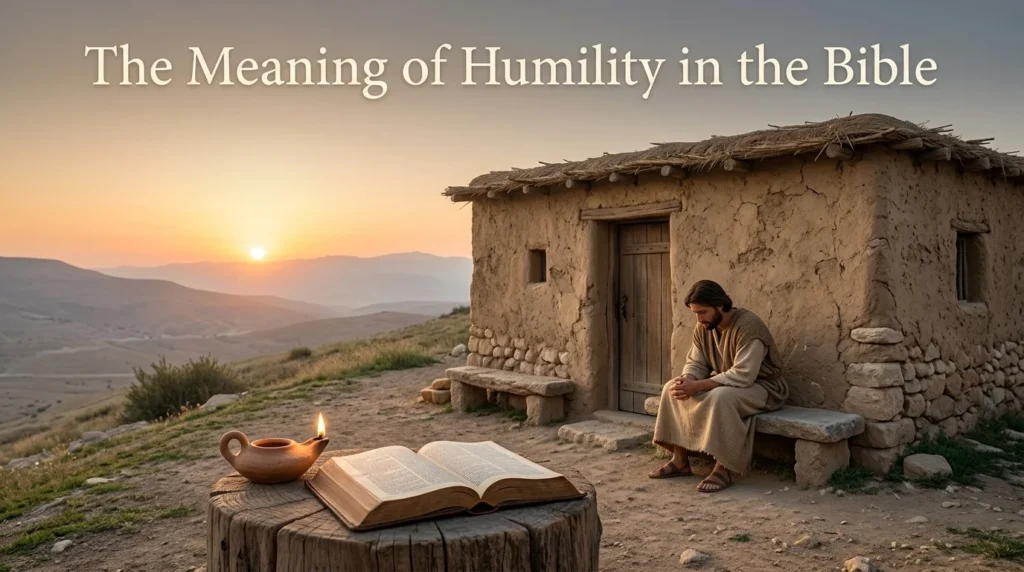
The Old Testament lays a rich foundation for understanding the meaning of humility in the Bible. From the earliest pages, God elevates those who walk in humble dependence and brings low those who exalt themselves.
Moses: The Meekest Man on Earth
Numbers 12:3 offers one of the most striking descriptions in Scripture: “Now the man Moses was very meek, more than all people who were on the face of the earth.” Moses led a nation out of slavery, confronted Pharaoh, and received the Law from God. Yet he is remembered not primarily for power but for meekness. When challenged by his own siblings, he did not defend his reputation. Instead, he interceded for them. His humility made room for God’s glory.
David: A Heart After God
King David provides another powerful example. After God promised to establish his dynasty, David’s response was not self-congratulation. He sat before the Lord and prayed, “Who am I, O Lord God, and what is my house, that you have brought me thus far?” (1 Chronicles 17:16). David’s life also shows the danger of pridehis later failures with Bathsheba and the census reveal how quickly humility can slip when a person forgets dependence on God. Yet his psalms continually return to a posture of lowliness: “The sacrifices of God are a broken spirit; a broken and contrite heart, O God, you will not despise” (Psalm 51:17).
Proverbs and Wisdom Literature
The book of Proverbs repeatedly links humility with wisdom, honor, and life itself:
- “When pride comes, then comes disgrace, but with the humble is wisdom” (Proverbs 11:2).
- “The reward for humility and fear of the Lord is riches and honor and life” (Proverbs 22:4).
- “One’s pride will bring him low, but he who is lowly in spirit will obtain honor” (Proverbs 29:23).
These verses show that humility is not passive. It is an active choice to fear the Lord, acknowledge limitation, and refuse self-exaltation.
Prophetic Calls to Humility
The prophets called Israel and Judah to humble themselves before God. Isaiah 57:15 reveals God’s heart: “For thus says the One who is high and lifted up, who inhabits eternity, whose name is Holy: ‘I dwell in the high and holy place, and also with him who is of a contrite and lowly spirit, to revive the spirit of the lowly, and to revive the heart of the contrite.’” God is both transcendent and nearHe draws close to the humble.
Humility in the New Testament: The Heart of Christian Discipleship
If the Old Testament establishes the foundation, the New Testament elevates humility to the very center of following Jesus. The meaning of humility in the Bible reaches its fullest expression in the life, teaching, and sacrifice of Christ, and then becomes the expected posture of every believer.
Jesus: The Perfect Example of Humility
Philippians 2:5–8 stands as the most profound description of humility in all of Scripture:
“Have this mind among yourselves, which is yours in Christ Jesus, who, though he was in the form of God, did not count equality with God a thing to be grasped, but emptied himself, by taking the form of a servant, being born in the likeness of men. And being found in human form, he humbled himself by becoming obedient to the point of death, even death on a cross.”
Jesus, who is fully God, chose to take on human flesh, live as a servant, and submit to the most humiliating form of execution. He washed His disciples’ feet (John 13). He associated with the lowly, the outcast, and the sinner. Taught that the greatest in the kingdom is the one who serves (Matthew 20:26–28). His entire life redefined greatness as downward mobility for the sake of love.
Key Teachings of Jesus on Humility
Jesus repeatedly overturned cultural expectations:
- “Blessed are the low-income in spirit, for theirs is the kingdom of heaven” (Matthew 5:3). Spiritual povertyrecognizing our needis the entry point to the kingdom.
- “Whoever exalts himself will be humbled, and whoever humbles himself will be exalted” (Matthew 23:12; Luke 14:11).
- In the parable of the Pharisee and the tax collector (Luke 18:9–14), the one who beat his breast and cried for mercy went home justified, while the self-righteous man did not.
- Jesus placed a child in the midst of the disciples and said, “Whoever humbles himself like this child is the greatest in the kingdom of heaven” (Matthew 18:4).
Apostolic Teaching
The apostles continued this emphasis. Paul urged believers to “do nothing from selfish ambition or conceit, but in humility count others more significant than yourselves” (Philippians 2:3). He described his own ministry as one of weakness so that Christ’s power might be displayed (2 Corinthians 12:9–10). Peter instructed, “Clothe yourselves, all of you, with humility toward one another, for ‘God opposes the proud but gives grace to the humble.’ Humble yourselves, therefore, under the mighty hand of God so that at the proper time he may exalt you” (1 Peter 5:5–6).
James echoed the same truth and added a practical command: “Humble yourselves before the Lord, and he will exalt you” (James 4:10).
Why Humility Matters: Benefits and Spiritual Realities
Understanding the meaning of humility in the Bible is not merely academic. Scripture attaches concrete blessings and warnings to this virtue.
God Gives Grace to the Humble
James 4:6 and 1 Peter 5:5 both quote Proverbs 3:34: God opposes the proud but gives grace to the humble. Grace is not a reward for performance; it is God’s undeserved favor poured out on those who know they need it. Pride blocks the flow of grace because it refuses to admit need. Humility opens the hand to receive.
Humility Leads to Wisdom and Guidance
Psalm 25:9 promises, “He leads the humble in what is right, and teaches the humble his way.” A proud heart is closed to correction. A humble heart remains teachable. Many relational conflicts, low-income decisions, and spiritual plateaus trace back to an unwillingness to listen or admit fault.
Humility Protects Against Destruction
Pride is repeatedly linked with downfallSatan’s original rebellion, the tower of Babel, King Saul, King Uzziah, and countless others. Humility acts as a safeguard. It keeps us from the isolation that pride creates and from the false sense of invincibility that leads to moral failure.
Humility Produces Unity and Effective Service
In the church and in relationships, humility enables people to prefer one another, forgive quickly, and serve without needing recognition. Philippians 2 shows that the mind of Christhumble serviceis the path to genuine community.
Eternal Perspective
Jesus taught that the humble will be exalted. This is not a guarantee of earthly status but a promise of honor in God’s kingdom. The last will be first. Those who lose their lives for His sake will find them. Humility aligns us with the upside-down values of the kingdom of God.
Practical Ways to Cultivate Biblical Humility
Knowing the meaning of humility in the Bible is only the beginning. How do we grow in it?
1. Fix Your Eyes on God’s Greatness
Regularly meditate on passages that reveal God’s holiness, power, and majesty (Isaiah 6, Revelation 4–5, Job 38–41). The more clearly we see God, the more naturally we see ourselves in proper proportion.
2. Practice Honest Self-Examination
Ask the Holy Spirit to search your heart (Psalm 139:23–24). Invite trusted friends to speak truth. Keep short accounts with sin. Confession is a practical expression of humility.
3. Serve in Hidden Ways
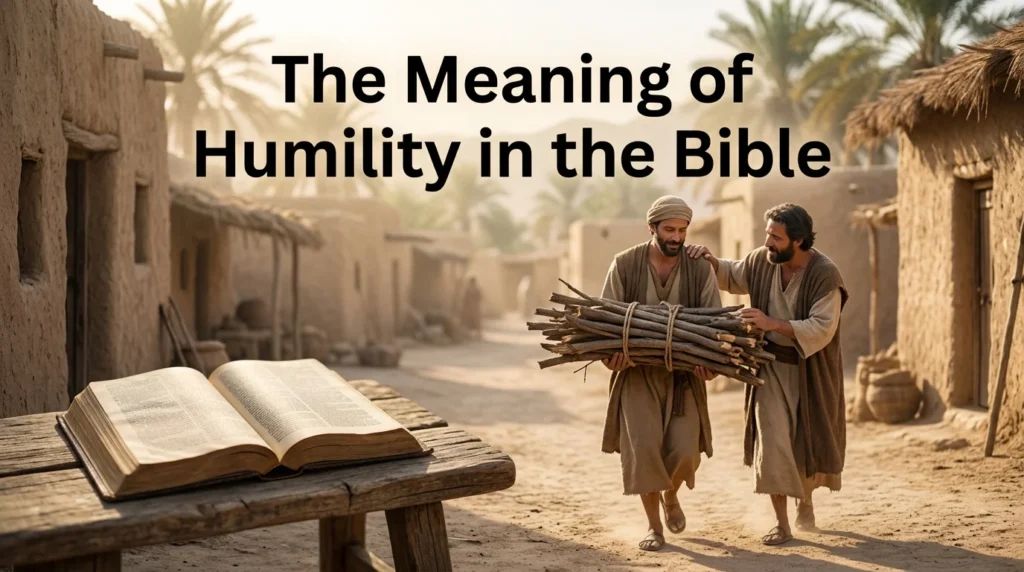
Look for opportunities to serve that bring no applausecleaning up after an event, writing an encouraging note anonymously, listening without needing to fix or be heard. Jesus washed feet; we can do the modern equivalent.
4. Celebrate Others’ Successes
When someone else is praised or promoted, deliberately rejoice. Refuse the comparison trap. Humility delights in the gifts God has given to others.
5. Submit to Authority and Accept Correction
Whether in the workplace, church, or family, practice respectful submission where appropriate. When corrected, resist defensiveness. Say “thank you” and consider the feedback prayerfully.
6. Remember the Gospel Daily
The gospel is the greatest fuel for humility. We are more sinful than we ever dared believe, yet more loved and accepted in Christ than we ever dared hope. This dual truth produces both brokenness and securitythe perfect soil for humility.
7. Pray for a Humble Heart
Ask God specifically for humility. Recognize that even the desire for humility is a gift of grace. Pray the words of Psalm 131 or the tax collector’s simple plea: “God, be merciful to me, a sinner.”
Common Misunderstandings About Humility
Several misconceptions can distort the meaning of humility in the Bible:
- Humility is not self-hatred or low self-esteem. Biblical humility includes recognizing that we are fearfully and wonderfully made (Psalm 139:14) and that our identity is secure in Christ.
- Humility is not passivity or weakness. Moses confronted Pharaoh. Jesus drove out the money changers. True humility has backbone because its strength is rooted in God, not self.
- Humility is not false modesty. Downplaying genuine gifts or refusing to use them is not humility; it can be another form of self-focus. Stewarding gifts for God’s glory is humble.
- Humility is not a one-time decision. It is a lifelong posture that must be renewed daily.
Real-Life Applications of Biblical Humility
Imagine a workplace where a manager regularly credits the team, admits mistakes, and prioritizes the growth of others. Or a marriage where each spouse seeks to understand before being understood. Or a church where leaders wash the feet of the congregationmetaphorically or literallyrather than demanding status. These are not idealistic fantasies; they are the natural fruit of hearts shaped by the meaning of humility in the Bible.
Consider historical figures shaped by this truth. William Wilberforce’s long fight against the slave trade was fueled by a deep sense of dependence on God. Modern missionaries who leave comfort for obscure places embody the downward path of Christ. Everyday believers who forgive when wronged, apologize first, or choose silence over self-defense quietly advance the kingdom.
FAQ: Common Questions About the Meaning of Humility in the Bible
1. What is the simplest definition of humility according to the Bible?
Biblical humility is lowliness of minda heart that sees God as supreme, acknowledges personal need, and values others above self.
2. Is humility the same as meekness?
They are closely related. Meekness often emphasizes strength under control, while humility focuses on the lowly estimate of self before God. Both appear together in Scripture as marks of godliness.
3. How did Jesus demonstrate the meaning of humility in the Bible?
Jesus emptied Himself of divine privileges, took the form of a servant, washed feet, associated with the lowly, and submitted to death on a crossall while remaining fully God.
4. Does the Bible promise rewards for humility?
Yes. God gives grace to the humble, guides them, and ultimately exalts them in His timing and way. Earthly honor is not guaranteed, but eternal reward is.
5. Can a person be too humble?
True biblical humility cannot be excessive because it is simply living in realityseeing God, self, and others accurately. False humility or self-deprecation can become pride in disguise.
6. How is pride the opposite of the meaning of humility in the Bible?
Pride elevates self, resists God, and seeks independence. Humility lowers self, submits to God, and embraces dependence. God opposes one and gives grace to the other.
7. How can I know if I am growing in humility?
Look for increasing teachability, quicker confession of sin, greater joy in others’ success, less need for recognition, and deeper awareness of God’s grace in daily life.
Conclusion:
The meaning of humility in the Bible is not a soft virtue for the timid. It is the pathway of the strongthe strength that comes from resting in God’s sufficiency rather than our own. From Moses to Mary, from David to Paul, and supremely in Jesus Christ, Scripture shows that the lowly are the ones God draws near to, guides, and ultimately lifts up.
In a world that constantly pushes us to promote ourselves, the call to humility is a gracious invitation. It frees us from the exhausting cycle of comparison and performance. It opens the door to deeper intimacy with God and richer relationships with people. Aligns us with the very heart of the gospelthe God who humbled Himself so that we might be raised with Him.

James Parker is a Bible writer at GrasePath.com who loves exploring the deeper meaning of Scripture. He shares clear, trustworthy insights about biblical names, symbols, dreams, and spiritual teachings in simple language. His mission is to help readers strengthen their faith and better understand God’s Word every day.