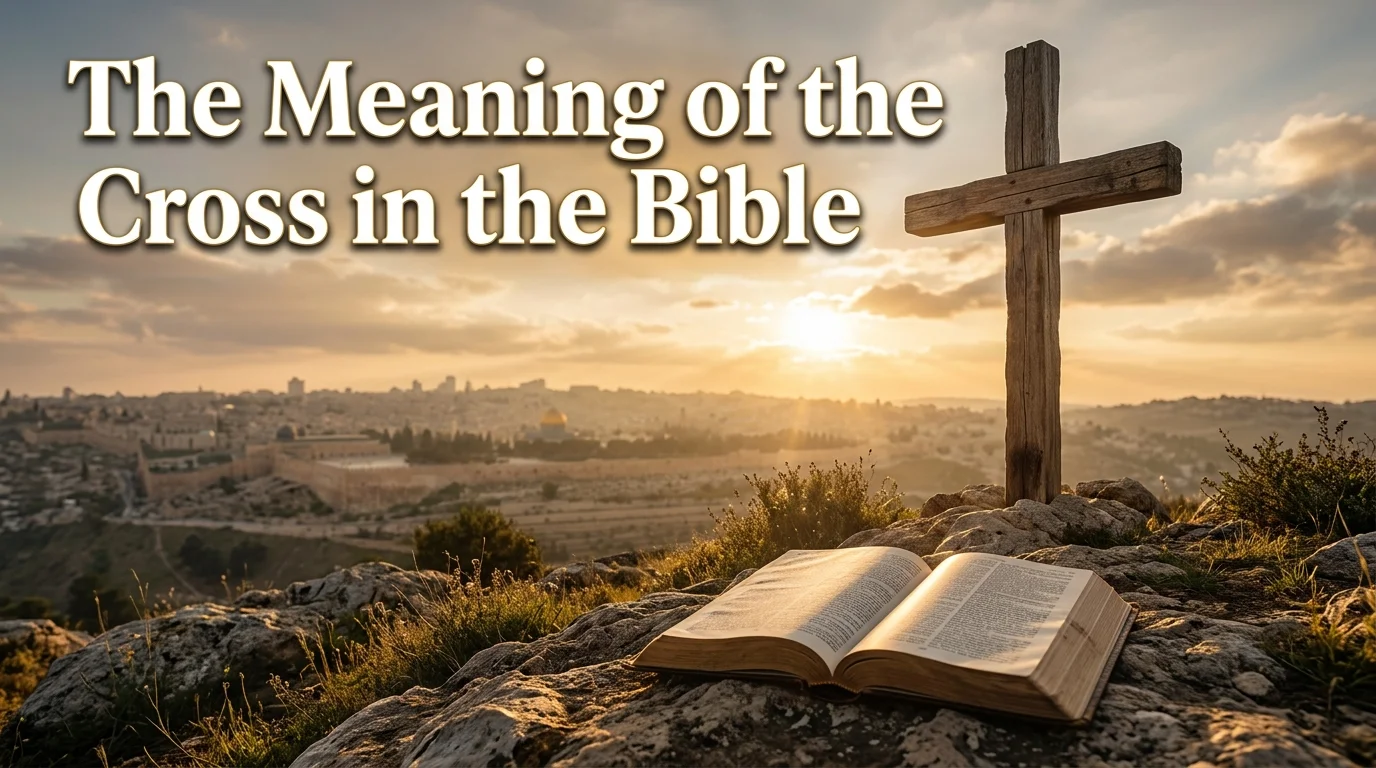
Have you ever stopped to wonder why a simple wooden beam turned into the most recognized symbol on the planet? You’ll find it on church steeples, tattooed on skin, hanging from necklaces, and painted on ambulances. But what is the actual meaning of the cross in the Bible, and why does it carry so much weight for millions of people, even today?
If you’ve ever asked yourself what the cross really represents beyond the jewelry and the artwork, you’re in the right place. This isn’t going to be a dry theology lecture. Instead, we’re going to walk through the history, the symbolism, the emotional weight, and the everyday relevance of the cross the way you’d explain it to a curious friend over coffee.
By the end of this article, you’ll understand exactly why the cross moved from being a brutal execution device in the Roman Empire to becoming the central symbol of hope, love, and redemption for billions of people worldwide.
A Quick Overview: What Does the Cross Actually Represent?
At its core, the meaning of the cross in the Bible centers on one event: the death of Jesus Christ. According to the New Testament, Jesus was crucified on a wooden cross outside Jerusalem, and Christians believe this act paid the price for humanity’s sin, opening the door for reconciliation with God.
But that’s just the surface-level answer. The cross carries several layers of meaning:
- A symbol of sacrifice Jesus giving His life willingly for others
- A symbol of victory overcoming sin and death through resurrection
- A symbol of love the depth of God’s love expressed through suffering
- A symbol of forgiveness a new start for anyone who believes
- A symbol of hope the promise of eternal life beyond physical death
Understanding these layers helps explain why the cross isn’t just a historical artifact it’s a living symbol that still shapes worship, art, culture, and personal faith today.
The Historical Background: What Was Crucifixion, Really?
To understand the biblical meaning of the cross, it helps to know what crucifixion actually was in the ancient world. This wasn’t a peaceful or dignified death. It was one of the most brutal execution methods the Roman Empire used, reserved mostly for slaves, rebels, and the worst criminals.
Victims were nailed or tied to a wooden structure and left to die slowly, often over hours or even days, from exhaustion, blood loss, and asphyxiation. It was designed to be public, humiliating, and terrifying a warning to anyone who dared defy Roman authority.
This is important context because it shows just how shocking it was for early Christians to embrace the cross as a symbol of hope. Imagine adopting an electric chair or a hangman’s noose as your logo of victory. That’s roughly the emotional equivalent of what happened when the cross became central to Christian identity.
Why This Matters for Understanding the Bible’s Message
When you read the Gospels Matthew, Mark, Luke, and John the crucifixion isn’t glossed over. It’s described with painful detail. This wasn’t a metaphorical death. It was real, physical suffering. And that reality is exactly what gives weight to the biblical claim that Jesus took on suffering willingly, out of love, rather than being forced into it by circumstance alone.
The Cross as a Symbol of Sacrifice
One of the clearest layers of the meaning of the cross in the Bible is sacrifice. In the Old Testament, sacrifice was a regular part of worship. People brought animals to the temple as offerings for sin, a practice meant to symbolize the seriousness of wrongdoing and the need for atonement.
The New Testament presents Jesus’ death on the cross as the ultimate sacrifice the one that completes and fulfills all the earlier ones. Instead of an animal offering, it’s described as a willing, human sacrifice made once for all people.
Consider this famous line often referenced in sermons and Bible studies: the idea that “greater love has no one than this, that someone lay down his life for his friends.” That single sentence captures the sacrificial meaning behind the cross it’s not just about pain, it’s about the reason behind the pain: love expressed through giving something of immense value.
Everyday Application
You don’t have to be a theologian to relate to sacrifice. Think about:
- A parent skipping meals so their kids can eat
- A soldier stepping in front of danger for a teammate
- A friend giving up their weekend to help you move
These small acts of sacrifice echo, in a much smaller way, the biblical idea that real love often costs something. The cross takes that idea to its most extreme and meaningful expression.
The Cross as a Symbol of Victory Over Death
Here’s where the story takes a dramatic turn. If the cross only represented suffering and death, it probably wouldn’t have become a symbol of hope. What changes everything, according to the Bible, is the resurrection.
Three days after the crucifixion, the Gospels report that Jesus rose from the dead. This event transforms the cross from a symbol of defeat into a symbol of triumph. Death didn’t get the final word.
This is why you’ll often hear Christians describe the cross and resurrection together, almost as a single package. The cross without the resurrection would just be a tragedy. But paired together, they tell a story of victory the idea that suffering isn’t the end of the story, and that new life can emerge from the darkest circumstances.
Why This Resonates with People Today
This part of the meaning of the cross speaks to something deeply human: the hope that pain isn’t permanent. Whether someone is going through grief, illness, failure, or heartbreak, the resurrection message offers a framework for hope that endings can become beginnings.
The Cross as a Symbol of Forgiveness and a Fresh Start
Another major thread woven through the biblical meaning of the cross is forgiveness. In Christian teaching, humanity’s separation from God is described as being caused by sin, and the cross is presented as the bridge that repairs that broken relationship.
Think of it like an enormous debt. The Bible often uses financial and legal language to describe sin a debt owed, a record of wrongdoing. The crucifixion is described as canceling that debt, not because the wrongdoing didn’t matter, but because someone else chose to pay the price on behalf of others.
This is a big reason why churches display crosses so prominently. It’s a visual reminder: no matter what someone has done, forgiveness is available. It’s not about earning your way back into good standing it’s presented as a gift, freely given.
Real-Life Parallel
Imagine owing someone a debt so large you could never repay it in a lifetime. Now imagine that person tearing up the bill and saying, “It’s settled. You’re free.” That emotional relief that sense of a clean slate is at the heart of what the cross represents in Christian theology.
The Cross as a Symbol of God’s Love
If you ask most Christians to summarize the meaning of the cross in one word, many would say love. The reasoning goes like this: if Jesus willingly endured suffering for the benefit of others, that act becomes the clearest demonstration of love described in the entire Bible.
This idea shows up again and again in New Testament letters, where writers describe God’s love being proven, not just claimed, through the willingness to suffer for others even those who were considered enemies or wrongdoers.
This flips a common assumption. Many people think you have to “clean up” before you’re worthy of love. The message of the cross suggests the opposite that love was extended first, while people were still far from perfect.
Different Types of Crosses and Their Symbolic Meanings
Over centuries, various cross designs have developed, each carrying slightly different symbolism within Christian tradition. Here are some of the most recognized:
- Latin Cross The most common design, with a longer vertical beam and shorter horizontal beam; represents the traditional crucifixion image.
- Celtic Cross Combines a traditional cross with a circle, often symbolizing eternity and the blending of faith with Celtic heritage.
- Greek Cross Features four equal arms, commonly used in Eastern Orthodox traditions.
- Jerusalem Cross A large central cross surrounded by four smaller ones, historically linked to the Crusades and representing the spread of the Gospel to the four corners of the earth.
- Empty Cross A cross without a figure on it, emphasizing the resurrection rather than the crucifixion itself.
- Crucifix A cross that includes an image of Jesus on it, more commonly seen in Catholic and Orthodox traditions, emphasizing the sacrifice.
Each variation tells the same core story from a slightly different angle, whether that’s emphasizing suffering, victory, eternity, or mission.
The Cross in Daily Christian Life
Beyond theology, the cross plays a very practical role in how many believers approach daily life. Here’s how it shows up:
1. As a Reminder During Hard Times
Many people wear a cross necklace or keep a cross in their home as a physical reminder that hardship isn’t the final chapter of their story.
2. As a Call to Selflessness
Jesus is quoted in the Gospels telling his followers to “take up their cross” and follow him language that’s often interpreted as a call to selflessness, humility, and putting others before yourself.
3. As a Symbol of Identity
For many Christians, the cross isn’t just a religious emblem it’s a personal identity marker, similar to how a wedding ring signals commitment. It represents a decision to follow a particular set of values centered on grace, forgiveness, and love.
4. As a Source of Comfort in Grief
At funerals, hospitals, and moments of loss, the cross frequently appears as a symbol of comfort, representing the belief that death isn’t the end of the story.
Common Misunderstandings About the Meaning of the Cross
Let’s clear up a few misconceptions that often come up:
- Misconception 1: The cross is just about punishment. While punishment is part of the historical picture, the biblical framing emphasizes willing sacrifice and love over punishment alone.
- Misconception 2: The cross is only a Catholic or Orthodox symbol. In reality, the cross is central across nearly all Christian denominations, though the specific imagery (crucifix vs. empty cross) may vary.
- Misconception 3: The cross represents defeat. Many people miss that the story doesn’t end at the cross the resurrection reframes it as a symbol of ultimate victory.
- Misconception 4: Wearing a cross is purely decorative. For many believers, it’s a deeply personal statement of faith, not just a fashion accessory.
Why the Meaning of the Cross Still Matters Today
You might wonder why an event from roughly two thousand years ago still holds such cultural and spiritual weight. A few reasons stand out:
- It addresses universal human experiences suffering, guilt, hope, and the desire for a fresh start.
- It offers a framework for understanding pain that doesn’t ignore suffering but reframes it with purpose.
- It provides a simple, visual reminder of complex ideas like grace and forgiveness.
- It connects generations of believers across cultures, languages, and centuries through one shared symbol.
Whether someone encounters the cross in a cathedral, a small chapel, a piece of jewelry, or a tattoo, the symbol continues to invite reflection on themes that never really go out of style: love, sacrifice, hope, and renewal.
Frequently Asked Questions About the Meaning of the Cross in the Bible
1. What is the main meaning of the cross in the Bible?
The main meaning centers on Jesus’ sacrificial death and resurrection, symbolizing love, forgiveness, and victory over sin and death.
2. Why was the cross used as a method of execution in biblical times?
Crucifixion was a common Roman execution method used to punish criminals and rebels publicly, meant to serve as a harsh warning to others.
3. What does the empty cross symbolize?
An empty cross emphasizes the resurrection, highlighting that Jesus did not remain dead, shifting the focus from suffering to victory.
4. Why do Christians wear cross necklaces or jewelry?
Many wear the cross as a personal reminder of their faith, representing love, sacrifice, and hope, similar to a meaningful keepsake.
5. What does it mean to “take up your cross” in the Bible?
This phrase, spoken by Jesus, is often interpreted as a call to selflessness, humility, and prioritizing faith and others over personal comfort.
6. Is the cross only significant in Christianity?
While the cross carries the most religious significance within Christianity, it has also become a broadly recognized cultural symbol associated with compassion, hope, and even medical aid.
7. What’s the difference between a cross and a crucifix?
A cross is typically a simple design without a figure, while a crucifix includes an image of Jesus on it, often emphasizing the sacrificial aspect more directly.
Final Thoughts:
At the end of the day, the meaning of the cross in the Bible goes far beyond a historical execution device. It tells a story of sacrifice, love, forgiveness, and ultimately, victory over death. What started as one of the most feared symbols in the ancient world transformed into a global emblem of hope.
You’re exploring this topic out of curiosity, personal faith, or academic interest, understanding the layered meaning behind the cross offers insight into why it continues to resonate so deeply, centuries after it first appeared on a hillside outside Jerusalem.

Hi, I’m Daniel Foster, a writer at GrasePath.com. I enjoy exploring the deeper meanings of biblical words, names, symbols, and verses to help readers better understand Scripture. My goal is to present accurate, easy-to-read, and well-researched content that makes the Bible more accessible for everyone. Through every article, I strive to provide clear explanations, meaningful insights, and trustworthy information to support your faith and Bible study journey.