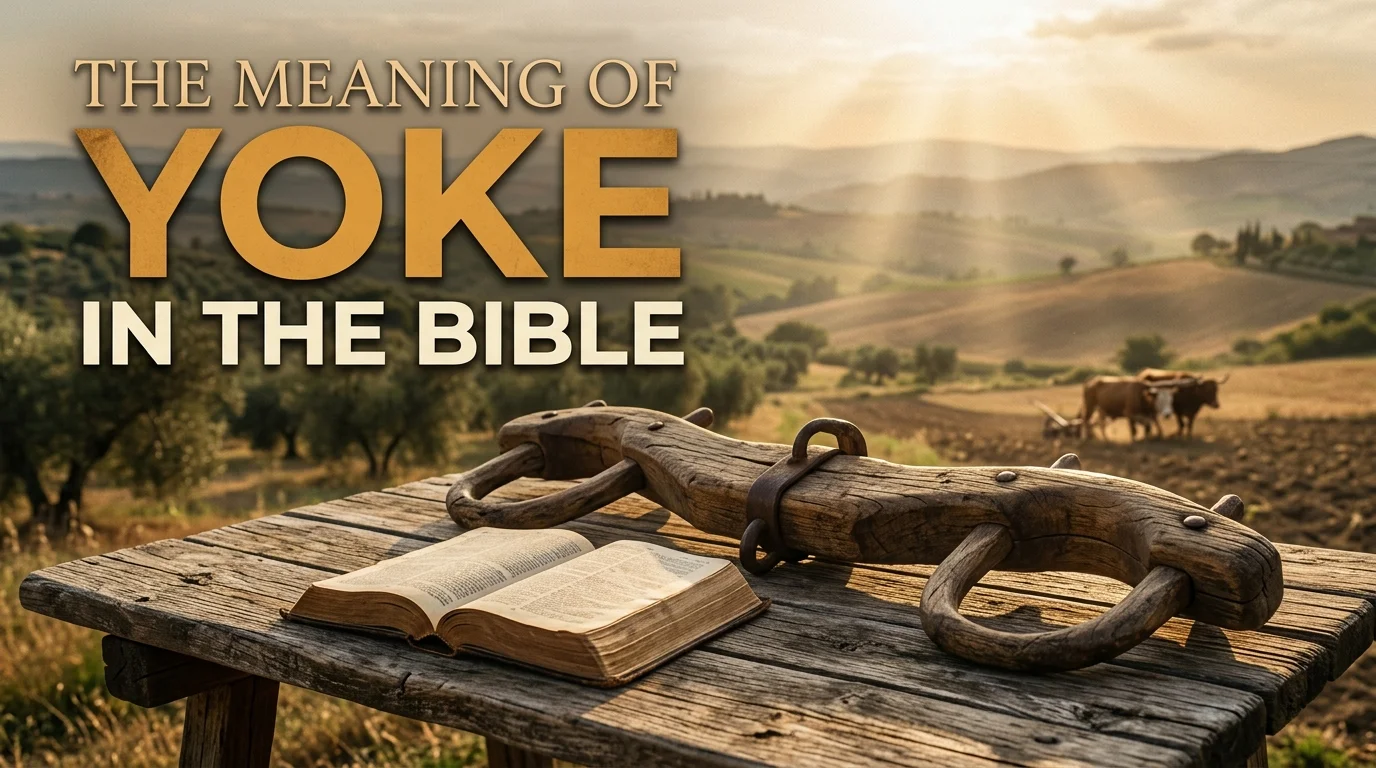
Have you ever stumbled across the word “yoke” while reading Scripture and paused to wonder what it actually means? You’re not alone. The meaning of yoke in the Bible is one of those topics that seems simple on the surface but opens up into a rich well of spiritual truth once you dig a little deeper.
From Jesus’ famous invitation in Matthew 11:29-30 to Paul’s warnings about being “unequally yoked,” this small wooden farming tool carries enormous theological weight throughout Scripture.
In this article, we’re going to unpack everything you need to know about the meaning of yoke in the Bible where the imagery comes from, how it’s used across both the Old and New Testaments, and what it means for your everyday walk of faith.
What Is a Yoke? Understanding the Literal Meaning First
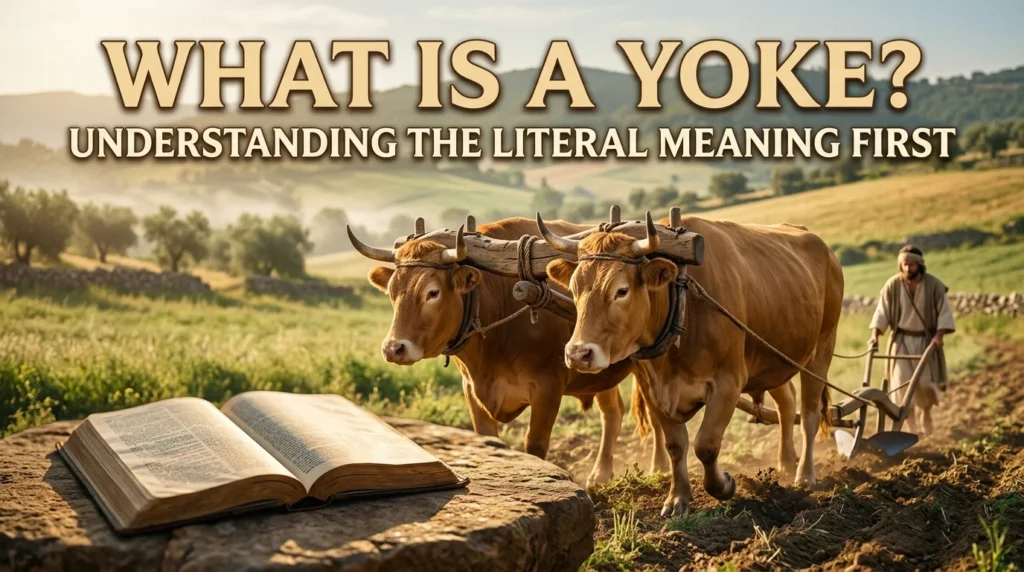
Before we can grasp the spiritual meaning of yoke in the Bible, it helps to understand what a yoke actually was in ancient times.
A yoke was a wooden farming implement usually crafted from timber placed across the necks or shoulders of two animals (most commonly oxen) so they could pull a plow, cart, or other heavy load together. The yoke connected the animals side by side, forcing them to move in sync. If one animal pulled harder or moved out of step, the yoke would chafe, and the work would become far more difficult for both.
Here’s what made the yoke such a powerful piece of equipment:
- It distributed weight evenly between two animals, making heavy labor manageable.
- It required cooperation. Two oxen under one yoke had to move together, or the load would become unbalanced.
- It was custom-fitted. A skilled craftsman (often a carpenter, like Jesus himself) would shape a yoke specifically for the animal wearing it, smoothing rough edges so it wouldn’t cause injury.
- It symbolized submission and labor. Being “under a yoke” meant being bound to work, service, or authority.
This everyday agricultural tool became one of the most vivid metaphors in biblical literature a symbol that ancient audiences would have understood instantly, the same way we might understand phrases like “carrying a heavy load” today.
The Meaning of Yoke in the Bible: Old Testament Usage
The Old Testament uses the imagery of the yoke primarily to describe bondage, servitude, and oppression. This context matters a lot, because it sets up a dramatic contrast with how Jesus later redefines the term in the New Testament.
1. Yoke as a Symbol of Slavery and Oppression
Throughout the Hebrew Scriptures, being placed under a yoke often represented harsh subjugation whether that was slavery, foreign domination, or the weight of unbearable labor.
For example, when the Israelites were enslaved in Egypt, their suffering is described in terms that evoke the crushing weight of a yoke. Later, after Solomon’s reign, his son Rehoboam made the fatal political mistake of promising to make his father’s already heavy “yoke” on the people even heavier a decision that led to the kingdom splitting in two (1 Kings 12:1-19).
2. Yoke as a Picture of National Bondage
Prophets like Isaiah and Jeremiah used yoke imagery to describe Israel’s political and spiritual bondage to foreign powers such as Assyria and Babylon. Breaking a yoke symbolized liberation and restoration, while being placed under a yoke symbolized judgment or captivity.
Isaiah, for instance, prophesied a coming day when God’s people would be set free, describing it as the yoke of the burden being lifted and the rod of the oppressor being broken (Isaiah 9:4).
3. Yoke as a Metaphor for Covenant Obligation
Interestingly, the Old Testament also uses yoke language in a more neutral or even positive sense as a symbol of the disciplined, obedient relationship God’s people were meant to have with Him. Being “yoked” to God’s law wasn’t always framed as pure hardship; sometimes it represented order, structure, and identity as His covenant people, even if it carried real weight and responsibility.
Key Old Testament Themes Around the Yoke
- Bondage and slavery (Egypt, exile)
- Political oppression by foreign nations
- Divine judgment (“I will put a yoke of iron on your neck”)
- Liberation and the breaking of yokes as a sign of God’s deliverance
Understanding this backdrop is essential, because it makes Jesus’ words in the New Testament so radically countercultural.
The Meaning of Yoke in the Bible: New Testament Usage
If the Old Testament frames the yoke mostly as a burden, the New Testament flips the imagery on its head especially through the words of Jesus.
Matthew 11:28-30 “Take My Yoke Upon You”
This is easily the most quoted and beloved yoke passage in all of Scripture. Jesus says:
“Come to me, all you who are weary and burdened, and I will give you rest. Take my yoke upon you and learn from me, for I am gentle and humble in heart, and you will find rest for your souls. For my yoke is easy and my burden is light.”
This passage completely reshapes what a yoke represents. Instead of oppression, Jesus offers His yoke as an invitation to rest. Here’s why this imagery is so powerful:
- Jesus was a carpenter. He would have literally built and fitted yokes with his own hands, smoothing rough wood so it wouldn’t chafe an animal’s neck. When he says his yoke is “easy,” the original Greek word (chrestos) can also mean “well-fitting” like a yoke custom-shaped for you.
- A yoke connects two. In ancient farming, a younger or weaker ox was often paired under the same yoke with a stronger, more experienced one. The stronger animal carried more of the load and guided the pace. Symbolically, this pictures believers being yoked together with Christ not carrying life’s burdens alone, but walking step-by-step with Him doing the heavy lifting.
- Rest, not slavery. Unlike the crushing yokes of Pharaoh or foreign empires, Christ’s yoke leads to soul-rest, not soul-destruction.
This single passage transforms the meaning of yoke in the Bible from a symbol of hardship into a symbol of intimate partnership with God.
2 Corinthians 6:14 “Do Not Be Unequally Yoked”
Paul uses yoke imagery again, but in a different context:
“Do not be yoked together with unbelievers. For what do righteousness and wickedness have in common? Or what fellowship can light have with darkness?”
Here, the metaphor returns to its agricultural roots. Farmers never paired two mismatched animals under one yoke say, an ox and a donkey because their differing strength, stride, and temperament would make the work miserable and inefficient for both. This law actually appears explicitly in Deuteronomy 22:10, which forbids plowing with an ox and a donkey together.
Paul applies this principle relationally and spiritually, warning believers against entering into deeply binding partnerships (commonly understood to include marriage, close business partnerships, and intimate spiritual alliances) with people who don’t share their core faith and values. The two would be pulling in different spiritual directions, leading to friction, imbalance, and struggle.
Galatians 5:1 “A Yoke of Slavery”
Paul also warns believers not to let themselves be burdened again by a “yoke of slavery” referring specifically to legalism, or trying to earn righteousness through rigid rule-keeping rather than resting in grace. This echoes the Old Testament negative sense of the yoke as bondage, but applies it to spiritual legalism rather than physical slavery.
Acts 15:10 The Yoke of the Law
During the early church’s debate over whether Gentile believers needed to follow Jewish law, Peter refers to the law as a “yoke” that neither their ancestors nor they themselves had been able to bear reinforcing the theme that human effort alone, apart from grace, is a crushing burden.
Comparing Old and New Testament Meanings of Yoke
It helps to see the contrast side by side:
| Aspect | Old Testament Yoke | New Testament Yoke |
| Primary meaning | Bondage, oppression, hard labor | Partnership, rest, discipleship |
| Emotional tone | Heavy, burdensome | Light, gentle |
| Who bears it | Slaves, conquered nations | Believers walking with Christ |
| Goal | Endure or escape it | Embrace and find rest in it |
| Best-known reference | Isaiah 9:4, 1 Kings 12 | Matthew 11:28-30 |
This contrast is really the heart of understanding the full meaning of yoke in the Bible. It’s not a single, static symbol it evolves depending on who is doing the yoking and why.
Symbolic and Spiritual Applications of the Yoke Today
So what does all this mean for you, practically speaking? Here are some ways believers throughout history have applied yoke imagery to everyday faith and life.
1. Partnership With Christ in Daily Struggles
Taking Christ’s yoke means recognizing that you’re not meant to carry life’s burdens anxiety, grief, work stress, relational pain entirely on your own strength. The imagery invites a posture of dependence rather than self-reliance.
2. Choosing Relationships Wisely
The “unequally yoked” principle from 2 Corinthians is often applied to:
- Marriage and dating relationships
- Close business partnerships
- Deep friendships that shape your values and direction
The point isn’t isolation from people who think differently, but caution about entering binding, life-directing relationships that would pull you away from your convictions.
3. Freedom From Legalism
Galatians’ “yoke of slavery” reminds believers that faith isn’t about earning approval through perfect performance. It’s an invitation to rest in grace rather than exhaust yourself trying to be good enough.
4. Learning Through Companionship
Just as a younger ox learned pace and direction by being yoked next to an experienced one, spiritual growth often happens through mentorship, community, and walking alongside someone more mature in faith ultimately, walking alongside Christ himself.
Real-Life Illustration: The Ox Under the Yoke
Picture a young, untrained ox being yoked for the very first time next to a seasoned, calm, experienced ox. The young one might strain, pull in the wrong direction, or panic under the unfamiliar weight. But because it’s bound to the stronger, wiser animal, it gradually learns the rhythm of the work. Over time, its steps synchronize, its anxiety fades, and the labor that once felt terrifying becomes manageable even easy.
This is essentially the picture Jesus paints when he invites the weary to take his yoke. You’re not asked to pull the load alone or perfectly. You’re invited to walk in step with someone stronger, wiser, and infinitely gentler than yourself.
Quick Facts About Biblical Yoke Symbolism
- The Hebrew word most often translated “yoke” is ol (עֹל), while the Greek term is zygos (ζυγός).
- Yokes were typically made from wood, often oak or other hardwoods durable enough for repeated agricultural use.
- Prophets sometimes performed symbolic acts involving physical yokes (see Jeremiah 27-28) to dramatize messages about political submission to Babylon.
- The image of “breaking a yoke” consistently symbolizes liberation throughout Scripture.
- Rabbinic Jewish tradition also used “yoke” language such as “the yoke of the Torah” to describe devoted obedience to God’s commands, a background Jesus’ original audience would have recognized.
Why This Topic Still Matters Today
Understanding the meaning of yoke in the Bible isn’t just an academic exercise it speaks directly to real struggles many people carry: burnout, the pressure to perform, unhealthy relationships, and the exhausting pursuit of “enough.” The biblical yoke, especially as reframed by Jesus, offers a countercultural message in a world obsessed with self-sufficiency: you were never meant to carry everything alone.
Whether you’re facing a season of exhaustion, weighing an important relationship, or simply wanting to deepen your understanding of Scripture, the imagery of the yoke offers timeless wisdom about partnership, rest, and freedom.
Frequently Asked Questions About the Meaning of Yoke in the Bible
1. What does it mean to take Jesus’ yoke?
Taking Jesus’ yoke means choosing to walk in close partnership with him, relying on his strength rather than your own, and trusting his guidance for daily life. It’s an invitation to rest, not an additional burden.
2. What is the meaning of yoke in the Bible according to the Old Testament?
In the Old Testament, a yoke usually symbolizes bondage, hard labor, or political oppression such as Israel’s slavery in Egypt or subjugation under foreign empires like Assyria and Babylon.
3. What does “unequally yoked” mean in the Bible?
Found in 2 Corinthians 6:14, this phrase warns believers against entering deeply binding relationships or partnerships with people who don’t share their core faith, since mismatched values create friction and imbalance.
4. Why does Jesus say his yoke is easy?
Jesus describes his yoke as “easy” because, as a carpenter, he would have crafted well-fitted yokes that didn’t chafe. Spiritually, this suggests his guidance and grace fit gently rather than crushing those who follow him.
5. Is the yoke always a negative symbol in the Bible?
No. While the Old Testament often uses yoke imagery negatively (slavery, oppression), the New Testament especially through Jesus’ words reframes the yoke as something positive: partnership, rest, and gentle guidance.
6. What does “breaking the yoke” mean in Scripture?
Breaking a yoke symbolizes liberation from bondage, oppression, or hardship. Prophets like Isaiah used this image to describe God’s promised deliverance for his people.
7. How can I apply the meaning of yoke in the Bible to my life today?
You can apply it by choosing to rely on God rather than carrying burdens alone, being intentional about who you form close partnerships with, and resting in grace instead of striving through legalism or self-effort.
Final Thoughts:
At its core, the meaning of yoke in the Bible tells a story of transformation from an image of crushing bondage in the Old Testament to a symbol of gentle partnership and rest offered by Christ in the New Testament. Whether it’s the weight of slavery under Pharaoh, the wisdom of avoiding mismatched partnerships, or Jesus’ tender invitation to walk beside him, the yoke consistently points toward one truth: we were never designed to carry life’s heaviest loads entirely on our own.
So the next time you read the word “yoke” in Scripture, remember it’s not just an old farming tool. It’s a doorway into some of the richest, most comforting truths the Bible has to offer

Hi, I’m Daniel Foster, a writer at GrasePath.com. I enjoy exploring the deeper meanings of biblical words, names, symbols, and verses to help readers better understand Scripture. My goal is to present accurate, easy-to-read, and well-researched content that makes the Bible more accessible for everyone. Through every article, I strive to provide clear explanations, meaningful insights, and trustworthy information to support your faith and Bible study journey.