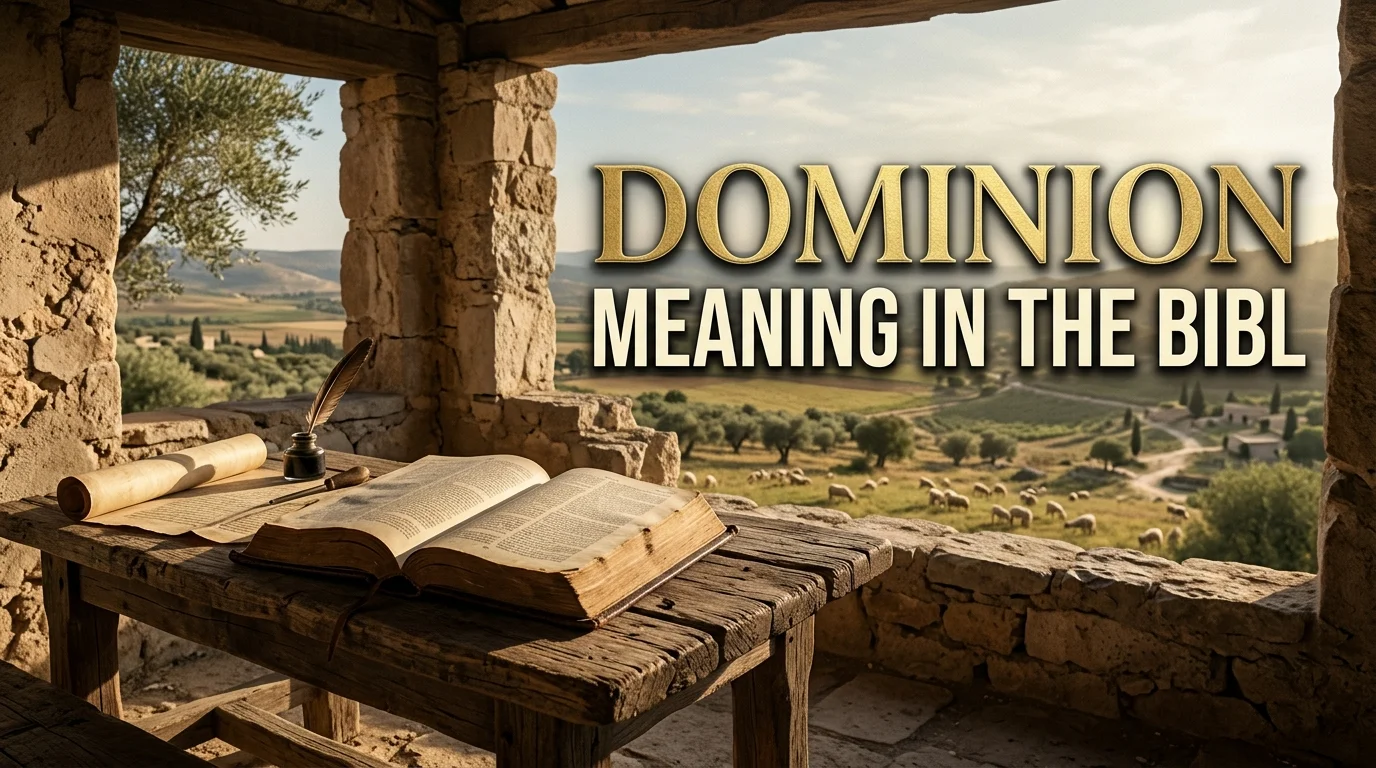
When people search for the dominion meaning in the Bible, they often land on Genesis 1 and wonder what God really intended when He told humanity to “have dominion” over the earth. That single word carries weight. It shapes how we see our role in creation, our relationship with animals, our responsibility toward the planet, and even how we understand authority itself.
Far from being a license for exploitation, the biblical idea of dominion is rooted in care, responsibility, and reflection of God’s own character.
This post walks through the full pictureHebrew and Greek roots, key verses, common misunderstandings, and practical takeawaysso you can grasp what Scripture actually teaches.
What Does Dominion Mean in the Bible?
At its simplest, dominion means rule, authority, or sovereign control. In everyday English it can sound heavy-handed, almost like domination. Yet in the Bible the concept is more nuanced. It describes both God’s absolute rule over everything and the limited, delegated authority He gives to human beings.
The Hebrew word most often translated “dominion” in the Old Testament is radah. It carries the sense of ruling, treading down, or exercising mastery. Another related term is mashal, which means to rule or have power over. In the New Testament the Greek words include kuriotes (lordship or dominion) and kratos (strength or manifested power). These terms appear in different contexts: God’s everlasting rule, humanity’s role in creation, angelic ranks, freedom from sin’s control, and the future reign of Christ.
Context always matters. When the Bible speaks of oppressive human rule, it condemns it. When it speaks of God’s dominion, it celebrates it as just, eternal, and good. It speaks of the dominion given to people. It ties that gift directly to being made in God’s image.
The Foundational Passage: Dominion Meaning in the Bible from Genesis 1
The most famous reference appears in the creation account. Genesis 1:26–28 records God saying:
“Let us make beings in our image, in our likeness, so that they may rule over the fish in the sea and the birds in the sky, over the livestock and all the wild animals, and over all the creatures that move along the ground.” Then God blessed them and said, “Be fruitful and increase in number; fill the earth and subdue it. Rule over the fish in the sea and the birds in the sky and over every living creature that moves on the ground.”
Here the dominion meaning in the Bible is tied to two linked ideas: being made in God’s. Image and receiving a mandate to rule and subdue. The image of God is not primarily about physical appearance. It includes the capacity to reason, create, relate, and exercise responsible authority the way God does.
Notice the sequence. God first declares the intention to give dominion, then creates male and female in His image, then issues the blessing and command. Dominion is not an afterthought; it is part of what it means to bear God’s likeness.
The word “subdue” (kabash) can sound aggressive. In other places it describes military conquest. In Genesis 1, however, the surrounding context softens the tone. God has just called the entire creation “very good.” He places the first humans in a garden and later tells Adam to “work it and take care of it” (Genesis 2:15). The Hebrew verbs there mean to serve and to guard. So the dominion mandate sits alongside a call to careful stewardship.
Psalm 8 echoes the same theme. The psalmist marvels that God has given human beings dominion over the works of His hands and put everything under their feetsheep, oxen, beasts, birds, and fish. Yet the psalm begins and ends with praise for God’s majesty. Human authority never stands alone; it always operates under God’s higher rule.
God’s Own Dominion Throughout Scripture
Before we talk about human responsibility, it helps to see the bigger picture. Ultimate dominion belongs to God alone.
Daniel 4:34–35 records King Nebuchadnezzar’s confession after a humbling experience: “His dominion is an eternal dominion; his kingdom endures from generation to generation… He does as he pleases with the powers of heaven and the peoples of the earth.” Psalm 145:13 declares, “Your kingdom is an everlasting kingdom, and your dominion endures through all generations.” Job 25:2 simply states, “Dominion and awe belong to God.”
In the New Testament the same truth appears in doxologies. Jude 25 offers “glory, majesty, power and authority” to God. Revelation repeatedly ascribes dominion to the Lamb and to the One seated on the throne.
This absolute divine dominion sets the standard. Human dominion is always secondary, derived, and accountable. When people forget that, they slide into arrogance or abuse. When they remember it, they treat authority as a trust rather than a personal right.
Human Dominion as Stewardship, Not Domination
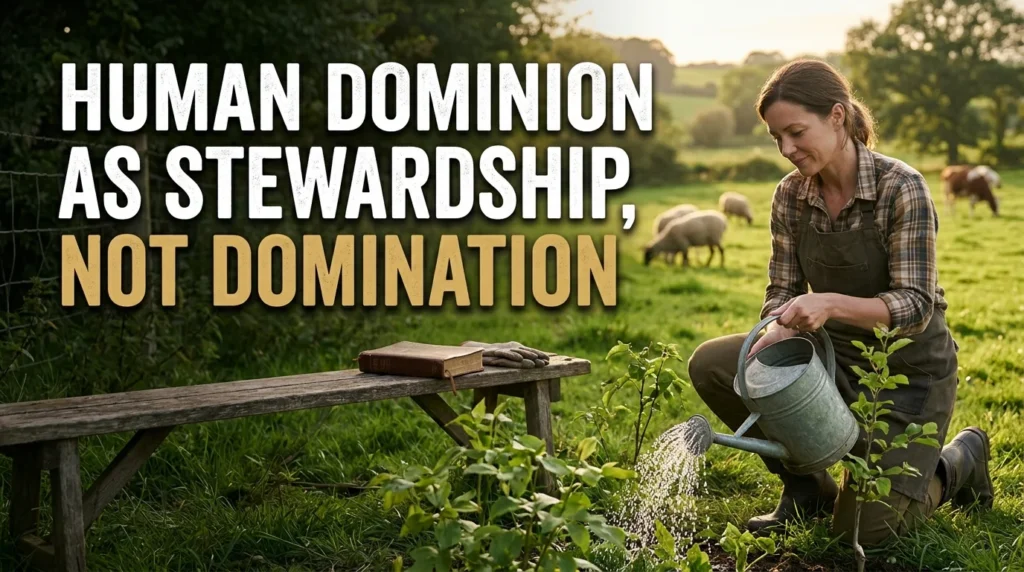
One of the biggest modern debates around the dominion meaning in the Bible centers on environmental ethics. Critics sometimes claim the Genesis mandate gave Western culture permission to exploit nature. A closer look at the text and the rest of Scripture points in a different direction.
Dominion was never meant to mean unchecked power. Several biblical patterns show the intended heart of the role:
- God Himself models gentle, sustaining rule. He feeds the birds, clothes the lilies, and cares for every living thing.
- Humans are told to name the animals (Genesis 2). An act of care and knowledge rather than conquest.
- After the flood, God places animals under human protection again, yet also institutes boundaries around blood and violence (Genesis 9).
- The law given to Israel includes rest for the land every seventh year and care for working animals (Exodus 23, Deuteronomy 25).
- Proverbs repeatedly praises kindness to animals as a mark of righteousness.
In other words, biblical dominion looks more like a shepherd’s responsibility than a tyrant’s fist. A good shepherd leads, protects, and provides. He does not crush the flock. Jesus later uses the same shepherd image for His own leadership and calls His followers to serve rather than lord it over others (Matthew 20:25–28).
When Christians today speak of the “dominion mandate,” the healthiest understanding keeps this stewardship focus front and center. We are managers of a world that still belongs to God. We will give account for how we treat soil, water, creatures, and fellow image-bearers.
Dominion in the New Testament: Sin, Christ, and Believers
The New Testament expands the idea in several directions.
First, it speaks of freedom from the dominion of sin. Romans 6:14 declares, “For sin shall no longer be your master, because you are not under the law, but under grace.” Before Christ, sin exercised real control. Through union with Jesus’ death and resurrection, that old dominion is broken. Believers now live under a new authoritygrace.
Second, it describes ranks of spiritual beings. Colossians 1:16 and Ephesians 1:21 list “thrones, powers, rulers, and authorities” or “dominions.” These appear to be orders of angels, some of them fallen. Christ is exalted far above them all. The point is not to speculate endlessly about angelic hierarchies but to remind readers that no spiritual power can ultimately rival Jesus.
Third, the New Testament looks forward to shared rule with Christ. Second Timothy 2:12 says, “If we endure, we will also reign with him.” Revelation promises that the overcomers will sit with Christ on His throne. The original Genesis calling finds its full restoration in the age to come.
Jesus Himself models perfect dominion. After the resurrection He announces, “All authority in heaven and on earth has been given to me” (Matthew 28:18). That authority is exercised through the Great Commissionmaking disciplesnot through political conquest. His kingdom advances by the Word, by the Spirit, and by self-giving love.
Common Misunderstandings About Biblical Dominion
Over the years, some groups have stretched the Genesis language into political or cultural programs sometimes labeled “dominion theology” or “dominionism.” These movements often claim Christians must take control of governmental and cultural institutions in order to enforce biblical law. While the desire to see society shaped by Christian values is understandable, the specific theological package usually goes beyond what Scripture teaches.
Genesis 1 speaks of dominion over animals and the earth, not over other people groups or political systems. Jesus repeatedly refused earthly kingship on the world’s terms. The early church grew under pagan governments without seeking to seize civil power. The New Testament emphasis falls on evangelism, discipleship, justice, and patient endurance rather than institutional takeover.
Healthy biblical thinking holds two truths together: believers are called to influence every sphere of life as salt and light, and the full establishment of God’s kingdom awaits Christ’s return. Confusing those two realities produces frustration and sometimes unhealthy zeal.
Practical Ways to Live Out the Dominion Meaning in the Bible Today
Understanding the concept is only half the story. How does it shape ordinary life?
- Care for creation. Simple choicesreducing waste, supporting sustainable practices, treating animals humanelyreflect the original mandate.
- Exercise authority with humility. Whether you lead a family, a team, a classroom, or a church, the pattern is service, not domination.
- Resist sin’s old claims. When temptation presses, remember Romans 6: you are no longer under its dominion.
- Use skills and resources for flourishing. Agriculture, science, art, technology, and business can all serve the common good when guided by a dominion-as-stewardship mindset.
- Teach the next generation. Children need to hear that they are image-bearers entrusted with responsibility, not owners who can do whatever they please.
- Rest in God’s ultimate rule. Anxiety shrinks when we remember that the whole earth remains under His everlasting dominion.
These practices keep the doctrine from remaining abstract. They turn ancient words into daily habits.
Key Bible Verses That Clarify Dominion
Here is a short list worth meditating on:
- Genesis 1:26–28 – the original grant
- Psalm 8:6 – humanity crowned with glory and honor
- Psalm 145:13 – God’s everlasting dominion
- Daniel 4:34 – Nebuchadnezzar’s confession
- Romans 6:9, 14 – freedom from death and sin
- Ephesians 1:21 – Christ above every dominion
- Colossians 1:16 – creation of all powers through and for Christ
- Jude 25 – ascription of dominion to God
- Revelation 1:6 – glory and dominion forever
Reading them together paints a coherent picture: God rules supremely, He shares limited rule with people made in His image, Christ restores what was broken, and the story ends with shared reign in a renewed creation.
Why the Dominion Meaning in the Bible Still Matters
In a culture that often swings between environmental panic and careless consumption, between authoritarian power grabs and radical individualism, the biblical vision offers a better way. It affirms human dignity without denying human limits. It calls for responsible action without promising utopia through politics. Roots authority in relationship with the Creator rather than in raw force.
When we recover the true dominion meaning in the Bible, we discover both privilege and responsibility. We are not cosmic accidents. We are appointed stewards. The earth is not ours to trash, nor is it a god to be worshipped. It is a gift to be tended under the watchful eye of the One whose dominion never ends.
That perspective changes how we garden, how we vote, how we parent, how we work, and how we pray. It invites us to live as image-bearers who reflect the character of the King.
FAQs About Dominion Meaning in the Bible
What is the basic dominion meaning in the Bible?
It refers to rule or authority. Primarily it describes God’s supreme rule and the delegated responsibility He gave humanity over the rest of creation.
Does “have dominion” mean humans can do whatever they want to the earth?
No. The command sits inside a larger call to work and keep the garden, and the rest of Scripture shows care for land and animals as marks of righteousness.
What Hebrew word is used for dominion in Genesis?
The main verb is radah, meaning to rule or have mastery. The related idea of subduing uses kabash.
Is dominion the same as domination?
Not in biblical usage. Domination often implies harsh control. Biblical dominion is meant to mirror God’s own just and life-giving rule.
What does the New Testament say about dominion?
It speaks of freedom from sin’s dominion, ranks of spiritual powers subordinate to Christ, and the future shared reign of believers with Jesus.
How does the image of God relate to dominion?
Being made in God’s image includes the capacity and calling to exercise responsible authority the way God doescreatively, justly, and with care.
Conculsion
In conclusion, dominion in the Bible refers to authority, power, and responsibility to rule or govern. God has ultimate dominion over all creation, demonstrating His sovereignty, wisdom, and power. In Genesis 1:26, God gives humanity dominion over the earth and its creatures, highlighting the responsibility to care for His creation. Biblical dominion is not simply about controlling others; it also involves stewardship, justice, humility, and obedience to God.
Understanding this meaning helps readers recognize God’s authority and humanity’s role in His plan. By exercising responsibility with love and wisdom, believers can honor God and reflect His character in their daily lives.

Hi, I’m Daniel Foster, a writer at GrasePath.com. I enjoy exploring the deeper meanings of biblical words, names, symbols, and verses to help readers better understand Scripture. My goal is to present accurate, easy-to-read, and well-researched content that makes the Bible more accessible for everyone. Through every article, I strive to provide clear explanations, meaningful insights, and trustworthy information to support your faith and Bible study journey.