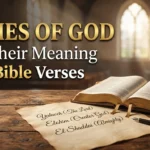
Throughout the Bible, names and titles for God reveal important truths about His character, authority, and relationship with humanity. One significant Hebrew word is “El,” which means “God” and is often used in biblical names and descriptions of the divine.
This ancient word appears in the Old Testament and helps readers understand how people recognized and worshipped God in biblical times. For example, the name “El Shaddai” is traditionally translated as “God Almighty,” while “El Elyon” means “God Most High.”
These titles emphasize God’s supreme power, greatness, and authority over all creation. The word “El” also appears in personal names such as Israel, Daniel, and Samuel, although the exact meaning of each name depends on its Hebrew roots and structure. In Scripture, “El” can be used in references to the God of Israel and, in some contexts, as a general term for a deity.
What Does “El” Mean in the Bible?
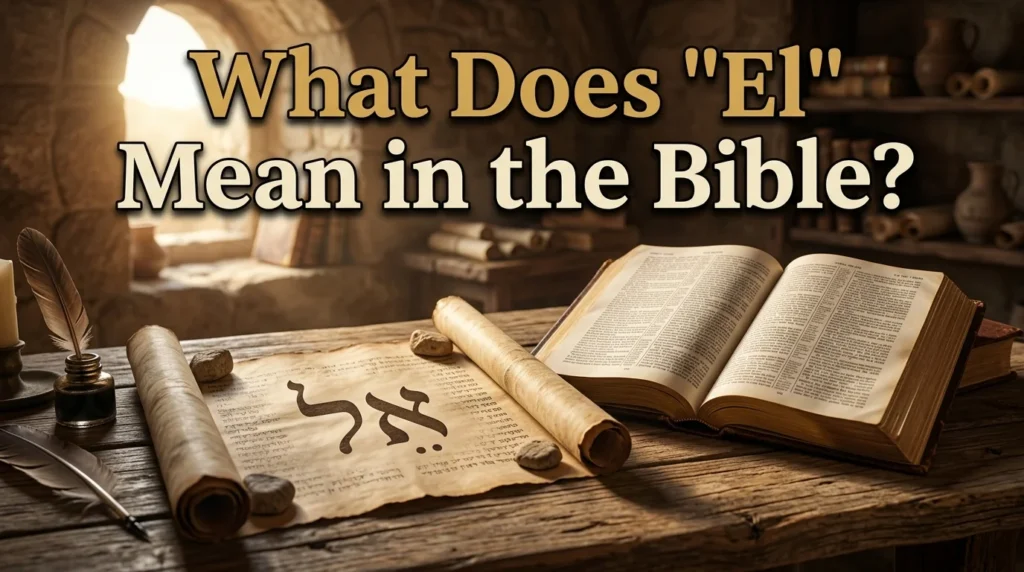
At its core, El (אֵל in Hebrew) is one of the oldest and most basic words for “God” or “deity” in the Semitic languages. It’s not just a Hebrew invention the term shows up across the ancient Near East, including in Canaanite, Ugaritic, and Akkadian texts, where it was used to refer to a chief god or simply “a god” in a general sense.
In the Hebrew Bible (Old Testament), El is used both as:
- A generic term for “god” or “deity” (lowercase, referring to any divine being)
- A proper name or title for the God of Israel (capitalized, referring specifically to Yahweh)
This dual usage is part of what makes studying the el meaning in bible passages so fascinating. Context always determines whether the author is speaking about God in a general, universal sense, or specifically invoking the personal, covenant-making God of Abraham, Isaac, and Jacob.
The Root Meaning of “El”
Scholars generally agree that the root of “El” conveys ideas of:
- Power
- Strength
- Might
- Preeminence
This is why many Bible translations render “El” as “Mighty One” or “Strong One” in certain contexts. For example, in Genesis 49:24, Jacob refers to “the Mighty God (El) of Jacob” when blessing his sons emphasizing God’s strength and reliability as a protector.
So when you see “El” attached to a name in Scripture, you’re almost always looking at a description of divine strength, authority, or supremacy.
Why Understanding “El” Matters for Bible Study

Names in the Bible aren’t just labels they’re theological statements. Ancient cultures believed a name captured the essence, character, or destiny of a person or being. That’s why so many biblical names for God are compound names built on “El.” Each one reveals a different facet of who God is.
If you’ve ever wondered why Scripture uses so many different names for God instead of just one, the answer lies in this rich naming tradition. Each “El” name paints a fuller picture like puzzle pieces coming together to form a complete portrait of God’s nature.
Let’s explore the most significant “El” names found throughout Scripture.
The Major “El” Names of God in the Bible
1. Elohim – The Plural Majesty
Elohim is actually the plural form of “El,” yet it’s used with singular verbs when referring to the God of Israel. This is one of the most common names for God in the Old Testament, appearing over 2,000 times, starting right in Genesis 1:1: “In the beginning, God (Elohim) created the heavens and the earth.”
Why plural? Scholars debate this, but the most widely accepted explanations include:
- A “plural of majesty” similar to how royalty might use “we” to convey greatness
- A reflection of God’s fullness and completeness
- Some Christian theologians see early hints of the Trinity in this plural construction
Elohim emphasizes God as Creator, Judge, and sovereign ruler over all creation.
2. El Shaddai – God Almighty
El Shaddai is often translated as “God Almighty,” though the exact meaning of “Shaddai” is debated among scholars. Some link it to a root meaning “mountain,” suggesting God as a towering, immovable source of strength. Others connect it to ideas of sufficiency and provision.
This name appears prominently when God introduces Himself to Abraham in Genesis 17:1: “I am El Shaddai; walk before me and be blameless.” It’s a name tied closely to covenant promises, fertility, and blessing fitting, since God was about to promise Abraham descendants as numerous as the stars.
3. El Elyon – God Most High
El Elyon translates to “God Most High” and emphasizes God’s supremacy over all other powers, whether earthly kings or spiritual forces. This name first appears in Genesis 14:18-20, when Melchizedek, king of Salem, blesses Abram in the name of “El Elyon, Creator of heaven and earth.”
This title reminds readers that no matter what other gods or rulers claim authority, the God of Israel sits above them all literally and figuratively “Most High.”
4. El Roi – The God Who Sees
One of the more tender and personal names in Scripture, El Roi means “the God who sees.” Hagar, Sarah’s servant, gives God this name in Genesis 16:13 after fleeing into the wilderness, pregnant and alone. She realizes that God saw her suffering even when no one else did.
This name reveals a beautifully intimate side of the el meaning in bible narratives showing that God isn’t distant or detached, but attentive to the pain of even the most overlooked individuals.
5. El Olam – The Everlasting God
El Olam means “the Everlasting God” or “God of Eternity.” Abraham calls on this name in Genesis 21:33 after planting a tamarisk tree in Beersheba. This name emphasizes God’s eternal, unchanging nature He was there before time began and will remain long after human history ends.
6. Immanu-El – God With Us
Perhaps one of the most beloved “El” names, Immanuel (or Immanu-El) means “God with us.” This name is prophesied in Isaiah 7:14 and later fulfilled in Matthew 1:23, referring to the birth of Jesus Christ. It captures the heart of the Christian gospel message that God didn’t remain distant in heaven but chose to dwell among humanity.
7. El Gibbor – Mighty God
Found in Isaiah 9:6, El Gibbor (“Mighty God”) is one of the messianic titles given to the promised child who would rule with justice and peace. This name emphasizes strength in the context of warfare and divine authority God as a warrior-king who fights on behalf of His people.
“El” vs. “Elohim” vs. “Yahweh”: What’s the Difference?
A common point of confusion for Bible readers is understanding how “El,” “Elohim,” and “Yahweh” (often rendered “LORD” in English translations) relate to each other. Here’s a simple breakdown:
| Name | Meaning | Usage |
| El | God, Mighty One | General term, often combined with descriptors |
| Elohim | Gods/God (plural form) | Emphasizes power, creation, and majesty |
| Yahweh | “I AM” (personal, covenant name) | God’s personal, relational name revealed to Moses |
While “El” and “Elohim” highlight God’s transcendence, power, and cosmic authority, “Yahweh” reflects His personal, covenantal relationship with Israel. Many Bible passages actually combine these names like “Yahweh Elohim” to express both God’s intimate closeness and His majestic power simultaneously.
Real-Life Applications: Why This Matters Today
Understanding these ancient names isn’t just an academic exercise it can genuinely deepen your faith and prayer life. Here’s how:
- When you feel powerless, remembering God as El Shaddai (God Almighty) can be a source of comfort and strength.
- When you feel invisible or forgotten, recalling Hagar’s discovery of El Roi (the God who sees) reminds you that you’re never truly alone.
- When facing uncertainty about the future, El Olam (the Everlasting God) reassures you that God’s plans transcend time.
- When you need courage, El Gibbor (Mighty God) reminds you that God fights on your behalf.
Many people find it powerful to pray using these specific names, tailoring their prayers to the particular need or struggle they’re facing. For example, someone going through infertility might find comfort praying to “El Shaddai,” given its connection to Abraham and Sarah’s story.
Common Misconceptions About “El” in the Bible
Let’s clear up a few myths that tend to circulate:
- Myth: “El” was originally a pagan god’s name, so using it for the biblical God is problematic. Reality: While “El” was indeed used by neighboring cultures (like the Canaanites, who worshipped a chief god named El), the Hebrew Bible repurposes and redefines the term to point exclusively to the one true God of Israel. This was actually a common practice using familiar language while filling it with new, distinct theological meaning.
- Myth: Elohim implies polytheism because it’s plural. Reality: As mentioned earlier, Elohim is consistently paired with singular verbs in reference to Israel’s God, indicating a “plural of majesty” rather than multiple deities.
- Myth: All “El” names are interchangeable. Reality: Each name carries distinct nuance and context. El Shaddai isn’t identical to El Elyon they emphasize different aspects of God’s character.
How to Study “El” Names for Yourself
If you’re inspired to dig deeper into biblical names for God, here are a few practical tips:
- Use a concordance (like Strong’s Concordance) to find every instance of a specific “El” name in Scripture.
- Read the surrounding context of each passage names are often revealed during pivotal, emotional moments in the biblical narrative.
- Cross-reference with Hebrew lexicons to understand nuanced shades of meaning that English translations sometimes flatten out.
- Journal your reflections write down how a particular name resonates with your current season of life.
- Compare translations different English Bible versions handle these names differently, so comparing a few can offer richer insight.
FAQ: El Meaning in Bible
1. What is the simplest definition of “El” in the Bible?
“El” simply means “God” or “Mighty One” in Hebrew. It’s one of the oldest and most foundational names used for deity throughout the Old Testament.
2. Is “El” only used for the God of Israel?
Not exclusively. In its most basic form, “El” was a generic word for “god” used across ancient Near Eastern cultures. However, in the Hebrew Bible, it’s overwhelmingly used to refer specifically to the God of Israel, especially when combined with other descriptive words.
3. What’s the difference between El and Elohim?
“El” is the singular, basic form meaning “God” or “Mighty One,” while “Elohim” is the plural form. Despite being plural, Elohim is used with singular verbs when referring to the one true God, reflecting majesty rather than multiple gods.
4. Why does the Bible use so many different “El” names for God?
Each name highlights a unique attribute of God’s character strength, eternity, presence, provision, and more. Together, these names form a fuller, richer picture of who God is than any single title could capture alone.
5. What does El Shaddai mean, and why is it significant?
El Shaddai means “God Almighty” and is closely tied to God’s covenant promises to Abraham. It emphasizes God’s power to provide and fulfill promises, even when circumstances seem impossible.
6. Is Immanuel related to “El”?
Yes. Immanuel (or Immanu-El) means “God with us” and directly incorporates “El” as its root, emphasizing God’s presence among His people a name famously connected to the birth of Jesus Christ.
7. Can I use these “El” names in my personal prayers?
Absolutely. Many believers find it meaningful to address God using these specific biblical names, especially when the name’s meaning aligns with their current circumstances or needs.
Final Thoughts
Exploring the el meaning in bible passages isn’t just a linguistic exercise it’s an invitation to know God more intimately through the very names He chose to reveal Himself by. From El Shaddai’s promise of provision to El Roi’s tender assurance of being seen, each name offers a distinct window into God’s character and His relationship with humanity.
You’re studying Scripture academically or seeking comfort in a difficult season, these ancient Hebrew names for God carry timeless relevance. They remind us that the God of the Bible is not a distant, abstract force, but a Mighty One who sees, provides, protects, and remains present through every generation.

James Parker is a Bible writer at GrasePath.com who loves exploring the deeper meaning of Scripture. He shares clear, trustworthy insights about biblical names, symbols, dreams, and spiritual teachings in simple language. His mission is to help readers strengthen their faith and better understand God’s Word every day.