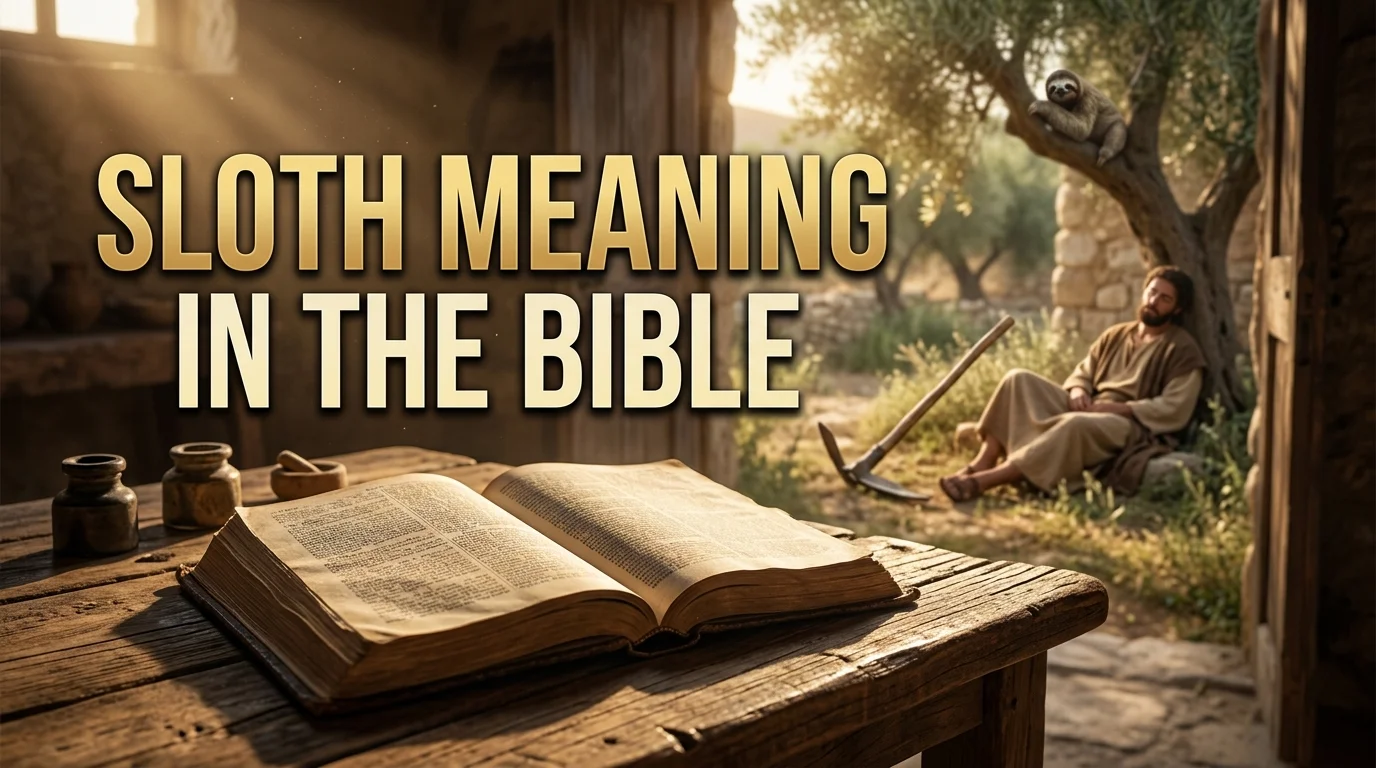
The Bible teaches the importance of hard work, responsibility, and using the gifts God has given us wisely. One concept that highlights these values is sloth, which refers to laziness, carelessness, or a lack of willingness to fulfill responsibilities.
The sloth meaning in the Bible goes beyond simply feeling tired or needing rest; it describes a habit of avoiding necessary work, neglecting duties, or failing to take action when action is needed.
Throughout Scripture, sloth is presented as a behavior that can prevent people from growing spiritually, caring for others, and fulfilling their responsibilities. Proverbs 6:6–11 encourages the lazy person to learn from the ant, which works diligently and prepares for the future.
What Does “Sloth” Mean in the Bible?
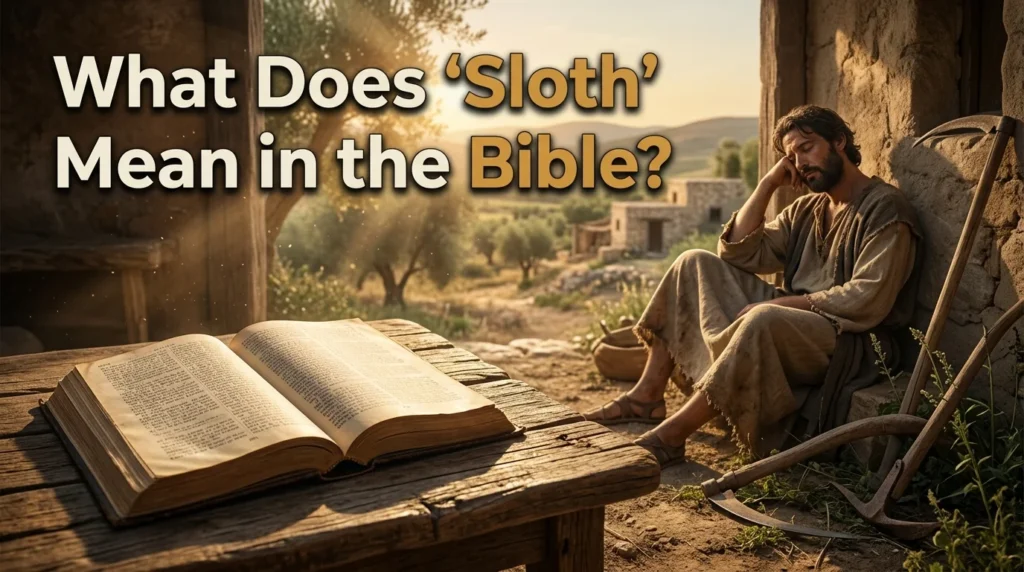
The word “sloth” in biblical usage comes from an Old English root meaning “slowness” or “laziness.” In the King James Version and other older translations, “slothful” and “slothfulness” appear frequently, usually translating Hebrew words like atsel (lazy, sluggish) or remiyyah (slack, deceitful in effort).
At its core, the sloth meaning in the bible centers on:
- Avoiding necessary work or responsibility
- Being careless or half-hearted in effort
- Wasting time and opportunities
- Failing to use one’s gifts, resources, or calling
It’s important to note that sloth isn’t simply about physical rest. The Bible actually praises rest as a gift from God the Sabbath itself is a command to rest. Sloth, by contrast, is about neglecting duty when action is required. It’s less about taking a break and more about consistently avoiding responsibility out of laziness, apathy, or fear.
Sloth vs. Rest: An Important Distinction
Many people confuse biblical rest with biblical sloth, but they are opposites in purpose:
| Rest | Sloth |
| Restores energy for future work | Avoids work altogether |
| Commanded by God (Sabbath) | Warned against repeatedly |
| Leads to renewed productivity | Leads to poverty and ruin |
| Intentional and time-bound | Habitual and open-ended |
Understanding this difference helps clarify why the Bible can simultaneously honor rest and condemn laziness. One restores; the other erodes.
Key Bible Verses About Sloth and Laziness

If you want to understand the sloth meaning in the bible, the Book of Proverbs is the best place to start. Solomon, known for his wisdom, repeatedly contrasts the diligent person with the “sluggard” a term almost synonymous with a slothful person.
Proverbs and the Sluggard
Here are some of the most well-known passages (paraphrased for clarity, not quoted verbatim):
- Proverbs 6:6-11 This passage points to the ant as an example of diligence, noting that ants work hard without anyone supervising them, gathering food during the right season. The passage warns that a little more sleep and folded hands lead to poverty creeping in like a thief.
- Proverbs 10:4 Solomon contrasts a lazy hand with a diligent one, noting that diligence brings wealth while laziness brings poverty.
- Proverbs 13:4 The sluggard craves things but gets nothing, while the diligent person’s desires are fully satisfied.
- Proverbs 20:4 A lazy person who doesn’t plow at the proper season ends up begging at harvest time with nothing to show for it.
- Proverbs 26:13-16 This passage humorously describes the sluggard making excuses (claiming a lion is in the road) and being so lazy that lifting food to his mouth becomes tiresome.
These verses paint a vivid picture. The sluggard isn’t necessarily evil in a dramatic sense he’s simply passive, indecisive, and full of excuses. Over time, that passivity leads to real consequences: poverty, missed opportunities, and a wasted life.
Sloth in the New Testament
While the Old Testament wisdom books use vivid imagery, the New Testament frames sloth in terms of stewardship and faithfulness.
- The Parable of the Talents (Matthew 25:14-30) A servant who buries his master’s money out of fear, rather than investing or using it, is called “wicked and slothful.” This parable is one of the clearest New Testament examples tied directly to the word “slothful” in the KJV translation.
- Romans 12:11 Believers are urged not to be lagging in diligence but to remain fervent in spirit, serving the Lord with enthusiasm.
- Hebrews 6:12 Christians are encouraged not to become sluggish, but to imitate those who inherit the promises through faith and patience.
- 2 Thessalonians 3:10 Paul instructs that if someone isn’t willing to work, they shouldn’t expect to eat, reinforcing the value of labor within the Christian community.
Together, these passages show that sloth isn’t just a character flaw in Old Testament wisdom literature it’s a spiritual issue addressed throughout Scripture, tied to how we steward our time, talents, and faith.
The “Sin of Sloth” in Christian Tradition
You may have heard sloth mentioned as one of the “Seven Deadly Sins.” This list didn’t come directly from the Bible but was developed by early Christian theologians, most notably Pope Gregory I in the 6th century, as a way to categorize common spiritual failings.
In this theological tradition, sloth (sometimes called acedia) means more than just physical laziness. It refers to:
- Spiritual apathy or indifference toward God
- A loss of joy or motivation in one’s faith
- Avoiding spiritual disciplines like prayer, worship, or service
- A general sluggishness of the soul, not just the body
Early monks described acedia as the “noonday demon” a restlessness and boredom that tempted them to abandon their spiritual duties. In this sense, the sloth meaning in the bible, when filtered through church tradition, expands beyond just skipping chores. It becomes a warning about spiritual complacency going through the motions of faith without real devotion.
Why Sloth Is Considered Serious
Sloth might seem like a “smaller” sin compared to something like murder or theft, but Christian teaching treats it seriously for a few reasons:
- It wastes God-given time. Scripture repeatedly emphasizes making the most of one’s days (Ephesians 5:15-16).
- It neglects stewardship. The parable of the talents shows that failing to use what God has given us has real consequences.
- It opens the door to other sins. Idle hands, as the old saying goes, often lead to gossip, envy, or other destructive behaviors.
- It reflects a heart issue. Sloth isn’t just about behavior it often reveals fear, doubt, or a lack of trust in God’s provision.
Real-Life Applications of Biblical Sloth Teachings
Understanding ancient wisdom is one thing, but applying it to daily life is where the real value lies. Here’s how the biblical warnings against sloth translate into practical, modern situations.
1. Work and Career
The book of Proverbs speaks directly to work ethic. Whether you’re an employee, a business owner, or a student, the principle remains the same: consistent effort over time produces results, while procrastination and excuses lead to missed opportunities.
- Show up prepared and on time
- Finish tasks instead of leaving them half-done
- Avoid the “tomorrow” trap the sluggard in Proverbs always has a reason to delay
2. Spiritual Life
Just as physical laziness has consequences, spiritual sloth can quietly erode a person’s relationship with God. This might look like:
- Skipping prayer or Bible reading “just for today” (which becomes a habit)
- Attending church without real engagement
- Avoiding opportunities to serve or grow in faith
3. Relationships and Family
Sloth can also show up relationally neglecting to nurture friendships, avoiding difficult conversations, or failing to follow through on commitments to loved ones. Diligence in relationships means showing up consistently, not just when it’s convenient.
4. Personal Growth
Whether it’s learning a new skill, managing finances, or pursuing a goal, the biblical model favors steady, ant-like effort over sporadic bursts of motivation. The ant in Proverbs 6 isn’t remarkable for working hard occasionally it’s remarkable for its consistency.
How to Overcome a Spirit of Sloth
If you recognize some of these patterns in your own life, the good news is that Scripture doesn’t just diagnose the problem it offers a path forward.
- Start small. The sluggard is paralyzed by big tasks; break responsibilities into manageable steps.
- Set a rhythm. Just as the ant works during the appropriate season, establish routines for work, rest, and spiritual disciplines.
- Address the root cause. Sometimes sloth is really fear, discouragement, or burnout in disguise. Praying honestly about what’s underneath the avoidance can help.
- Practice accountability. Community and encouragement, as Hebrews 6:12 suggests, help believers stay diligent rather than drifting into spiritual sluggishness.
- Remember your purpose. The parable of the talents reminds us that our time, gifts, and resources are meant to be used, not buried out of fear or apathy.
Frequently Asked Questions About Sloth in the Bible
1. What is the biblical definition of sloth?
In the Bible, sloth refers to laziness, idleness, or a lack of diligence in fulfilling one’s responsibilities whether in work, relationships, or spiritual life. It’s most commonly discussed in the Book of Proverbs through the figure of the “sluggard.”
2. Is sloth mentioned by name in the Bible?
The exact word “sloth” as a noun appears rarely, but “slothful” and “slothfulness” appear multiple times, especially in the King James Version, describing lazy or negligent behavior.
3. Where in the Bible does it talk about being lazy?
Proverbs contains the most direct teaching on laziness, particularly Proverbs 6:6-11, 10:4, 13:4, 20:4, and 26:13-16. The New Testament parable of the talents in Matthew 25 also addresses laziness in the context of stewardship.
4. Is sloth one of the seven deadly sins in the Bible?
The “Seven Deadly Sins,” including sloth, aren’t a direct biblical list they come from early church tradition, developed by theologians like Pope Gregory I. However, the concept of sloth as a spiritual and moral failing is rooted in biblical teaching.
5. What does the Bible say about the sluggard?
The sluggard is described as someone who avoids work, makes excuses, and suffers poverty as a result. Proverbs uses this figure repeatedly as a warning against laziness and procrastination.
6. Is rest considered a sin in the Bible?
No. The Bible commands rest, especially through the Sabbath, and views it as essential and God-given. Sloth is different from rest because it involves avoiding necessary responsibilities altogether, not simply taking intentional time to recover.
7. How can Christians overcome laziness according to the Bible?
Scripture encourages diligence, consistency, and faithfulness following the example of the ant in Proverbs 6, staying “fervent in spirit” as Romans 12:11 describes, and using one’s talents rather than burying them out of fear, as shown in Matthew 25.
Final Thoughts
So, what’s the real sloth meaning in the bible? At its heart, it’s a warning against wasting the time, talents, and opportunities God has given us. From the sluggard in Proverbs who lets his field go to ruin, to the servant in Matthew 25 who buries his talent out of fear, Scripture consistently points toward diligence, faithfulness, and purposeful living.
Sloth isn’t about resting it’s about neglecting what matters most. And the antidote isn’t frantic busyness, but intentional, steady effort rooted in trust and purpose.

James Parker is a Bible writer at GrasePath.com who loves exploring the deeper meaning of Scripture. He shares clear, trustworthy insights about biblical names, symbols, dreams, and spiritual teachings in simple language. His mission is to help readers strengthen their faith and better understand God’s Word every day.