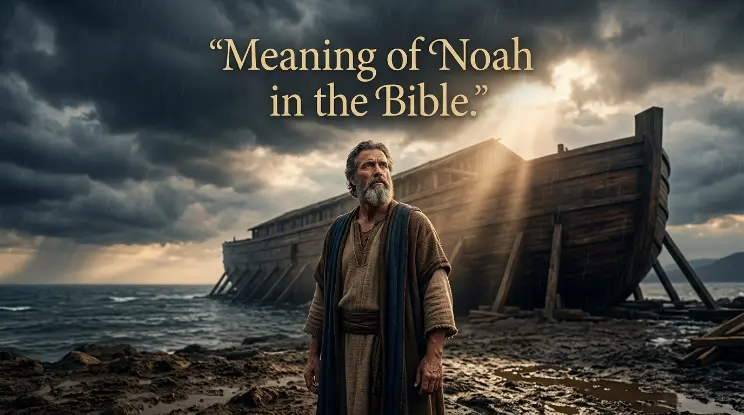
Have you ever wondered why the name Noah keeps showing up everywhere from baby name lists to Sunday school lessons to blockbuster movies? There’s a reason this ancient name has stuck around for thousands of years. The meaning of Noah in the Bible is far richer than most people realize, and once you understand it, the entire story of the flood starts to make a lot more sense.
Noah isn’t just “the guy who built the ark.” His name itself carries a message, one that his own father spoke over him before he was even born. In this article, we’re going to dig into where the name comes from, what it truly means in Hebrew, why it mattered so much in the story of Genesis, and how that meaning still speaks to people today.
Grab a cup of coffee, because we’re about to unpack one of the most fascinating names in all of Scripture.
Quick Answer: What Does Noah Mean in the Bible?
Let’s start simple, since you’re probably here for a straight answer first.
The meaning of Noah in the Bible is generally translated as “rest,” “comfort,” or “relief.” The name comes from the Hebrew word Noach (נֹחַ), which is closely tied to the Hebrew verb nacham, meaning “to comfort” or “to bring relief.”
In Genesis 5:29, Noah’s father Lamech explains exactly why he chose this name:
“He named him Noah and said, ‘He will comfort us in the labor and painful toil of our hands caused by the ground the Lord has cursed.'”
So even before Noah did anything remarkable, his name was a prophecy of hope. His parents were tired, worn down by hard labor and a world that felt cursed. They named their son with the expectation that he would bring relief. And in many ways, he did just not in the way anyone expected.
The Hebrew Origins of the Name Noah
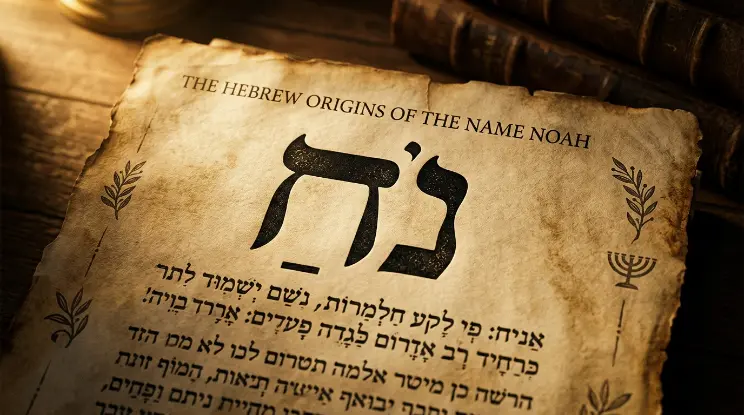
To really understand the meaning of Noah in the Bible, it helps to look closer at the original Hebrew language, since names in ancient Israel weren’t just labels they were statements of identity, hope, or destiny.
Breaking Down the Hebrew Word “Noach”
The Hebrew name Noach (נֹחַ) is built from a root that connects to two closely related ideas:
- Rest – the state of settling down, ceasing from struggle
- Comfort – emotional relief after hardship
Interestingly, scholars point out that Noah’s name is a near-homophone (a similar-sounding word) to the Hebrew verb nacham, which more directly means “to comfort” or “to console.” Some linguists believe Lamech may have been making a wordplay, choosing a name that sounded like “rest” while carrying the deeper connotation of “comfort.”
This kind of wordplay was common in ancient Hebrew naming traditions. Names weren’t random they told a story, made a wish, or declared a family’s hope for the future.
Why Names Mattered So Much in Biblical Times
If you’re not familiar with ancient Near Eastern culture, this might seem like overthinking a simple name. But in the biblical world, names carried enormous weight. They often reflected:
- The circumstances of a child’s birth
- A parent’s hopes or prayers
- A prophetic statement about the child’s future
- A tribute to God’s character or actions
Think about other biblical names: Isaac means “he laughs,” tied to Sarah’s disbelief and joy. Jacob means “supplanter” or “heel-grabber,” referencing how he was born holding his twin’s heel. Noah fits perfectly into this pattern his name wasn’t decorative, it was declarative.
The Story Behind Noah’s Name: Why His Father Chose It
Genesis 5:29 gives us the exact reasoning behind Noah’s name, and understanding the context makes it even more powerful.
A World Weighed Down by Toil
By the time Noah was born, humanity had been living under the consequences of Adam and Eve’s fall for generations. According to Genesis 3:17-19, the ground itself was cursed, meaning that farming and daily survival required painful, exhausting labor. Life wasn’t easy it was a constant grind against a harsh and unforgiving earth.
Lamech, Noah’s father, was tired. Not just physically tired, but generationally tired. He was carrying the weight of a curse that had been passed down since the Garden of Eden. So when his son was born, he spoke words of hope over him, essentially saying, “This child will bring us relief from this exhausting struggle.”
Did Noah Actually Bring “Comfort”?
Here’s where it gets interesting. Noah didn’t remove the curse on the ground. He didn’t invent new farming tools or end humanity’s hard labor. So how did he fulfill his name?
Many Bible scholars suggest the comfort Noah brought was different and arguably much bigger than what his father expected:
- He preserved humanity and animal life through the flood, giving the world a fresh start.
- He introduced the practice of viticulture (Genesis 9:20), and wine has historically been associated with comfort and celebration in ancient cultures.
- He received God’s covenant promise never to destroy the earth by flood again (Genesis 9:11), which gave humanity long-term relief from that particular fear.
So while Noah didn’t erase the daily grind of farming, he became the bridge between a judged world and a renewed one. In that sense, his name proved prophetic in a much larger, cosmic way than his father likely imagined.
Noah’s Character: Living Up to His Name
The meaning of Noah in the Bible isn’t just about etymology it’s also reflected in who Noah actually was as a person. Genesis 6:9 gives us a striking description:
“Noah was a righteous man, blameless among the people of his time, and he walked faithfully with God.”
That’s a huge statement. In a world the Bible describes as filled with violence and corruption (Genesis 6:11), Noah stood out. Let’s look at a few character traits that made him worthy of such a significant name.
1. Righteousness in a Corrupt Generation
Noah lived during a time when, according to Genesis 6:5, “every inclination of the thoughts of the human heart was only evil all the time.” Despite being surrounded by moral decay, Noah maintained his integrity. This wasn’t peer pressure he gave into he was the exception, not the rule.
2. Obedience Without Hesitation
When God instructed Noah to build an massive ark a task that likely took decades Noah didn’t argue or make excuses. Genesis 6:22 simply states:
“Noah did everything just as God commanded him.”
That’s remarkable obedience, especially considering there had never been rain before (based on Genesis 2:5-6), meaning Noah was building a giant boat for a weather phenomenon nobody had ever witnessed.
3. Faith in the Face of Ridicule
Imagine building an enormous wooden vessel on dry land while your neighbors watch and mock you. Hebrews 11:7 in the New Testament later commends Noah specifically for his faith:
“By faith Noah, when warned about things not yet seen, in holy fear built an ark to save his family.”
This combination of righteousness, obedience, and faith is exactly the kind of character that fits a name meaning “rest” or “comfort.” Noah became a source of stability and hope in an unstable, hopeless world.
The Broader Symbolic Meaning of Noah in Scripture
Beyond the literal Hebrew translation, Noah carries symbolic weight throughout the Bible that’s worth exploring.
Noah as a Symbol of New Beginnings
After the flood waters receded, Noah and his family stepped out onto dry land to essentially restart human civilization. This makes Noah a powerful symbol of:
- Renewal – a fresh start after judgment
- Second chances – humanity given another opportunity
- Preservation – the saving of both human and animal life
Noah as a Type of Salvation
Many theologians view Noah’s story as a foreshadowing of salvation themes that appear later in the Bible. The ark itself represents a place of safety amid judgment those inside were saved, while those outside faced the consequences of the flood.
In the New Testament, 1 Peter 3:20-21 draws a direct comparison between Noah’s ark and baptism, suggesting the flood narrative carries meaning that echoes throughout Scripture, not just as a historical account but as a symbolic pattern.
The Rainbow Covenant: A Permanent Reminder
After the flood, God established a covenant with Noah, promising never again to destroy the earth with a flood, and gave the rainbow as a sign of that promise (Genesis 9:12-17). This covenant ties directly back to the meaning of Noah’s name he was the recipient of a divine promise that brought lasting comfort and assurance to future generations.
Common Variations and Related Names
If you’re researching baby names or just curious about linguistic connections, it’s worth knowing how Noah’s name has evolved and connected to other names across cultures.
- Noach – the original Hebrew form
- Noe – used in Greek Septuagint and Latin Vulgate translations
- Noah – the standard English transliteration
- Noa – a popular unisex variant used in modern Hebrew and increasingly in Western countries (note: this is technically a different biblical name, belonging to one of Zelophehad’s daughters in Numbers, though the names are often confused)
It’s a common mix-up worth mentioning: the female name “Noa” in the Bible (Numbers 26:33) is spelled and pronounced differently in Hebrew and has an entirely separate meaning, even though it looks similar in English.
Why the Meaning of Noah Still Resonates Today
You might be wondering why any of this matters outside of a Bible study. Here’s the thing the meaning of Noah in the Bible speaks to something deeply human: the longing for rest and comfort in the middle of hardship.
Think about it. Noah’s story checks off some universally relatable experiences:
- Feeling like an outsider for doing what’s right when everyone else isn’t
- Facing an overwhelming task that seems impossible
- Waiting patiently for something you can’t fully see or understand yet
- Trusting a promise even when circumstances look uncertain
That’s why parents still choose the name Noah for their children today. It’s not just a trendy, simple-sounding name it carries centuries of meaning tied to hope, endurance, and eventual relief after struggle.
Noah’s Popularity as a Modern Baby Name
Interestingly, Noah has consistently ranked among the top baby names in the United States and many other countries in recent years. Part of this popularity likely comes from:
- Its short, easy-to-pronounce sound
- Its strong biblical roots and meaning of “rest” or “comfort”
- Its gender-neutral softness while still feeling traditionally masculine
- Cultural visibility through movies, books, and media
Parents often choose it hoping their child will bring peace and comfort into their lives echoing the exact same hope Lamech had thousands of years ago.
Lessons We Can Learn From the Meaning of Noah
Let’s bring this back to something practical. What can we actually take away from understanding the meaning of Noah in the Bible?
1. Our names and identities can carry purpose. Just as Noah’s name pointed to his future role, our own identities whether given by family, faith, or personal choice can shape how we live and what we aim toward.
2. Comfort often comes after obedience, not before. Noah didn’t experience “rest” by avoiding hard work. He built an ark for decades, faced ridicule, and endured a terrifying flood before experiencing the promised relief. Sometimes comfort is on the other side of obedience, not a replacement for it.
3. Faithfulness stands out in difficult environments. Noah’s righteousness wasn’t diminished by his surroundings it was proven by them. His story reminds us that integrity often matters most when it’s least convenient.
4. Promises can outlast the moment they were given. The rainbow covenant God made with Noah wasn’t just for him it was a promise meant to comfort every generation that followed. Some sources of comfort are designed to last far beyond their original context.
Frequently Asked Questions About the Meaning of Noah in the Bible
1. What does the name Noah mean in Hebrew?
The name Noah comes from the Hebrew word Noach, which is generally translated as “rest” or “comfort.” It’s closely linked to the Hebrew verb nacham, meaning “to comfort” or “console.”
2. Why did Lamech name his son Noah?
According to Genesis 5:29, Lamech named his son Noah because he hoped the child would bring comfort from the painful, exhausting labor caused by the curse on the ground.
3. Is Noah a biblical name for boys or girls?
Noah is traditionally a male biblical name, referring to the patriarch who built the ark. There’s a separate name, “Noa,” belonging to a woman in the Book of Numbers, which is often confused with Noah due to similar spelling.
4. What is the spiritual significance of Noah in the Bible?
Noah symbolizes righteousness, obedience, faith, and new beginnings. His story represents both judgment and salvation, and many see the ark as a foreshadowing of later biblical salvation themes.
5. How old was Noah when he built the ark?
The Bible doesn’t give an exact age when Noah began building the ark, but Genesis 7:6 states he was 600 years old when the flood came, meaning the construction likely spanned many decades.
6. Does the meaning of Noah relate to the flood story?
Yes. While Noah’s name means “rest” or “comfort,” his role in the flood story shows how he brought a different kind of comfort than his father expected preserving life and receiving God’s covenant promise for humanity’s future.
7. Why is Noah still a popular name today?
Noah remains popular due to its simple pronunciation, strong biblical roots, and meaningful translation of “rest” and “comfort” qualities many parents hope to reflect in their children’s lives.
Final Thoughts: The Deeper Meaning of Noah in the Bible
So, what’s the real takeaway here? The meaning of Noah in the Bible goes far beyond a simple dictionary definition. It’s a name born out of a father’s exhaustion and hope, a name that ended up shaping one of the most pivotal figures in biblical history.
Noah’s life shows us that comfort doesn’t always arrive the way we expect it to. Sometimes it comes through obedience, patience, and faith during seasons that feel anything but comfortable. His story from his name’s meaning to his righteous character to the covenant he received continues to resonate with people looking for hope in the middle of hardship.

James Parker is a Bible writer at GrasePath.com who loves exploring the deeper meaning of Scripture. He shares clear, trustworthy insights about biblical names, symbols, dreams, and spiritual teachings in simple language. His mission is to help readers strengthen their faith and better understand God’s Word every day.