If you’ve ever rocked a baby named Oliver to sleep, or you’re expecting one soon, there’s a good chance you’ve typed “oliver meaning in bible” into a search bar late at night. Maybe a family member told you it’s “a biblical name.”
Maybe you just love how it sounds and want to know if there’s deeper spiritual weight behind it. Either way, you’re in the right place, and the answer is more interesting than a one-line definition on a baby name website.
Here’s the short version before we dig in: Oliver isn’t actually a name that appears in the Bible. You won’t find a Prophet Oliver or an Apostle Oliver anywhere in Scripture. But the meaning behind the name “olive tree” is deeply, richly biblical.
What Does Oliver Mean in the Bible?
Let’s clear up the confusion right away. When people search “oliver meaning in bible,” they’re usually looking for one of two things:
- Whether Oliver is a name found in Scripture
- Whether the meaning of Oliver connects to a biblical concept
The answer to the first question is no. Oliver does not appear as a character, place, or name anywhere in the Old or New Testament. It’s not a Hebrew name, and it wasn’t used during biblical times.
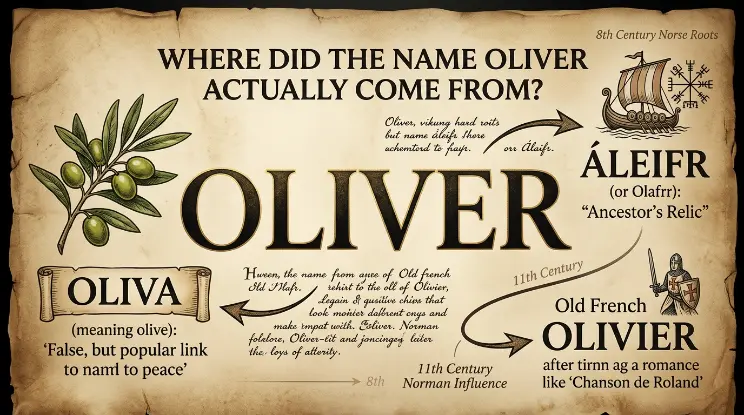
The answer to the second question, though, is a resounding yes. Oliver comes from the Old French name Olivier, which most etymologists trace back to the Latin word oliva, meaning “olive tree.” Some scholars argue the name may have older Germanic or Old Norse roots (from Áleifr, meaning “ancestor’s descendant” or “heir”), with the spelling later shifting to resemble the Latin word for olive. Either way, by the time the name reached English and French usage in the Middle Ages, “olive tree” had become its accepted and popularly understood meaning.
So when someone asks about the “oliver meaning in bible” context, what they’re really asking is: what does the olive tree mean in the Bible? And that question has a beautiful, layered answer.
Quick Summary: Oliver Name Meaning at a Glance
- Meaning: Olive tree
- Origin: Old French (Olivier), from Latin oliva
- Biblical connection: Not a biblical name itself, but symbolically tied to the olive tree, one of Scripture’s most powerful images
- Gender: Traditionally masculine
- Pronunciation: AH-liv-er
- Popular nicknames: Ollie, Oli, Liv
The Olive Tree in the Bible: Why It Matters So Much
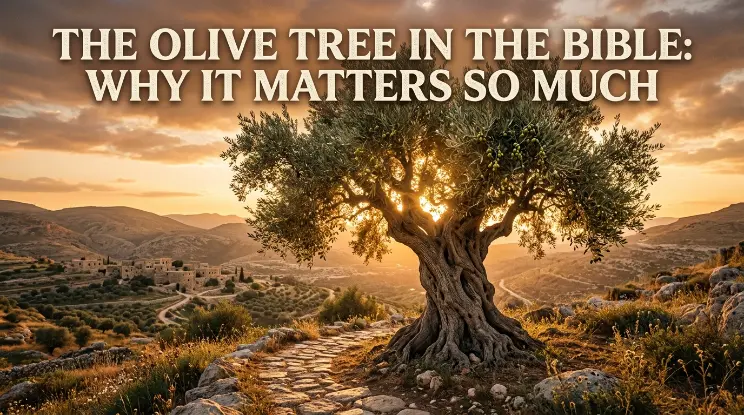
To really understand the spiritual meaning behind the name Oliver, you have to understand what the olive tree represented to the people of ancient Israel. This wasn’t just another plant growing in the background of biblical stories. The olive tree was central to daily life, worship, economy, and even prophecy.
1. A Symbol of Peace
The most famous olive branch moment in the entire Bible happens right after the flood. In Genesis 8:11, Noah sends out a dove to see if the floodwaters have receded, and it comes back carrying an olive leaf in its beak. That single image became one of the most enduring symbols in human history.
That olive leaf told Noah two things: the waters were going down, and God’s judgment had passed. From that moment on, the olive branch became shorthand for peace, restoration, and a fresh start after hardship. Even today, thousands of years later, people still say they’re “extending an olive branch” when they want to make peace after a conflict. That phrase exists because of this one story.
2. A Symbol of Blessing and Prosperity
Throughout the Old Testament, olive oil wasn’t just cooking oil it was liquid gold. Families used it for lighting lamps, preparing food, healing wounds, and anointing kings and priests. Because of its importance, the olive tree became a picture of God’s provision and blessing.
Psalm 52:8 captures this beautifully:
“But I am like a green olive tree in the house of God; I trust in the steadfast love of God forever and ever.”
Here, the psalmist compares himself to a thriving olive tree planted in God’s presence rooted, nourished, and flourishing because of God’s faithfulness. It’s a picture of stability and spiritual health.
Psalm 128:3 also uses this image in a family context, describing children as being “like olive shoots around your table,” a picture of a household growing and multiplying under God’s favor.
3. A Symbol of Anointing and the Holy Spirit
In the Old Testament, priests and kings were anointed with olive oil as a sign that God had set them apart for a specific purpose. This practice runs throughout the books of Exodus, Leviticus, and 1 Samuel. Oil became so closely tied to this idea of being “set apart” or “chosen” that it eventually became a symbol for the Holy Spirit Himself.
Even the word “Christ” comes from the Greek Christos, meaning “anointed one” a direct callback to this olive oil tradition. So when someone names their son Oliver because they love the connection to “anointing,” there’s real biblical substance behind that choice.
4. A Symbol of Endurance and Deep Roots
Olive trees are famous for their resilience. They can survive drought, poor soil, and even fire, often living for hundreds sometimes thousands of years. Some olive trees still growing in the Middle East today are believed to be over a thousand years old.
This resilience made the olive tree a natural metaphor for spiritual endurance. Jeremiah 11:16 describes Israel itself as “a green olive tree, fair with goodly fruit,” a nation meant to remain rooted in faithfulness to God even through hardship.
5. A Symbol of Israel and God’s Covenant People
In Romans 11, the Apostle Paul uses an extended olive tree metaphor to explain the relationship between Israel and the Gentiles who come to faith in Christ. He describes believers as branches “grafted in” to a cultivated olive tree, sharing in “the rich root of the olive tree” (Romans 11:17). This is one of the most theologically significant uses of the olive tree image in the entire New Testament, tying the symbol directly to the identity of God’s people and the unity of believers.
Where Did the Name Oliver Actually Come From?
Now that we’ve covered the biblical symbolism, let’s talk history. Oliver wasn’t plucked from Scripture the way names like Sarah, David, or John were. Its journey is much more medieval than ancient.
The Old French Connection
Most name historians agree that Oliver descends from the Old French name Olivier. This name became widely known across Europe thanks to La Chanson de Roland (The Song of Roland), an 11th-century epic poem. In that story, Olivier is the loyal friend and advisor to the hero Roland, a warrior known for his wisdom and level-headedness, which contrasted with Roland’s impulsiveness. That friendship became so legendary throughout medieval Europe that the name spread quickly.
The Debated Germanic Root
Here’s where it gets interesting: some etymologists believe Olivier wasn’t originally about olives at all. They argue it may have come from an Old Norse name, Áleifr, which combines elements meaning “ancestor” and “descendant” or “heir.” Under this theory, the spelling gradually shifted over time to resemble the Latin word oliva simply because it sounded similar, a linguistic phenomenon known as folk etymology.
So there’s genuine academic debate about whether “olive tree” is the name’s true original meaning or a later reinterpretation. But regardless of which theory is correct, the “olive tree” meaning is the one that stuck, spread, and became the accepted popular definition and it’s the one virtually every baby name resource and parent recognizes today.
How Oliver Reached England
The Normans brought the name Olivier to England during the conquest of 1066, where it was anglicized to Oliver. It shows up in the Domesday Book (a survey of England commissioned by William the Conqueror) as “Oliverus.” The name remained fairly common through the Middle Ages.
Interestingly, Oliver’s popularity dipped sharply in England after the 17th century because of Oliver Cromwell, the controversial military leader who ruled England following the Civil War. Many parents avoided the name due to its association with his divisive legacy.
The name made its major comeback in the 19th century, largely thanks to Charles Dickens’ novel Oliver Twist (1838), which introduced the name to a whole new generation as the story of a resilient orphan boy searching for belonging.
Why Christian Parents Love the Name Oliver
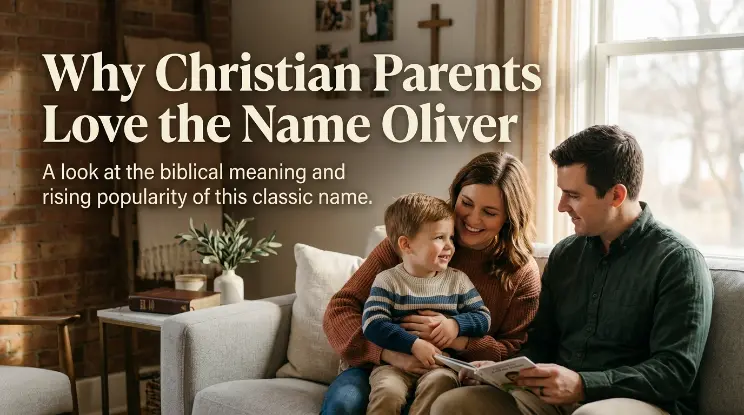
Even though Oliver isn’t technically a “Bible name” in the strictest sense, it has become a favorite among Christian families for reasons that make a lot of sense once you understand the symbolism.
Here’s what draws parents to it:
- The peace symbolism Many parents want their child’s name to carry a message of hope, calm, and restoration, echoing the dove and olive branch from Genesis.
- The blessing connection Psalm 52:8’s picture of a “green olive tree” flourishing in God’s house resonates with parents who want their child to grow up rooted in faith.
- The anointing imagery Some families are drawn to the historical link between olive oil and being set apart for God’s purposes.
- A name with depth, not just sound Oliver is trendy and pleasant-sounding, but unlike many modern names, it carries centuries of meaning behind it.
- A strong nickname option “Ollie” has become one of the most beloved nicknames for young boys, giving the name flexibility from toddlerhood into adulthood.
Real-Life Example
Think about a family who has walked through a hard season maybe a difficult pregnancy, financial stress, or loss in the extended family and then welcomes a baby boy right as things start to turn around. Naming him Oliver, consciously connecting him to the story of Noah’s dove returning with an olive leaf, becomes a way of saying: we made it through the storm, and this child represents our fresh start. That’s not just a cute story; it’s the exact symbolism the Bible itself assigns to the olive branch.
Oliver vs. Other Biblically-Rooted Names
It’s worth noting how Oliver compares to actual biblical names, since a lot of the confusion around “oliver meaning in bible” comes from mixing up two different categories:
| Name Type | Examples | Found in Scripture? |
| Direct biblical names | David, Sarah, Noah, Elijah | Yes |
| Names with biblical symbolism (but not in Scripture) | Oliver, Olivia | No, but meaning connects to biblical themes |
| Hebrew-meaning names popular today | Hannah, Micah, Ezra | Yes, appear directly in Scripture |
Oliver falls into that middle category not a name you’ll find printed in a Bible concordance, but one whose meaning draws directly from one of the Bible’s most repeated and beloved images.
Other Meanings and Variations of Oliver Around the World
Since Oliver has spread across so many cultures, it picked up a few additional interpretations along the way:
- Latin: Olive, symbol of peace; peaceful
- French: The olive tree
- Norse: Affectionate, or “ancestor’s descendant”
- German: Sometimes interpreted as “elf army” due to the Germanic root theory
- Shakespearean: In As You Like It, Oliver is the name of a central character, the son of Sir Rowland de Boys
You’ll also find regional variations of the name across Europe, including Olivier (French), Oliviero (Italian), Óliver (Spanish and Icelandic), Olivér (Hungarian), and Oilibhéar (Irish). Each variation carries the same core meaning tied back to the olive tree.
Tips for Parents Considering the Name Oliver
If you’re leaning toward naming your son Oliver and want the name to carry spiritual meaning, here are a few ways to lean into that intentionally:
- Pair it with a middle name that reinforces the meaning. Something like Oliver Shalom or Oliver Grace can double down on the peace symbolism.
- Choose a dedication or baptism verse that connects. Psalm 52:8 or Genesis 8:11 work beautifully as verses to reflect on during a baby dedication.
- Create a family tradition around the meaning. Some families plant an olive tree (or any tree) when a child is born as a living symbol of growth and rootedness.
- Explain the meaning as your child grows. Kids love knowing the story behind their name telling your son about Noah’s dove and the olive branch can become a meaningful piece of his identity.
Conclusion: The Real Oliver Meaning in Bible Context
So, does Oliver appear in the Bible? No. But does the oliver meaning in bible terms carry real weight? Absolutely. The name’s core meaning, “olive tree,” connects directly to one of Scripture’s richest and most repeated symbols: peace after the flood, blessing in the psalms, anointing for God’s purposes, endurance through hardship, and the covenant relationship between God and His people.
While the name itself traveled to us through Old French and medieval Europe rather than straight out of the pages of Scripture, its meaning is unmistakably rooted in biblical soil. For parents searching for a name that sounds modern but carries ancient, faith-filled symbolism, Oliver checks every box. It’s a name that says peace, growth, blessing, and resilience themes that show up from Genesis all the way through Romans.
Frequently Asked Questions About Oliver Meaning in Bible
1. Is Oliver a name mentioned in the Bible?
No, Oliver does not appear as a name anywhere in the Old or New Testament. It originated later, during the medieval period in Europe.
2. What does the name Oliver mean spiritually?
Spiritually, Oliver is tied to the olive tree, which represents peace, blessing, anointing, and endurance throughout the Bible.
3. Why is the olive branch associated with peace in the Bible?
This comes from Genesis 8:11, when a dove returns to Noah’s ark carrying an olive leaf, signaling that the floodwaters were receding and God’s judgment had passed.
4. Is Oliver a good Christian name for a baby boy?
Many Christian parents choose Oliver specifically because of its connection to biblical olive tree symbolism, even though it’s not a direct biblical name.
5. What is the female version of Oliver, and does it have the same meaning?
Olivia and Olive are the feminine forms, and they share the same “olive tree” meaning and symbolism.
6. Does Oliver mean peace in the Bible?
Not directly, but the olive branch, which the name is derived from, is one of the Bible’s clearest symbols of peace, especially in the story of Noah.
7. What Bible verse is most connected to the meaning of Oliver?
Genesis 8:11 (Noah’s dove and the olive leaf) and Psalm 52:8 (“I am like a green olive tree in the house of God”) are the two verses most commonly associated with the name’s meaning.

Hi, I’m Daniel Foster, a writer at GrasePath.com. I enjoy exploring the deeper meanings of biblical words, names, symbols, and verses to help readers better understand Scripture. My goal is to present accurate, easy-to-read, and well-researched content that makes the Bible more accessible for everyone. Through every article, I strive to provide clear explanations, meaningful insights, and trustworthy information to support your faith and Bible study journey.










