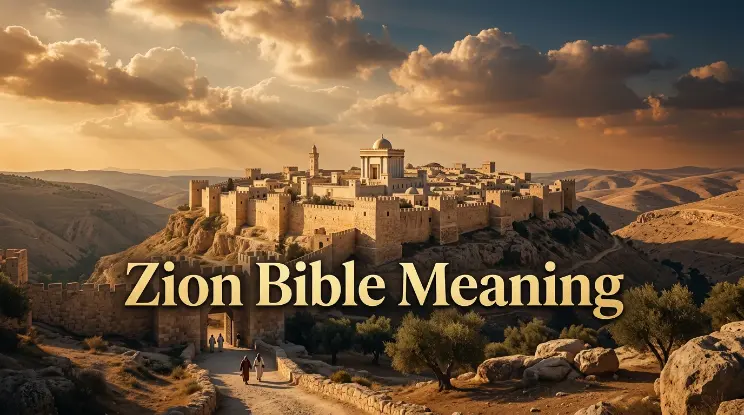
If you’ve ever read through the Psalms or listened to a worship song and heard the word “Zion” mentioned, you’ve probably paused and wondered what does it actually mean? The Zion Bible meaning goes far deeper than a simple place name on an ancient map. It carries layers of history, prophecy, and spiritual symbolism that have shaped Jewish and Christian thought for thousands of years.
In this article, we’re going to unpack everything you need to know about Zion where the word came from, how it’s used throughout Scripture, what it symbolizes theologically, and why it still matters to believers today.
You’re a curious reader, a Bible study leader, or someone doing a deep dive into biblical geography and theology, this guide will give you a clear, well-rounded understanding of the Zion Bible meaning.
What Is the Meaning of Zion in the Bible?
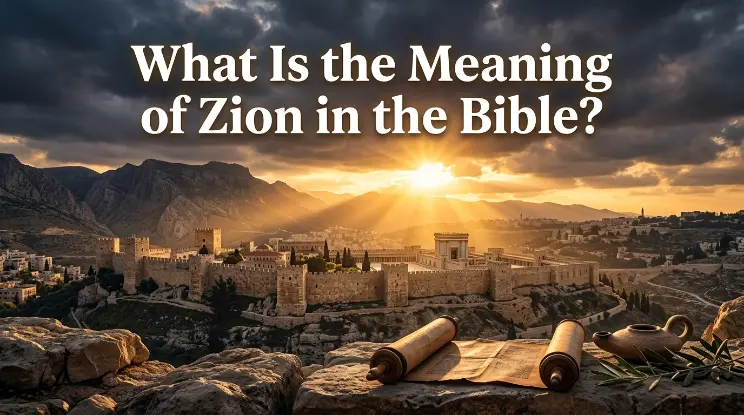
At its most basic level, the Zion Bible meaning refers to a specific hill in Jerusalem that later became a symbol for the entire city of Jerusalem, the people of Israel, and even the dwelling place of God Himself.
The name first appears in the Old Testament as a literal geographic location a fortified hill that King David captured from the Jebusites. Over time, though, “Zion” grew from a physical location into something much bigger: a theological concept representing God’s presence, His covenant with His people, and the hope of restoration and eternal peace.
So when you see “Zion” in Scripture, it can mean one of several things depending on the context:
- A literal hill or fortress in ancient Jerusalem
- A poetic name for the city of Jerusalem as a whole
- A symbol representing the nation of Israel or God’s chosen people
- A spiritual image of heaven or God’s eternal kingdom
This layered meaning is part of what makes Zion such a rich and fascinating word to study.
The Origin of the Word “Zion”
Etymology and Original Hebrew Meaning
The word Zion comes from the Hebrew word “Tsiyon” (צִיּוֹן). Scholars have debated its exact root for centuries, and there isn’t one single agreed-upon translation. Some of the most commonly proposed meanings include:
- “Fortress” or “stronghold” referencing its original use as a defensible hilltop position
- “Dry place” or “parched ground” a possible reference to the terrain
- “Marker” or “monument” suggesting it was a landmark of significance
- “Highest point” tying into its later symbolic meaning as an elevated, honored place
While the precise etymology remains uncertain, what’s clear is that the word carried a sense of prominence and permanence from the very beginning. It wasn’t just any hill it was a hill that mattered.
Zion as a Historical Location
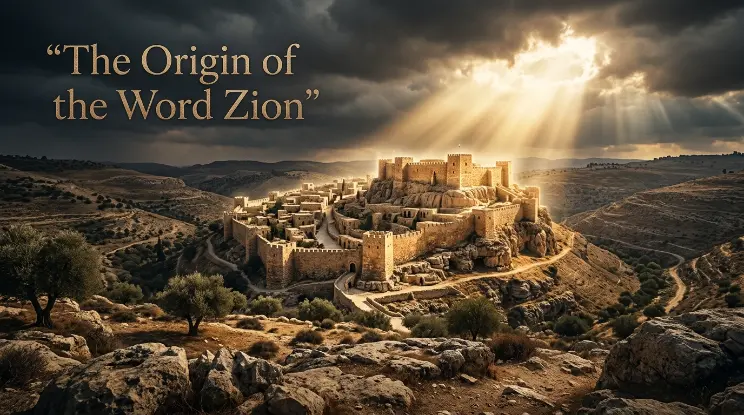
Historically, Mount Zion referred to a specific ridge in ancient Jerusalem. According to the biblical account in 2 Samuel, King David conquered this stronghold from the Jebusites and made it the City of David. From that point forward, Zion became closely tied to David’s dynasty, and eventually, it became synonymous with Jerusalem as a whole.
Later, when Solomon built the Temple on a nearby hill (Mount Moriah), the name Zion expanded to include that area too. Over centuries of use, “Zion” stopped being a precise geographic marker and became a broader, almost poetic way of referring to the entire holy city.
Zion in the Old Testament
A Symbol of God’s Chosen City
Throughout the Old Testament, Zion is repeatedly described as the place God chose to dwell among His people. It’s mentioned well over 150 times across the Hebrew Scriptures, which shows just how central this concept was to Israel’s identity and worship.
In the Psalms especially, Zion is portrayed with deep affection and reverence. The psalmists describe it as:
- The place where God’s glory dwells
- A source of strength and refuge for His people
- The center of true worship
- A city that will never be shaken because God Himself protects it
This wasn’t just poetic language for the sake of beauty it reflected a genuine theological belief that God had specially set apart Jerusalem, and Zion in particular, as His earthly home.
Zion and the Davidic Covenant
Zion is also closely tied to God’s covenant with King David. Because David established his throne on this hill, Zion became associated with the promise that David’s line would endure forever. This is a crucial piece of the puzzle when it comes to understanding messianic prophecy later in Scripture.
When prophets spoke of a future king who would reign in righteousness, restore Israel, and bring peace, they often framed this hope in terms of Zion. The coming Messiah wasn’t just expected to be a spiritual figure He was expected to reign from Zion, fulfilling the promises made to David.
Zion in Prophetic Literature
The prophets particularly Isaiah, Jeremiah, and Micah use Zion extensively as a symbol of both judgment and hope.
Examples of how prophets used Zion:
- Isaiah frequently uses Zion to describe both the coming judgment on unfaithful Israel and the future restoration and glory of God’s people.
- Jeremiah laments over Zion’s destruction during the Babylonian exile, portraying the fallen city almost like a grieving widow.
- Micah speaks of a future day when Zion will become the center of worship for all nations, with people streaming to it to learn God’s ways.
This dual use as both a place of warning and a place of hope shows how flexible and powerful the symbolism of Zion became over time. It wasn’t a static idea; it evolved with Israel’s changing circumstances.
Zion in the New Testament
From Physical Location to Spiritual Reality
By the time we reach the New Testament, the meaning of Zion shifts even further. While it still occasionally refers to the physical city of Jerusalem, it increasingly becomes a symbol of the spiritual, heavenly reality that the earthly Zion always pointed toward.
The Book of Hebrews captures this beautifully, describing believers as having come not to a physical mountain, but to “Mount Zion, the city of the living God, the heavenly Jerusalem.” This reframes Zion as something believers already belong to spiritually, even while still living on earth.
Zion as a Symbol of the Church and Heaven
In New Testament theology, Zion often represents:
- The gathered community of believers (the Church)
- The heavenly, eternal Jerusalem that awaits believers after death
- The fulfillment of God’s promises through Jesus Christ
- A place of ultimate peace, joy, and unbroken fellowship with God
This spiritual reinterpretation doesn’t erase the historical meaning it builds on it. The physical Zion in Jerusalem becomes a foreshadowing of a greater, eternal Zion that transcends any earthly location.
Jesus and Zion
There’s also a direct connection between Jesus and Zion in messianic prophecy. Old Testament texts that speak of a coming king from Zion are understood by New Testament writers as pointing to Jesus. He is portrayed as the ultimate fulfillment of the Davidic promise a king who reigns not just over a physical territory, but over an eternal, spiritual kingdom.
Symbolic and Theological Meanings of Zion
Now that we’ve covered the historical and biblical background, let’s look at what Zion symbolizes on a deeper theological level. This is often what people are really searching for when they look up the Zion Bible meaning not just the history, but what it represents spiritually.
1. Zion as God’s Dwelling Place
At its core, Zion represents the idea that God chooses to dwell among His people. It’s not a distant, unreachable concept it’s about closeness, presence, and relationship.
2. Zion as a Symbol of Security and Refuge
Because of its fortress-like origins, Zion also carries connotations of safety and protection. Just as the physical hill was defensible, the spiritual idea of Zion represents a place where God’s people can find refuge from trouble.
3. Zion as a Picture of Restoration
Especially in the prophetic books, Zion becomes a symbol of hope after loss. Even when Jerusalem was destroyed and the people were exiled, the promise of Zion’s restoration gave them something to hold onto.
4. Zion as the Center of Worship
Zion is consistently linked to worship to the Temple, to sacrifices, to songs of praise. It represents the idea that true worship flows from God’s presence, and Zion was seen as the geographic and spiritual center of that worship.
5. Zion as a Foreshadowing of Heaven
Finally, in its fullest sense, Zion points forward to the ultimate hope of eternal life with God a heavenly city where there is no more suffering, exile, or separation from God’s presence.
Zion vs. Jerusalem: What’s the Difference?
A lot of people wonder whether Zion and Jerusalem are simply two names for the same thing. The answer is: sort of, but not exactly.
| Aspect | Zion | Jerusalem |
| Original meaning | A specific hill/fortress | The entire city |
| Historical use | Narrower, symbolic | Broader, geographic |
| Theological weight | Heavily symbolic (God’s presence, covenant) | Historical and political center |
| New Testament use | Often spiritual/heavenly | Sometimes literal, sometimes symbolic |
Over time, the two terms became closely intertwined, with Zion often used poetically to refer to Jerusalem as a whole. But technically speaking, Zion started as a smaller, more specific location before its meaning expanded.
Real-Life Applications: Why Zion Still Matters Today
You might be wondering okay, this is interesting history, but why does it matter for me today? Here are a few reasons the concept of Zion continues to resonate with modern readers and believers.
A Reminder of God’s Faithfulness
The story of Zion established, destroyed, mourned, and ultimately promised restoration mirrors the human experience of loss and hope. It’s a powerful reminder that setbacks aren’t the end of the story.
A Picture of Belonging
For many believers, Zion represents spiritual belonging the idea that no matter where you are physically, you have a place in God’s eternal city. This can be especially comforting during seasons of instability or displacement.
A Source of Worship and Music
Zion has inspired countless hymns, worship songs, and spirituals throughout history. From traditional hymns to modern worship music, the imagery of Zion continues to shape how people express faith and hope through song.
A Symbol Used Beyond Religion
Interestingly, the concept of Zion has also influenced cultural and political movements outside of strictly religious contexts, including its use in Rastafarian theology and various cultural expressions of longing for a promised homeland. While these uses differ from the original biblical context, they show just how far-reaching and powerful the symbol of Zion has become.
Common Misunderstandings About Zion
Before we wrap up, let’s clear up a few common misconceptions people have about the Zion Bible meaning:
- Misconception 1: Zion is just another word for Israel. While closely related, Zion specifically refers to a place (originally a hill, later expanded symbolically), not the entire nation.
- Misconception 2: Zion only appears in the Old Testament. As we covered above, Zion appears in the New Testament too, especially in its spiritualized, heavenly sense.
- Misconception 3: Zion is purely a physical location with no deeper meaning. In reality, the theological weight of Zion far outweighs its purely geographic significance.
- Misconception 4: The word Zion has one clear, agreed-upon etymology. As mentioned earlier, scholars still debate its precise linguistic root.
Tips for Studying Zion in Your Own Bible Reading
If you want to explore the concept of Zion more deeply in your personal study, here are a few practical tips:
- Read the Psalms with fresh eyes. Pay attention to every mention of Zion and note whether it’s used literally or symbolically.
- Cross-reference Old and New Testament passages. Compare how prophets like Isaiah use Zion versus how the writer of Hebrews uses it.
- Use a concordance. Look up every instance of “Zion” in your preferred Bible translation to see the full range of its usage.
- Consider historical context. Understanding what was happening politically and historically (like the Babylonian exile) will deepen your appreciation of why Zion carried such emotional weight.
- Reflect on personal application. Ask yourself what “Zion” as a symbol of God’s presence, refuge, and future hope means for your own life and faith journey.
Frequently Asked Questions About Zion Bible Meaning
1. What does Zion literally mean in the Bible?
Zion originally referred to a specific hill in Jerusalem that King David captured and made his stronghold. Over time, the term expanded to symbolically represent the entire city of Jerusalem and, eventually, God’s spiritual kingdom.
2. Is Zion the same as Jerusalem?
Not exactly. Zion started as a smaller, specific location within Jerusalem before becoming a poetic and symbolic name often used interchangeably with the city as a whole.
3. What does Mount Zion represent spiritually?
Spiritually, Mount Zion represents God’s presence, protection, and the ultimate hope of restoration. In the New Testament, it also represents the heavenly, eternal dwelling place of believers.
4. How many times is Zion mentioned in the Bible?
Zion is mentioned well over 150 times throughout the Old and New Testaments, making it one of the most significant symbolic terms in Scripture.
5. What is the connection between Zion and King David?
King David captured the fortress of Zion from the Jebusites and established it as his royal city. This connection is central to the biblical covenant promising an eternal throne through David’s line.
6. Does Zion appear in the New Testament?
Yes. The New Testament, particularly the Book of Hebrews, uses Zion to describe the heavenly Jerusalem a spiritual, eternal reality that believers are said to belong to.
7. Why is Zion important to Christians today?
For many Christians, Zion serves as a symbol of hope, belonging, and God’s faithfulness. It represents both the historical roots of their faith and the future promise of eternal life with God.
Final Thoughts on the Zion Bible Meaning
So, what’s the takeaway here? The Zion Bible meaning is far richer than a single definition can capture. It began as a literal, physical stronghold in ancient Jerusalem, grew into a symbol representing the entire holy city, and eventually blossomed into a powerful theological picture of God’s presence, protection, and promised restoration.
From the Psalms to the prophets to the New Testament writers, Zion consistently points to something bigger than geography it points to relationship, hope, and the enduring faithfulness of God to His people. Whether you encounter the word in a worship song, a sermon, or your own personal Bible study, understanding its full depth of meaning can transform how you read and connect with Scripture.

James Parker is a Bible writer at GrasePath.com who loves exploring the deeper meaning of Scripture. He shares clear, trustworthy insights about biblical names, symbols, dreams, and spiritual teachings in simple language. His mission is to help readers strengthen their faith and better understand God’s Word every day.










