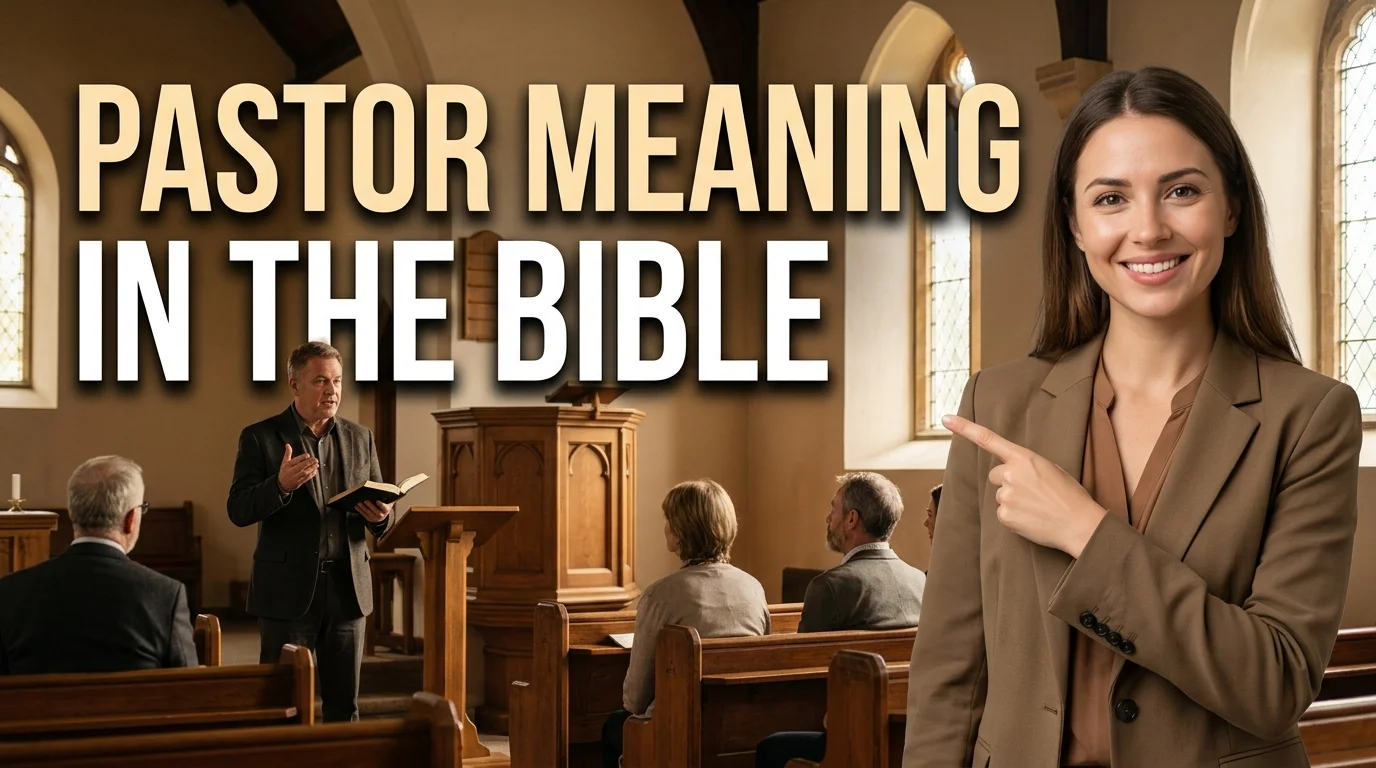
The word “pastor” has an important meaning in the Bible because it describes someone who provides spiritual guidance, care, protection, and leadership to God’s people. The term comes from a word associated with shepherding, which helps explain why Scripture often compares spiritual leaders to shepherds caring for a flock. Just as a shepherd guides, feeds, and protects sheep, a pastor is expected to teach God’s Word, encourage believers, and help a church community grow in faith.
One of the most meaningful references appears in Ephesians 4:11, where Paul explains that Christ gave some people the responsibility of serving as pastors and teachers to equip believers for ministry. Another important passage is John 10:11, where Jesus describes Himself as the Good Shepherd who lays down His life for the sheep. Although Jesus is the ultimate Shepherd, Christian pastors are called to follow His example through faithful service, humility, and compassion.
First Peter 5:2–3 also encourages church elders to care for God’s flock willingly and lead by example rather than seeking power or personal gain. Understanding the pastor meaning in the Bible can help readers recognize the responsibilities and spiritual purpose of church leadership. It also explains why biblical shepherding involves more than preaching; it includes caring for people, teaching truth, offering encouragement, and helping others remain strong in their relationship with God.
What Is the Pastor Meaning in the Bible?
At its core, the pastor meaning in the Bible is tied to one beautifully simple image: a shepherd caring for sheep.
The English word “pastor” comes from the Latin word pastor, which literally means “shepherd.” This isn’t a coincidence. When the Bible talks about pastors, it’s almost always painting a picture of someone who leads, protects, feeds, and nurtures a flock except the flock is a community of believers, not literal sheep.
The word “pastor” itself appears only once in most English translations of the Bible, in Ephesians 4:11, where Paul writes that God gave the church “some to be pastors and teachers” (some translations render this as “shepherds and teachers”). But even though the exact word shows up rarely, the concept of pastoral leadership runs through the entire Bible from Genesis to Revelation.
The Original Greek Word Behind “Pastor”
The Greek word translated as “pastor” in Ephesians 4:11 is poimen (ποιμήν), which simply means “shepherd.” This same Greek word is used throughout the New Testament to describe:
- Jesus Christ as the “Good Shepherd” (John 10:11)
- Literal shepherds tending sheep (Luke 2:8)
- Church leaders who “shepherd” the congregation (1 Peter 5:2, Acts 20:28)
So when you ask about the pastor meaning in the Bible, you’re really asking: what does it mean to shepherd people spiritually?
The Hebrew Roots: Shepherds in the Old Testament
Long before the New Testament used the word poimen, the Old Testament had already established shepherding as a symbol of godly leadership. The Hebrew word ra’ah (רָעָה) means “to shepherd” or “to tend a flock,” and it’s used to describe:
- God Himself as Israel’s shepherd (Psalm 23:1 “The LORD is my shepherd”)
- Kings and leaders who were supposed to shepherd God’s people (Ezekiel 34:2)
- Moses and David, both literal shepherds before becoming spiritual and national leaders
This is a crucial insight: in biblical culture, shepherding wasn’t just an occupation it was a leadership metaphor woven into the fabric of how God’s people understood authority, care, and responsibility.
Where Does the Word “Pastor” Appear in the Bible?
If you’re searching your Bible for the word “pastor,” you might be surprised at how rarely it shows up in most translations. Here’s a breakdown:
Ephesians 4:11 The Key Verse
This is the most direct biblical reference to pastors as a specific role within the church. Paul lists five types of leaders Christ gave to the church:
- Apostles
- Prophets
- Evangelists
- Pastors (shepherds)
- Teachers
These are often called the “fivefold ministry,” and pastors are placed right alongside teachers, suggesting their job includes both spiritual care and instruction.
Jeremiah 3:15 God’s Promise of Godly Shepherds
“And I will give you pastors according to mine heart, which shall feed you with knowledge and understanding.” This Old Testament verse (King James Version) directly uses the word “pastors” and connects the role to feeding people spiritually with knowledge, wisdom, and understanding.
1 Peter 5:1-4 Instructions to Elders/Pastors
Peter doesn’t use the word “pastor” directly here, but he addresses “elders” and tells them to “shepherd the flock of God.” This passage is considered one of the clearest job descriptions for pastoral leadership in the entire Bible.
John 10 Jesus as the Model Shepherd
Even though this chapter never uses the word “pastor,” it’s arguably the most important passage for understanding what pastoral ministry should look like, because Jesus describes Himself as the Good Shepherd who:
- Knows His sheep by name
- Lays down His life for them
- Leads them rather than driving them
- Protects them from wolves and thieves
Every human pastor is meant to reflect this model, imperfectly but intentionally.
The Biblical Job Description of a Pastor
So now that we know the pastor meaning in the Bible traces back to shepherding, what does a biblical pastor actually do? Scripture gives us a surprisingly detailed picture.
1. Feeding the Flock (Spiritual Nourishment)
Just like a shepherd leads sheep to good pasture, a pastor is responsible for feeding people spiritually through teaching, preaching, and sound biblical doctrine. Jesus told Peter three times, “Feed my sheep” (John 21:15-17), making this one of the clearest pastoral commands in Scripture.
2. Protecting the Flock from Harm
Shepherds in ancient Israel had to physically defend their sheep from wolves, lions, and thieves. Spiritually, pastors are called to protect their congregations from false teaching, division, and spiritual danger.
Acts 20:28-29 warns leaders to “take heed” because “grievous wolves” would try to enter and harm the flock.
3. Leading by Example, Not Force
1 Peter 5:3 gives a striking instruction: pastors should lead “not as being lords over God’s heritage, but being ensamples to the flock.” In other words, pastoral authority isn’t about control it’s about modeling godly character.
4. Caring for Individuals, Not Just the Crowd
A good shepherd notices when even one sheep goes missing (Luke 15:4-7). This teaches us that pastoral care isn’t just about preaching to a crowd on Sunday it’s about personal attention, comfort, and presence in people’s lives.
5. Guarding Sound Doctrine
Titus 1:9 says an elder/pastor must “hold fast the faithful word” so they can “exhort and convince the gainsayers.” Pastors are meant to be doctrinally grounded, able to correct error with grace and truth.
Pastor vs. Other Biblical Church Roles
One reason people get confused about the pastor meaning in the Bible is that Scripture uses several overlapping terms for church leaders. Let’s clear up the confusion.
Pastor vs. Elder
In the New Testament, “pastor,” “elder” (presbyteros), and “overseer” or “bishop” (episkopos) often refer to the same role, just emphasizing different aspects:
- Elder emphasizes maturity and wisdom
- Overseer/Bishop emphasizes the function of oversight and management
- Pastor emphasizes the nurturing, shepherding relationship
Acts 20:17 and 20:28 use all three ideas in the same context, describing the Ephesian “elders” as those the Holy Spirit made “overseers” to “feed [shepherd] the church.”
Pastor vs. Apostle
Apostles were typically church planters and foundational leaders with broader authority (often traveling), while pastors were usually attached to a specific local congregation, providing ongoing care.
Pastor vs. Teacher
Ephesians 4:11 links “pastors and teachers” so closely in the original Greek grammar that many scholars believe this describes one combined role a “pastor-teacher” rather than two separate offices. This suggests that biblical pastoral ministry always includes a teaching component.
Real-Life Examples of Shepherd-Leaders in the Bible
Understanding the pastor meaning in the Bible becomes much clearer when we look at actual people Scripture holds up as examples.
Moses: The Reluctant Shepherd-Leader
Before leading Israel out of Egypt, Moses spent 40 years literally shepherding sheep in the wilderness (Exodus 3:1). God used that season to prepare him for shepherding an entire nation.
David: The Shepherd King
David was literally a shepherd boy (1 Samuel 16:11) before becoming Israel’s most celebrated king. His experience protecting sheep from lions and bears (1 Samuel 17:34-36) directly shaped his courage and leadership style as king.
Jesus: The Good Shepherd
As mentioned earlier, Jesus explicitly calls Himself the “good shepherd” who “giveth his life for the sheep” (John 10:11). This is the ultimate template every human pastor is meant to imitate.
Peter: From Fisherman to Shepherd
After denying Jesus three times, Peter was restored with the specific charge to “feed my sheep” (John 21:17). He later became one of the early church’s most influential shepherd-leaders, writing directly to elders/pastors in 1 Peter 5.
Why the Shepherd Metaphor Still Matters Today
You might be wondering: why does any of this ancient shepherding imagery matter for modern church life? Here’s why it’s more relevant than ever.
It Redefines Leadership as Service
In a world obsessed with power, titles, and platforms, the biblical pastor meaning flips the script. True pastoral leadership isn’t about being served it’s about serving, protecting, and nurturing others, even at personal cost.
It Sets Healthy Expectations
Knowing the biblical job description helps congregations have realistic, healthy expectations of their pastors not treating them like CEOs, celebrities, or untouchable authority figures, but as shepherds who are also part of the flock, accountable to the Chief Shepherd (1 Peter 5:4).
It Encourages Accountability
Because Scripture is specific about what pastors should and shouldn’t do (no greed, no lording over people, no hypocrisy 1 Peter 5:2-3), it gives churches a biblical standard to measure leadership against.
It Reminds Pastors of Their “Why”
For pastors themselves, returning to this shepherd imagery is grounding. Ministry can become busy, political, or performance-driven. Remembering that the job is fundamentally about feeding, protecting, and personally caring for people keeps the calling pure.
Common Misunderstandings About the Pastor Meaning in the Bible
Let’s clear up a few myths that often confuse people.
- Myth: “Pastor” is only a modern denominational title. Truth: While the specific organizational title varies today, the biblical concept of shepherd-leadership goes back thousands of years before modern denominations existed.
- Myth: Only men who preach on Sundays are “real” pastors. Truth: The biblical function of shepherding teaching, caring, protecting can be expressed in various roles and contexts across different church traditions, and how that’s structured varies by denomination.
- Myth: A pastor’s authority is absolute. Truth: Scripture repeatedly warns against domineering leadership (1 Peter 5:3) and emphasizes accountability to God and to sound doctrine.
- Myth: Pastoral ministry is mainly about public speaking. Truth: Biblically, preaching is only one part of a much bigger picture that includes personal care, protection, and discipleship.
Key Bible Verses That Define the Pastor Role
If you want a quick reference list for personal study, here are the most important verses connected to the pastor meaning in the Bible:
- Ephesians 4:11-12 Pastors given to equip the saints for ministry
- Jeremiah 3:15 God promises pastors “according to mine heart”
- John 10:11-14 Jesus as the model Good Shepherd
- John 21:15-17 “Feed my sheep”
- Acts 20:28 Elders called to feed and oversee the church
- 1 Peter 5:1-4 The clearest job description for shepherd-leaders
- Titus 1:5-9 Qualifications for elders/pastors
- 1 Timothy 3:1-7 Character requirements for church overseers
- Psalm 23 The foundational shepherd imagery applied to God Himself
- Ezekiel 34 A warning against selfish, careless shepherds
How to Apply This Understanding in Everyday Faith Life
Even if you’re not a pastor yourself, understanding this biblical concept can shape your everyday faith.
- If you’re a church member: Pray for your pastor’s protection and wellbeing, not just their sermons. Shepherding is exhausting, personal work.
- If you’re considering pastoral ministry: Study the qualifications in 1 Timothy 3 and Titus 1 carefully before pursuing the role character matters more than charisma.
- If you’re a pastor already: Regularly revisit John 10 and 1 Peter 5 to recalibrate your heart toward service rather than status.
- If you’re just curious about the Bible: Use this shepherd theme as a lens to reread familiar passages you’ll notice it woven throughout Scripture in surprising places.
Conclusion:
At the end of the day, the pastor meaning in the Bible points to something far richer than a job title or a Sunday role. It’s rooted in the ancient, tender image of a shepherd who knows his sheep, feeds them, protects them, and is willing to sacrifice for them. From Moses to David to Jesus Himself, Scripture consistently uses shepherding language to describe godly leadership leadership defined by humility, service, and genuine care rather than control or status.
Whether you’re a pastor, a church member, or simply someone exploring what the Bible says, understanding this word’s deep biblical roots can transform the way you view spiritual leadership. The next time you hear someone called “Pastor,” you’ll know you’re really hearing an echo of an ancient, sacred calling: to shepherd God’s people the way the Good Shepherd shepherds us all.
FAQs About the Pastor Meaning in the Bible
1. What does the word “pastor” mean in the Bible?
The word “pastor” comes from the Latin word for “shepherd” and translates the Greek word poimen. In the Bible, it refers to a spiritual leader who feeds, protects, and cares for a congregation the way a shepherd cares for sheep.
2. How many times does the word “pastor” appear in the Bible?
In most English translations, the exact word “pastor” (singular form) appears only in Ephesians 4:11 in the New Testament, though “pastors” (plural) appears a few more times, including in Jeremiah 3:15. However, the broader concept of shepherding leaders appears throughout Scripture.
3. Is a pastor the same as an elder in the Bible?
Largely, yes. The New Testament often uses “pastor,” “elder,” and “overseer/bishop” interchangeably to describe the same church leadership role, with each term highlighting a different aspect of the responsibility.
4. What are the biblical qualifications for a pastor?
According to 1 Timothy 3:1-7 and Titus 1:5-9, a pastor should be above reproach, faithful in marriage, self-controlled, hospitable, able to teach, not quarrelsome or greedy, and have a good reputation both inside and outside the church.
5. What is the difference between a pastor and a priest?
While both are spiritual leaders, “priest” often carries a specific sacramental or liturgical function in certain traditions, whereas “pastor” biblically emphasizes shepherding, teaching, and personal spiritual care of a congregation.
6. Why is Jesus called the “Good Shepherd” in relation to pastors?
Jesus calls Himself the Good Shepherd in John 10 to show what true, sacrificial spiritual leadership looks like. Human pastors are called to imitate this model of laying down personal interests for the good of the flock.
7. Can women be pastors according to the Bible?
This is a widely debated topic across Christian denominations, with different traditions interpreting relevant passages (such as 1 Timothy 2 and Galatians 3:28) differently. It’s best explored through denominational teaching and careful, personal biblical study.

Hi, I’m Daniel Foster, a writer at GrasePath.com. I enjoy exploring the deeper meanings of biblical words, names, symbols, and verses to help readers better understand Scripture. My goal is to present accurate, easy-to-read, and well-researched content that makes the Bible more accessible for everyone. Through every article, I strive to provide clear explanations, meaningful insights, and trustworthy information to support your faith and Bible study journey.