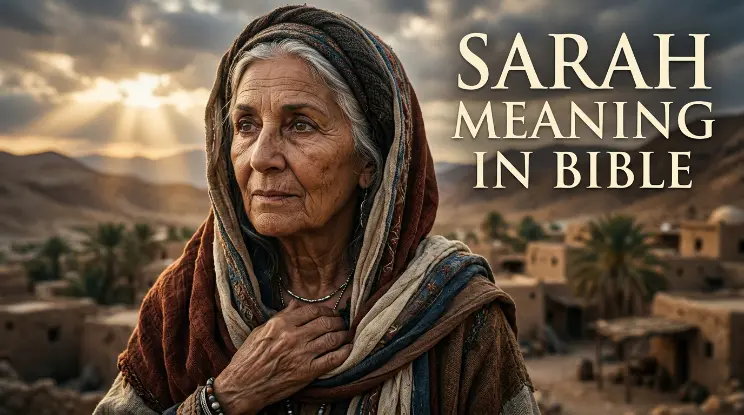
Have you ever wondered why a single name change in Scripture could carry so much spiritual weight? That’s exactly what happens with Sarah, one of the most influential women in biblical history.
If you’ve searched for “sarah meaning in bible,” you’re probably curious about more than just a dictionary definition you want to understand the deeper story, the symbolism, and why this name still resonates with millions of people today.
In this article, we’re going to dig deep into the sarah meaning in bible, exploring her origin story, the significance of her name change from Sarai to Sarah, and what lessons her life still teaches us thousands of years later. Whether you’re naming a child, studying Scripture, or simply curious about biblical history, this guide will give you everything you need.
What Does Sarah Mean in the Bible?
Let’s start with the basics. The sarah meaning in bible is widely translated as “princess,” “noblewoman,” or “lady of high rank.” The name comes from the Hebrew word sarah (שָׂרָה), which is rooted in the term sar, meaning “prince,” “chief,” or “ruler.”
So when we talk about the meaning of Sarah in Scripture, we’re really talking about royalty, dignity, and authority qualities that perfectly matched the woman who carried this name in the Book of Genesis.
Here’s the interesting part: Sarah wasn’t always called Sarah. Her original name was Sarai, which most scholars believe meant “my princess” a more personal, possessive form of the name. It wasn’t until later in her life that God changed her name, and that change is one of the most meaningful moments in her entire story.
Quick Summary of the Name’s Meaning
- Sarai – “My princess” (a personal or limited form of nobility)
- Sarah – “Princess” or “Noblewoman” (a universal, expanded form of nobility)
- Hebrew Root – Sar (prince, chief, leader)
- Symbolic Meaning – Royalty, honor, motherhood, promise fulfilled
The Story of Sarah in the Bible: Who Was She?
To really understand the sarah meaning in bible, you need to know her story. Sarah appears primarily in the Book of Genesis, and she’s introduced as the wife of Abram (later renamed Abraham). She’s not just a supporting character she’s a central figure in one of the most important covenants in biblical history.
Sarah’s Background
Sarah was Abram’s wife and, according to some biblical interpretations, possibly his half-sister as well (Genesis 20:12). She left her homeland of Ur with Abram, following God’s call to journey to an unknown land a decision that required incredible faith and trust.
Throughout her life, Sarah is described as remarkably beautiful, even in her later years, which caused complications during their travels through foreign lands like Egypt and Gerar, where rulers took notice of her.
The Struggle with Infertility
One of the most emotionally powerful parts of Sarah’s story is her long struggle with infertility. For decades, Sarah was unable to conceive a child, which in ancient Near Eastern culture carried enormous social and personal weight. Women were often defined by their ability to bear children, so Sarah’s barrenness was a source of deep grief.
Out of desperation and cultural custom, Sarah gave her servant Hagar to Abram so he could have a child through her a decision that led to the birth of Ishmael. But this wasn’t the plan God had for Sarah. God had promised Abram that he would become the father of many nations, and that promise specifically included Sarah as the mother of that lineage.
Why Did God Change Sarai’s Name to Sarah?
This is where the sarah meaning in bible becomes truly fascinating. In Genesis 17:15-16, God appears to Abram and makes a covenant that changes everything:
God tells Abram that his name will now be Abraham, meaning “father of many nations,” and at the same time, He changes Sarai’s name to Sarah. This wasn’t a random change it was deeply symbolic.
The Significance Behind the Name Change
- From Personal to Universal – Sarai meant “my princess,” suggesting she belonged to Abraham alone. Sarah means simply “princess,” suggesting she would become a mother of nations and kings, not just a princess to one man.
- A Sign of the Covenant – The name change happened at the same time God renewed His covenant promise, symbolizing a new identity and a new purpose.
- A Promise of Motherhood – Immediately after changing her name, God tells Abraham that Sarah will bear a son, and that kings of nations will come from her.
This moment is a powerful reminder that in the Bible, names aren’t just labels they represent identity, destiny, and divine purpose. When God changes someone’s name, it usually signals a major shift in their role within His plan.
The Birth of Isaac: Sarah’s Miracle Child
Perhaps the most remarkable part of Sarah’s story is the birth of her son, Isaac. By the time God promised Sarah a child, she was around 90 years old, and Abraham was around 100. Naturally, this promise seemed impossible.
In Genesis 18:12, when Sarah overhears the promise, she laughs to herself, doubting it could really happen at her age. This moment is so significant that it directly influences her son’s name Isaac means “he laughs” or “laughter” in Hebrew.
Key Details About Isaac’s Birth
- Isaac was born when Sarah was approximately 90 years old.
- His birth fulfilled God’s covenant promise to Abraham.
- Isaac became the ancestor of the Israelite nation, continuing the lineage that leads to major biblical figures.
- Sarah’s laughter of doubt turned into laughter of joy, as she later said, “God has made laughter for me; everyone who hears will laugh with me” (Genesis 21:6).
This story beautifully illustrates a central theme tied to the sarah meaning in bible the idea that even when human circumstances seem impossible, divine promises can still be fulfilled.
Symbolic and Spiritual Meaning of Sarah’s Story
Beyond the literal translation of her name, Sarah’s story carries several layers of spiritual symbolism that scholars and theologians have studied for centuries.
1. A Symbol of Faith Through Waiting
Sarah waited decades for the fulfillment of a promise. Her story teaches that faith isn’t always immediate sometimes it requires patience through long seasons of uncertainty and doubt.
2. A Symbol of Transformation
The change from Sarai to Sarah represents personal transformation. Just as her name expanded from something personal to something universal, her role expanded from being simply Abraham’s wife to becoming a matriarch of nations.
3. A Symbol of Motherhood and Legacy
Sarah is considered one of the great matriarchs of the Bible, alongside Rebekah, Rachel, and Leah. Her legacy as Isaac’s mother places her at the very root of the Israelite nation’s family tree.
4. A Symbol of Honor and Dignity
Because the name itself means “princess” or “noblewoman,” Sarah is often used as a symbol of dignity, grace, and honor qualities that many parents hope to instill in daughters named after her today.
Sarah in the New Testament
While Sarah is primarily a figure from the Old Testament, she’s also referenced in the New Testament, which shows just how influential her story remained centuries later.
- Hebrews 11:11 highlights Sarah’s faith, noting that she received the ability to conceive because she considered God faithful to keep His promise.
- 1 Peter 3:6 uses Sarah as an example of a respectful and faithful wife, describing how she honored Abraham.
- Galatians 4:21-31 uses an allegorical comparison between Sarah and Hagar to illustrate the difference between promise and human effort, freedom and bondage.
These references show that Sarah wasn’t just an Old Testament figure her example of faith carried theological weight well into New Testament teachings.
Modern Popularity of the Name Sarah
Given its rich biblical background, it’s no surprise that Sarah remains one of the most popular names across the world. Its meaning “princess” or “noblewoman” combined with its powerful biblical story, makes it a name parents have chosen for generations.
Why Parents Still Choose the Name Sarah
- Timeless Meaning – “Princess” is a meaning that feels elegant without being overly elaborate.
- Strong Biblical Roots – For religious families, naming a daughter Sarah connects her to a story of faith, patience, and divine promise.
- Simple Yet Elegant – The name is short, easy to pronounce across cultures, and has graceful sound qualities.
- Cross-Cultural Appeal – Variations of Sarah exist in many languages and cultures, including Sara, Zahra (in some interpretations), and Sarra.
Common Variations of the Name
| Variation | Origin/Language |
| Sara | English, Spanish, Italian |
| Sarai | Hebrew (original form) |
| Sarra | French |
| Zara | Arabic-influenced variation |
| Sadie | English nickname form |
Lessons We Can Learn from Sarah’s Life
Sarah’s story isn’t just a historical account it’s packed with practical, real-life lessons that still apply today.
- Faith Doesn’t Always Look Perfect – Sarah laughed in doubt before she believed. It’s okay to struggle with faith before fully embracing it.
- Timing Matters – Sarah’s story reminds us that just because something hasn’t happened yet doesn’t mean it never will.
- Identity Can Shift with Purpose – Her name change shows that as our purpose grows, our identity can grow with it.
- Grief and Joy Can Coexist – Sarah experienced years of heartbreak over infertility before experiencing overwhelming joy at Isaac’s birth.
- Honor and Respect Matter in Relationships – Sarah’s respectful relationship with Abraham is highlighted as an example even in the New Testament.
FAQs About Sarah Meaning in the Bible
1. What is the meaning of Sarah in the Bible?
The sarah meaning in bible is “princess” or “noblewoman,” derived from the Hebrew root word for “prince” or “ruler.” It reflects her status as a matriarch and mother of nations.
2. Why was Sarai’s name changed to Sarah?
God changed her name in Genesis 17 as part of His covenant renewal with Abraham, symbolizing her expanded role as the mother of many nations rather than belonging to just one household.
3. How old was Sarah when she had Isaac?
According to Genesis, Sarah was approximately 90 years old when she gave birth to Isaac, making it a miraculous fulfillment of God’s promise.
4. Who was Sarah’s husband in the Bible?
Sarah was married to Abraham (originally named Abram), one of the most significant patriarchs in the Bible and the father of multiple nations through his descendants.
5. What does the name Sarah symbolize spiritually?
Spiritually, Sarah symbolizes faith, patience, transformation, and the fulfillment of divine promises, even when circumstances seem impossible.
6. Is Sarah mentioned in the New Testament?
Yes, Sarah is referenced in Hebrews 11, 1 Peter 3, and Galatians 4, where she’s used as an example of faith and as part of an allegorical teaching about promise versus human effort.
7. What is the difference between Sarai and Sarah?
Sarai means “my princess,” suggesting a more personal or limited meaning, while Sarah means simply “princess,” representing a broader, more universal role tied to her destiny as a matriarch.
Final Thoughts on Sarah’s Meaning in the Bible
At its core, the sarah meaning in bible is about far more than a simple translation of “princess.” It’s a story of transformation, patience, faith, and the fulfillment of promises that once seemed impossible. From her humble beginnings as Sarai to her powerful legacy as Sarah, mother of nations, her journey continues to inspire people who are waiting on their own promises, struggling with their own doubts, or searching for deeper meaning in their identity.
You’re drawn to this name for its elegant meaning, its powerful biblical roots, or the timeless lessons Sarah’s life still teaches us, one thing is clear the story behind Sarah is one of resilience, honor, and unwavering hope.

James Parker is a Bible writer at GrasePath.com who loves exploring the deeper meaning of Scripture. He shares clear, trustworthy insights about biblical names, symbols, dreams, and spiritual teachings in simple language. His mission is to help readers strengthen their faith and better understand God’s Word every day.