Have you ever stumbled across the word “yoke” while reading Scripture and paused, wondering what it actually meant beyond a farming tool? You’re not alone.
The yoke in the Bible meaning goes far deeper than wooden beams and oxen it touches on submission, partnership, burden, freedom, and even rest. Understanding this ancient symbol can completely change how you read passages like Matthew 11:28-30 or Galatians 5:1.
In this article, we’re going to unpack the yoke from every angle: its literal, historical use in agriculture, its symbolic weight in the Old Testament, and how Jesus flipped its meaning on its head in the New Testament. By the end, you’ll not only understand the yoke in the Bible meaning but also see how this powerful image can speak into your own life today.
What Is a Yoke? A Quick Overview
Before we jump into the spiritual symbolism, it helps to understand what a yoke physically was in biblical times.
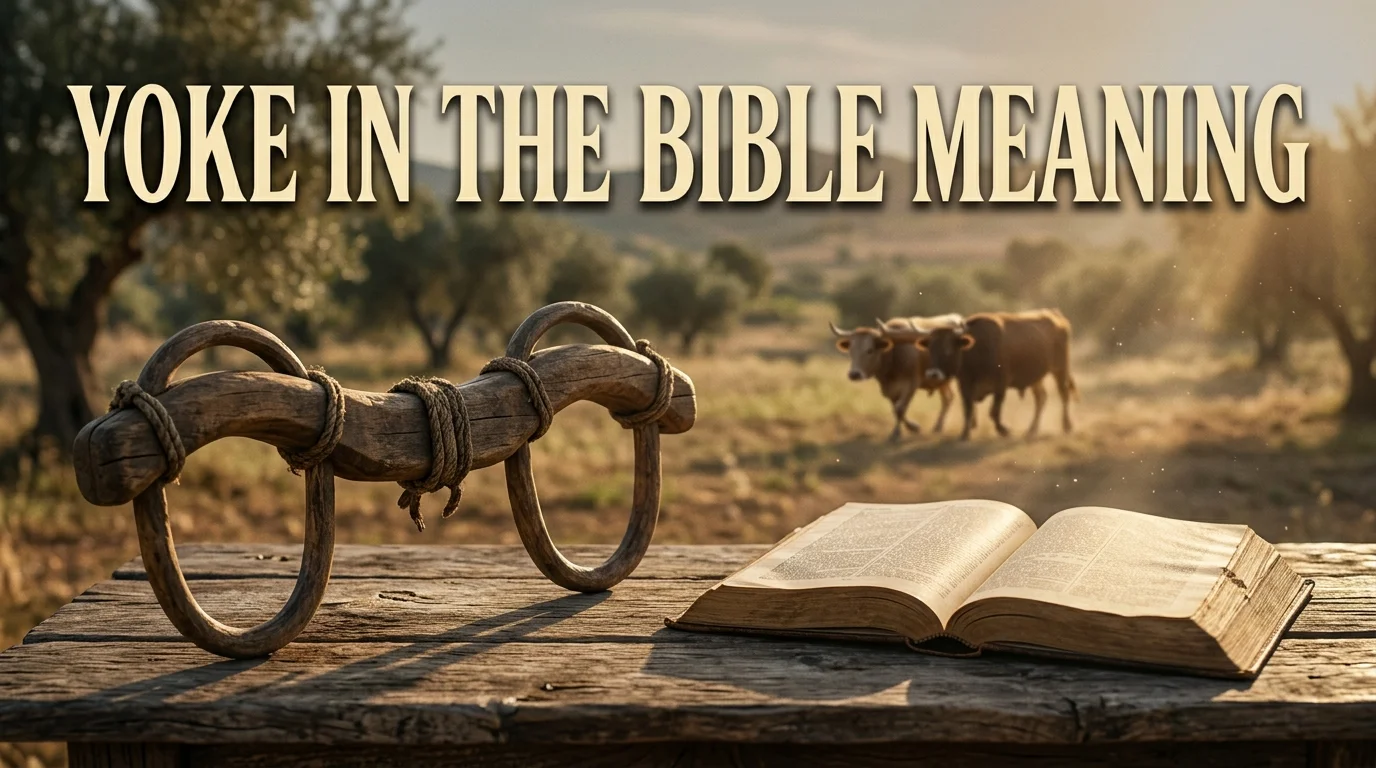
A yoke was a wooden crossbar or frame, usually carved to fit across the necks or shoulders of two animals most commonly oxen. It connected them together so they could pull a plow, cart, or heavy load as a unified team. Farmers in the ancient Near East relied on yokes daily; without them, farming would have been nearly impossible on the scale needed to feed families and communities.
Here’s what made the yoke so significant:
- It joined two animals together, forcing them to move in sync.
- It distributed weight, making a heavy task more manageable.
- It required training young, untrained oxen were paired with older, experienced ones to “learn the yoke.”
- It symbolized submission to a task, a master, or an authority.
Because the yoke was such a familiar, everyday object, biblical writers used it constantly as a metaphor. And that’s really where the deeper yoke in the Bible meaning begins to unfold.
Yoke in the Old Testament: A Symbol of Burden and Bondage
In the Old Testament, the yoke almost always represents hardship, servitude, or oppression. It’s rarely portrayed as something pleasant. Instead, it’s tied to slavery, forced labor, and the weight of being controlled by another nation or ruler.
The Yoke as Slavery and Oppression
Throughout Israel’s history, the yoke became shorthand for national bondage. When Israel was enslaved in Egypt, later oppressed by foreign empires, or crushed under harsh kings, the prophets described that suffering using yoke imagery.
For example, when the northern kingdom pleaded with King Rehoboam for relief from heavy labor, they specifically asked him to “lighten the yoke” his father had placed on them. When he refused and made it heavier instead, the kingdom split a pivotal moment in Israel’s history triggered by, quite literally, yoke language.
Prophets like Isaiah and Jeremiah also used the yoke to describe:
- Political domination by foreign powers (like Babylon or Assyria)
- Spiritual oppression caused by disobedience to God
- The heaviness of sin and rebellion weighing down a nation
The Yoke as a Sign of Coming Judgment
Interestingly, some prophets acted out yoke imagery as a physical prophecy. Jeremiah, for instance, wore a wooden yoke around his own neck to symbolize the coming Babylonian captivity a dramatic, visual sermon warning Judah that submission to Babylon was inevitable unless they repented.
This shows just how powerful and instantly understood the symbol was. You didn’t need a long explanation. Everyone knew: a yoke means submission, weight, and loss of freedom.
The Promise of a Broken Yoke
But the Old Testament doesn’t leave things there. Alongside the warnings, there’s also hope. Several prophetic passages promise a future day when God will “break the yoke” off His people freeing them from oppression and restoring their dignity.
This sets up a beautiful contrast that carries into the New Testament: yokes can be broken, removed, or replaced with something better.
Yoke in the New Testament: Jesus Redefines the Symbol
This is where the yoke in the Bible meaning takes an unexpected turn. Instead of only representing burden and slavery, Jesus reframes the yoke as something you can actually choose and something that brings rest, not exhaustion.
Matthew 11:28-30 “Take My Yoke Upon You”
The most famous yoke passage in Scripture is Jesus’ invitation:
“Come to me, all who labor and are heavy laden, and I will give you rest. Take my yoke upon you, and learn from me… For my yoke is easy, and my burden is light.”
This is a radical statement. Jesus isn’t offering freedom from all yokes He’s offering His own yoke as an alternative to the crushing religious legalism people were carrying at the time. Many Jewish teachers of the day burdened people with endless rules and regulations, often called “the yoke of the Law” or “the yoke of the commandments” in rabbinic tradition.
Jesus essentially says: Stop carrying that heavy yoke. Come carry mine instead it fits differently.
Here’s why His yoke is described as “easy” and “light”:
- It’s rooted in grace, not performance.
- It involves partnership with Him, not isolated struggle.
- It’s tailor-made, like a custom-fitted yoke that doesn’t chafe.
- It leads to rest for the soul, not just physical relief.
The Picture of Two Oxen Working Together
Remember how yokes typically joined two animals? Many Bible teachers point out that when Jesus invites people to take His yoke, He’s picturing Himself as the experienced ox walking alongside the untrained one. You’re not pulling the load alone He’s doing the heavy lifting right beside you, guiding your steps and setting the pace.
This image transforms the yoke from a symbol of oppression into a symbol of companionship and shared strength.
Paul’s Use of the Yoke: Freedom vs. Bondage
The Apostle Paul picks up the yoke metaphor too, but in a different context. In Galatians 5:1, he writes that Christ has set believers free, urging them not to submit again to “a yoke of slavery” referring to a return to legalistic religious requirements after experiencing grace.
Paul also uses the phrase “unequally yoked” in 2 Corinthians 6:14, warning believers against being joined together with those who don’t share their values or faith. This draws directly from the agricultural picture: pairing two very different animals (say, an ox and a donkey) under one yoke would create imbalance, strain, and inefficiency a powerful metaphor for mismatched partnerships, whether in marriage, business, or close relationships.
Key Meanings of “Yoke” in the Bible (Summary)
To make this easier to digest, here’s a breakdown of the different symbolic meanings of the yoke throughout Scripture:
- Bondage and Oppression – Slavery, forced labor, or domination by a foreign power (Old Testament).
- Submission to Authority – Being under the rule or control of a king, master, or law.
- Religious Legalism – The overwhelming weight of trying to earn favor with God through strict rule-keeping.
- Partnership and Discipleship – Walking alongside Jesus, learning from Him, sharing the load (Matthew 11).
- Freedom Through Christ – The contrast between the “yoke of slavery” and the freedom found in grace (Galatians 5).
- Compatibility in Relationships – The idea of being “equally yoked,” used to describe shared values and direction (2 Corinthians 6:14).
Each of these meanings connects back to the same core image: two things joined together, moving in the same direction, sharing a load.
Why the Yoke Metaphor Still Matters Today
You might be thinking, “Okay, that’s interesting history but why does this matter for me right now?” Great question. Here’s why this ancient symbol still resonates.
1. We All Carry Some Kind of Yoke
Whether it’s work stress, people-pleasing, perfectionism, or trying to “earn” love and approval, most of us are carrying some invisible yoke. Understanding the biblical concept invites a simple but powerful question: Whose yoke am I wearing and is it easy, or is it crushing me?
2. Jesus’ Invitation Is Still Open
The offer in Matthew 11:28-30 isn’t a one-time historical statement; it’s presented as an ongoing invitation. Anyone feeling exhausted, overwhelmed, or spiritually weary is invited to trade their heavy yoke for His lighter one.
3. It Reframes Rest as Relational, Not Just Restful
Notice that Jesus doesn’t say “put down every yoke and do nothing.” He says “take my yoke.” Rest, in this picture, doesn’t mean the absence of responsibility it means carrying responsibility differently, with support, guidance, and companionship instead of isolation and anxiety.
4. It Applies to Relationships and Partnerships
The “unequally yoked” concept still shapes how many people think about choosing life partners, business partners, or close friendships. Shared direction and shared values matter pulling in opposite directions under one yoke creates unnecessary strain for everyone involved.
Real-Life Applications of the Yoke Symbol
Let’s bring this down to earth with a few practical ways this imagery shows up in everyday life:
- Marriage and Relationships: Choosing a spouse or close partner whose values and life direction align with yours, rather than pulling against each other.
- Work and Career: Recognizing when a job, hustle culture, or perfectionist mindset has become a “heavy yoke” that’s draining rather than sustaining.
- Faith and Religion: Distinguishing between grace-based faith (light yoke) and legalistic, fear-based religion (heavy yoke).
- Mental and Emotional Health: Identifying self-imposed burdens like the need to always appear strong and learning to “share the load” with trusted people or through faith practices like prayer.
- Community and Friendship: Surrounding yourself with people who walk in step with you rather than constantly pulling you off course.
Common Misunderstandings About the Yoke in the Bible
It’s worth clearing up a few misconceptions people often have:
- Misconception 1: The yoke always means something negative. Not true while the Old Testament mostly uses it negatively, Jesus redeems the image in the New Testament as something positive and life-giving.
- Misconception 2: Taking Jesus’ yoke means an easy, effortless life. “Easy” in Matthew 11:30 is better understood as “well-fitting” or “kind,” not “requiring no effort.” It’s still work just not crushing, isolating work.
- Misconception 3: “Unequally yoked” only applies to marriage. While it’s often quoted in the context of dating and marriage, the original context is broader, addressing partnerships and alliances in general.
FAQs About the Yoke in the Bible
1. What does the yoke symbolize in the Bible?
The yoke symbolizes submission, burden, partnership, or bondage, depending on context. In the Old Testament it usually represents oppression or slavery, while in the New Testament, especially in Jesus’ teaching, it can represent a shared, manageable burden carried in partnership with Him.
2. What does “my yoke is easy” mean in Matthew 11:30?
It means the burden Jesus offers is well-fitted and manageable, not effortless. It contrasts with the heavy religious rule-keeping many people carried at the time, offering rest through grace instead of striving.
3. What does it mean to be “unequally yoked” in the Bible?
Being “unequally yoked” refers to being joined in close partnership often marriage with someone whose core values, faith, or direction in life don’t align with yours, creating imbalance and strain.
4. Why did Jeremiah wear a yoke in the Bible?
Jeremiah wore a wooden yoke as a prophetic symbol, warning Judah that submission to Babylon was coming and encouraging them to accept it rather than resist and suffer greater destruction.
5. What is the difference between the yoke of the Law and the yoke of Christ?
The yoke of the Law refers to the burden of trying to keep every religious rule perfectly to earn righteousness, while the yoke of Christ refers to a relationship-based, grace-filled way of living that brings rest instead of exhaustion.
6. Does breaking a yoke in the Bible always mean freedom?
Generally, yes. References to a “broken yoke” typically symbolize liberation from oppression, slavery, or an overwhelming burden, often pointing to God’s deliverance of His people.
7. How can I apply the meaning of the yoke to my daily life today?
You can reflect on what “yokes” you’re currently carrying stress, perfectionism, fear, unhealthy relationships and consider whether they’re life-giving or draining, using the biblical model of choosing a lighter, shared burden instead of an isolating, heavy one.
Final Thoughts:
So, what’s the takeaway? The yoke in the Bible meaning is far richer than a simple farming term. It’s a symbol that stretches across the whole of Scripture from oppression and captivity in the Old Testament to freedom, partnership, and rest offered by Jesus in the New Testament.
At its core, the yoke asks a timeless question: What are you carrying, and are you carrying it alone? You’re drawn to the historical richness of the imagery, the prophetic warnings of Jeremiah, or the gentle invitation of Jesus to exchange a heavy burden for a lighter one, the symbolism of the yoke offers something deeply relevant even today. It’s a reminder that we were never meant to labor endlessly under crushing weight and that true rest often comes not from carrying nothing, but from carrying the right things, with the right support, alongside the right companion.

James Parker is a Bible writer at GrasePath.com who loves exploring the deeper meaning of Scripture. He shares clear, trustworthy insights about biblical names, symbols, dreams, and spiritual teachings in simple language. His mission is to help readers strengthen their faith and better understand God’s Word every day.