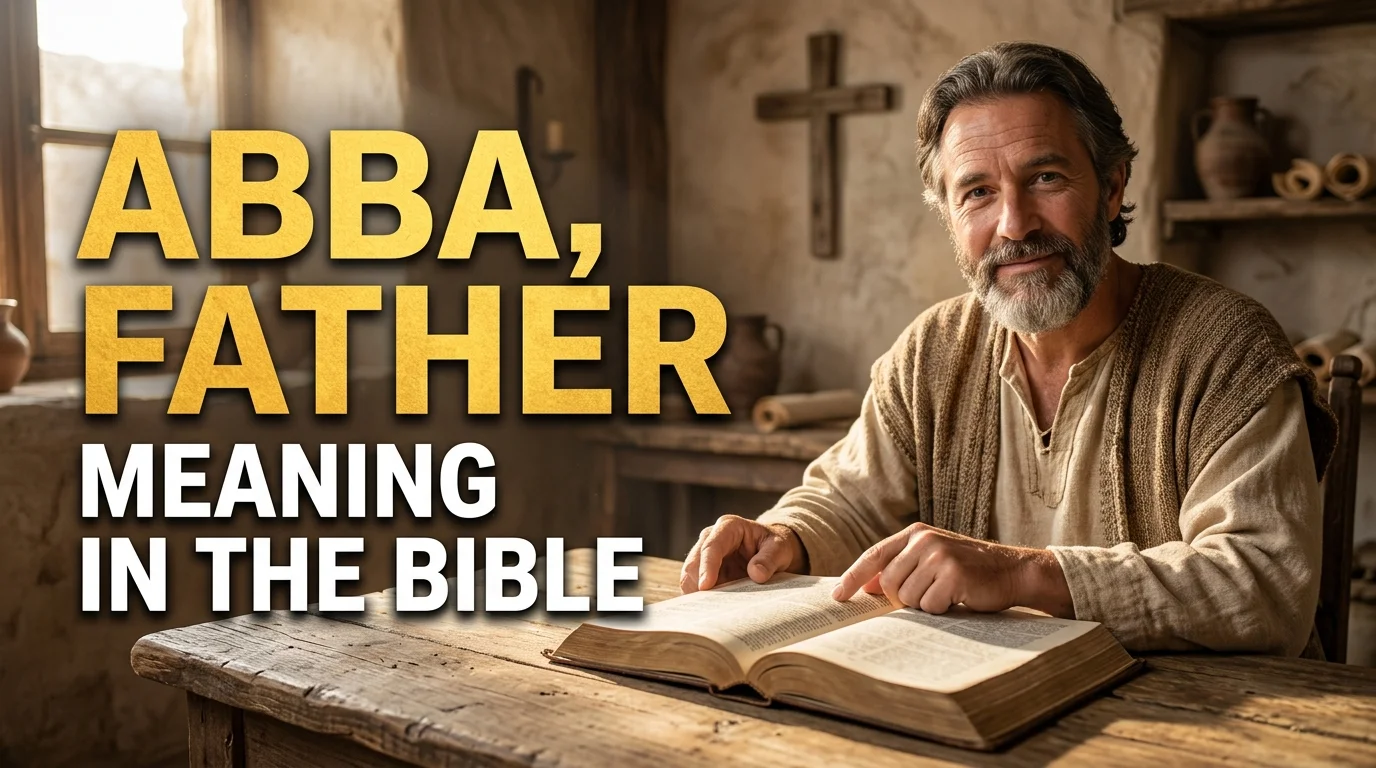
Some of the most meaningful words in the Bible reveal the close and loving relationship God wants to have with His people. One beautiful expression is “Abba Father,” a phrase that communicates trust, affection, and a sense of belonging to God. The word “Abba” comes from Aramaic, the language spoken by Jesus and many people in His time, and is commonly understood as an intimate way of addressing a father.
When combined with “Father,” it emphasizes a personal relationship with God rather than simply describing His position as Creator and Ruler. The phrase appears in important New Testament passages, including Mark 14:36, where Jesus prays in the Garden of Gethsemane, saying, “Abba, Father,” as He expresses His trust and submission to God’s will. It also appears in Romans 8:15 and Galatians 4:6, where believers are reminded that through the Spirit, they can approach God as His children.
These passages highlight the comfort, confidence, and closeness Christians can experience in their relationship with God. Although “Abba” is sometimes translated as “Daddy,” its meaning is broader than a childish term; it conveys loving familiarity, respect, and trust.
What Does Abba Mean? The Aramaic Root of an Intimate Title

The word “Abba” comes from Aramaic, the everyday language Jesus spoke. At its core, Abba simply means “Father.” It is the emphatic form of the word for father, used within families to express both affection and respect.
Scholars have debated how informal the term was. Some older teachings compared it directly to “Daddy,” suggesting a child’s babbling speech. More recent study shows that Abba was used by both young children and adult sons and daughters. It carried warmth and trust, yet it also held a note of reverence. It was the language of the homepersonal, confident, and relationalrather than the distant language of formal religion.
When the New Testament writers kept the Aramaic word instead of translating it fully into Greek, they preserved something special. Every time Abba appears, it is paired with the Greek word patēr (Father). The result is the double expression “Abba, Father.” This combination emphasizes the relationship in two languages, underscoring both intimacy and dignity.
This is why the abba father meaning in the bible cannot be reduced to a single English word. It is not merely “Dad” or “Father.” It is the cry of a heart that knows it belongs.
Where Does “Abba Father” Appear in Scripture?

The phrase occurs only three times in the entire Bible. Each occurrence is significant.
Jesus in the Garden of Gethsemane (Mark 14:36)
The first and most moving use comes from Jesus Himself. On the night before His crucifixion, in the agony of Gethsemane, Jesus prayed:
“Abba, Father, all things are possible for you. Remove this cup from me. Yet not what I will, but what you will.”
Here we see the Son addressing the Father with both intimacy and surrender. In the darkest hour of His earthly life, Jesus did not retreat into formal language. He used the familiar, trusted name of family. The abba father meaning in the bible begins with Jesus’ own relationship with the Fathera relationship of perfect love, trust, and obedience.
The Spirit of Adoption in Romans 8:15
Paul takes the same phrase and applies it to every believer:
“For you did not receive the spirit of slavery to fall back into fear, but you have received the Spirit of adoption as sons, by whom we cry, ‘Abba! Father!’”
The Holy Spirit places within us the same cry that Jesus uttered. We are not slaves living in fear. We are adopted sons and daughters who can approach God with the confidence of family.
The Spirit in Our Hearts (Galatians 4:6)
Paul repeats the truth in Galatians:
“And because you are sons, God has sent the Spirit of his Son into our hearts, crying, ‘Abba! Father!’”
Notice the shift. In Romans, we cry “Abba, Father.” In Galatians, the Spirit Himself cries it within us. The two realities work together. The Spirit confirms our adoption and gives voice to the relationship we now share with God.
These three passages form the complete biblical picture. Jesus models the relationship. The Spirit makes it ours.
The Deeper Theological Meaning of Abba Father
Understanding the abba father meaning in the bible requires looking beyond the dictionary definition. The title reveals several powerful truths about God and our relationship with Him.
Intimacy Without Losing Reverence
Abba balances closeness and respect. It is not casual or irreverent. At the same time, it is not cold or distant. Believers are invited into a relationship that is both warm and holy. We can pour out our hearts, yet we never lose the sense that we are speaking to the Almighty.
Adoption into God’s Family
In Roman culture, adoption carried strong legal weight. An adopted son received full rights, inheritance, and status. Paul uses this imagery deliberately. Through faith in Christ, we are not merely forgiven; we are brought into the family with full standing as sons and daughters. The cry “Abba, Father” is the evidence of that new status.
Freedom from Fear
Both Romans and Galatians contrast the spirit of slavery with the Spirit of adoption. Before Christ, many related to God primarily through fear or performance. Abba Father changes the dynamic. We come as loved children, not as anxious servants trying to earn approval.
Shared Sonship with Jesus
When we cry “Abba, Father,” we are drawn into the same relationship Jesus enjoys with the Father. We become joint heirs with Christ. The intimacy Jesus knew is now offered to us through the Spirit.
God as Father in the Old Testament: A Foundation, Not the Full Picture
The idea of God as Father is not brand new in the New Testament. The Old Testament occasionally describes God as the Father of Israel (Deuteronomy 32:6; Isaiah 63:16; Jeremiah 3:19). He is the Father who created, chose, disciplined, and redeemed His people.
Yet the individual, intimate address of Abba is largely absent. Jewish prayers of the time rarely used such personal language for God. Jesus’ consistent use of Father language, and especially Abba, marked a significant shift. He revealed a relationship that was available in a new and deeper way through His own sonship.
Practical Implications: Living as Children of Abba Father
Knowing the abba father meaning in the bible is not meant to stay in the realm of study. It is meant to shape how we live, pray, and relate to God.
Prayer Becomes Conversational and Honest
When you know God as Abba, prayer loses its stiffness. You can bring your real feelingsconfusion, gratitude, fear, joywithout pretending. Jesus modeled this in Gethsemane. He was honest about the cup He faced, yet He submitted to the Father’s will. We can do the same.
Identity Shifts from Performance to Belonging
Many believers struggle with feeling “not enough.” The cry of Abba Father reminds us that our place in the family does not rest on our performance. It rests on the finished work of Christ and the Spirit’s testimony within us.
Confidence in Times of Suffering
Jesus used Abba in His greatest trial. Paul links the cry of Abba to the reality that we will also share in Christ’s sufferings (Romans 8:17). Knowing God as Abba does not remove hardship, but it anchors us in the middle of it. We are not alone. Our Father is present and attentive.
Inheritance and Hope
As children, we are heirs. The future inheritance includes the redemption of our bodies and the full revelation of the glory to come. Calling God Abba keeps our eyes on that hope.
Common Misunderstandings About Abba Father
Several ideas circulate that need gentle correction.
- “Abba just means Daddy.” While it carries affection, it is not limited to a toddler’s vocabulary. Adults used it too. Reducing it to “Daddy” can sometimes strip away the note of respect the term also carries.
- “Everyone is a child of God in this way.” Scripture distinguishes between creation and adoption. All people are God’s creatures, but the right to cry “Abba, Father” belongs to those who have received the Spirit of adoption through faith in Christ (John 1:12–13; Romans 8:15).
- “It is only an emotional experience.” The cry is real and often felt deeply, yet it is grounded in the objective reality of adoption. The Spirit confirms what God has already done.
How to Grow in Your Experience of God as Abba Father
Here are practical ways to let this truth sink deeper:
- Meditate regularly on the three key passagesMark 14:36, Romans 8:15, and Galatians 4:6.
- Begin your prayers by addressing God as “Abba Father” or “Father.” Notice how it shapes the conversation.
- Ask the Holy Spirit to make the reality of your adoption more vivid in your heart.
- Reflect on times when an earthly father (or the lack of one) has shaped your view of God. Invite the Lord to heal and redefine that picture.
- Study the broader New Testament teaching on adoption and sonship (Ephesians 1, Romans 8, Galatians 3–4).
- Practice honest prayer in seasons of difficulty, following Jesus’ example in Gethsemane.
- Celebrate the fact that you are a joint heir with Christ. Let that identity influence how you face both blessing and trial.
The Transformative Power of Knowing Abba Father
When the truth of Abba Father takes root, it changes everything. Fear loses its grip. Performance-driven religion gives way to relational trust. Prayer becomes less about getting things right and more about being with the One who already loves you completely.
This is why the early church held onto the Aramaic word. It was too precious to translate away. It carried the memory of Jesus’ own prayer and the living experience of the Spirit in the hearts of believers.
The abba father meaning in the bible ultimately points us to the heart of the gospel. The Son came so that we could become sons and daughters. The Spirit was given so that we could know it deeply. And the Father delights to hear His children cry, “Abba!”
FAQ: Common Questions About Abba Father Meaning in the Bible
1. What is the exact meaning of Abba in the Bible?
Abba is an Aramaic word meaning “Father.” It expresses a warm, trusting, familial relationship while still carrying respect. In the New Testament it always appears with the Greek word for Father, creating the combined phrase “Abba, Father.”
2. Why did Jesus call God Abba?
Jesus used Abba in Gethsemane to express both deep intimacy and complete submission. It revealed the unique relationship He shared with the Father and modeled the kind of trust He invites His followers into.
3. Is Abba the same as calling God “Daddy”?
Not exactly. While Abba includes affection similar to a child’s address, it was also used by adults and carries a note of reverence. “Dear Father” or simply “Father” with warmth often captures the sense better than a purely childish term.
4. How many times does “Abba Father” appear in the Bible?
The combined phrase appears three times: once from Jesus (Mark 14:36) and twice from Paul (Romans 8:15 and Galatians 4:6).
5. Can every person call God Abba Father?
Scripture links the cry of “Abba, Father” to the Spirit of adoption. Those who have received Christ and been adopted into God’s family are given this privilege and this inner witness.
6. What does it mean that the Spirit cries “Abba, Father”?
The Holy Spirit confirms our adoption and produces within us the same relational confidence Jesus had with the Father. It is both a theological reality and an experiential assurance.
7. How should knowing God as Abba Father change the way I pray?
It invites honesty, confidence, and childlike trust. You can bring your real needs and emotions without fear of rejection, while still submitting to the Father’s wise and loving will.
Conclusion:
The abba father meaning in the bible is one of the most beautiful revelations of God’s heart. In three short passages, Scripture opens a window into the relationship Jesus enjoyed with the Father and then invites us to share in that same intimacy through the Holy Spirit.
We are no longer slaves living in fear. We are sons and daughters who can cry out with confidence, “Abba, Father!” This name assures us of belonging, inheritance, and unfailing love. It shapes our prayers, steadies us in suffering, and reminds us that the God of the universe has chosen to be our Father.

James Parker is a Bible writer at GrasePath.com who loves exploring the deeper meaning of Scripture. He shares clear, trustworthy insights about biblical names, symbols, dreams, and spiritual teachings in simple language. His mission is to help readers strengthen their faith and better understand God’s Word every day.