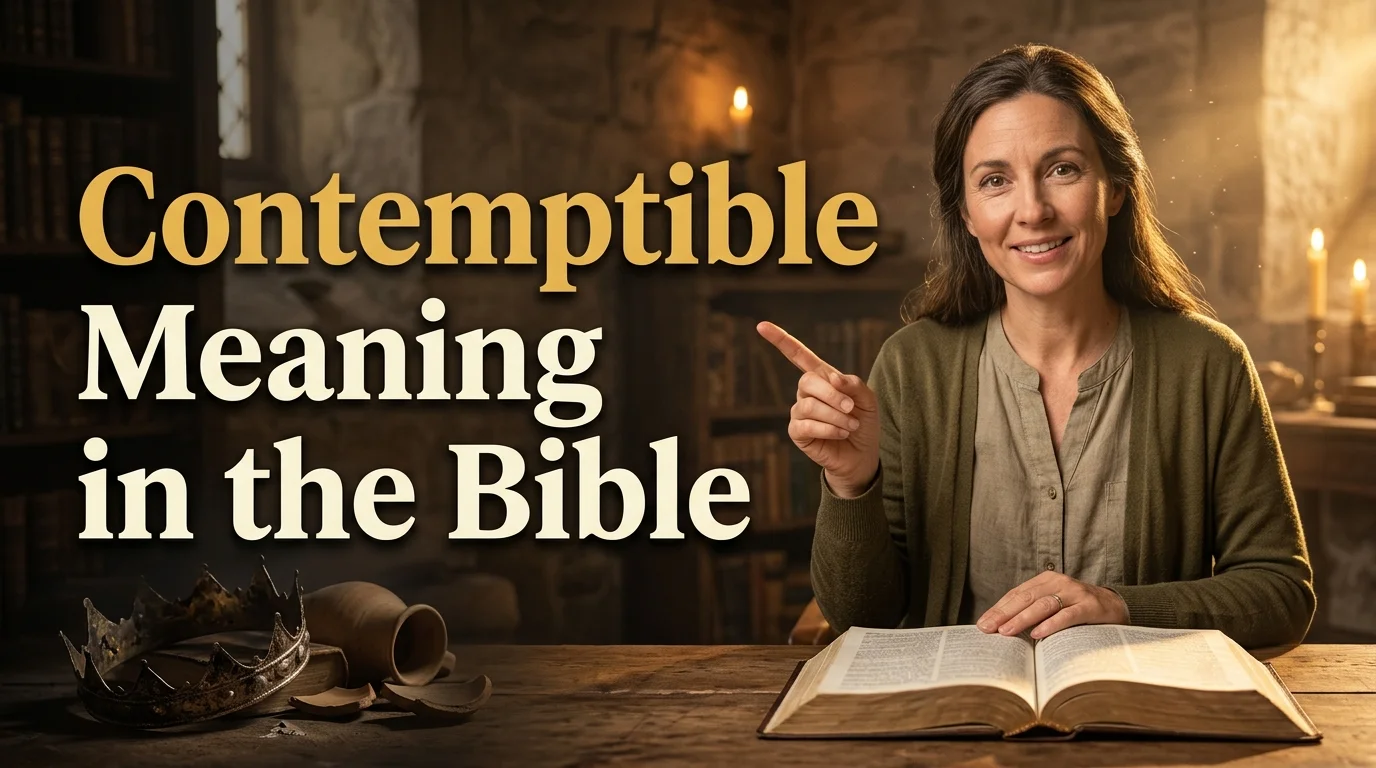
The word “contemptible” carries a strong meaning in the Bible because it describes something or someone considered shameful, dishonorable, worthless, or deserving of disrespect. When this word appears in a biblical passage, it often highlights the difference between behavior that reflects God’s values and actions that reveal pride, wickedness, or a lack of integrity.
Understanding the contemptible meaning in the Bible can help readers recognize how Scripture teaches about humility, righteousness, character, and the importance of treating others with respect. One important passage is Malachi 2:9, where God rebukes the priests for failing to follow His ways and showing partiality in their teaching.
Their actions caused them to become despised and humiliated before the people. Similarly, Psalm 15:4 describes a righteous person as someone who rejects what is contemptible while honoring those who fear the Lord. These verses show that the Bible uses ideas of contempt and dishonor to teach people to value truth, faithfulness, and godly character. However, the exact meaning depends on the passage and its translation, because different Bible versions may use words such as despised, dishonorable, or worthless.
What Does “Contemptible” Mean in the Bible?
At its core, the word contemptible means something or someone deserving of scorn, disrespect, or disdain something worthy of being looked down upon. When we talk about the contemptible meaning in the bible, we’re referring to actions, attitudes, or people that are described as despicable, worthless, or deserving of God’s rebuke because they violate His standards of holiness, justice, or reverence.
In everyday English, calling someone “contemptible” is a strong insult it implies they’ve done something so shameful that they deserve to be treated with contempt. In biblical language, the concept carries even more weight because it’s often connected to how people treat God, His name, His altar, or His commandments.
The Hebrew root behind many of these passages is bazah (בָּזָה), which means “to despise,” “to disdain,” or “to hold in contempt.” This word and its derivatives appear throughout the Old Testament, especially in the wisdom literature and the prophetic books, where it’s used to describe:
- People who despise wisdom or correction
- Priests who dishonor God’s altar
- Nations or individuals who mock God’s name
- Attitudes of arrogance and scorn toward others
Understanding this word helps us see how seriously the Bible treats disrespect whether it’s disrespect toward God, toward sacred things, or toward other people.
Where Does “Contemptible” Appear in the Bible?
If you search your Bible for the word “contemptible,” you’ll find it most frequently in the book of Malachi, though the underlying concept (contempt, scorn, disdain) runs throughout Scripture. Let’s look at a few key examples.
Malachi 1:6-7 Contempt Toward God’s Name
One of the clearest uses of “contemptible” appears in Malachi, where God rebukes the priests of Israel for offering blemished sacrifices and treating His altar with disrespect. The prophet accuses them of despising God’s name while claiming innocence, pointing out that their careless offerings revealed a heart that no longer honored the Lord as it should.
This passage is powerful because it shows that contempt isn’t always loud or obvious sometimes it’s revealed through neglect, half-hearted worship, or going through religious motions without genuine reverence.
Malachi 2:9 Contempt as a Consequence
Later in Malachi, God warns that because the priests failed to keep His ways and showed partiality in their teaching, they themselves would become despised and humiliated before the people. This is a striking reversal: those who treated sacred things with contempt would themselves experience the shame of being held in contempt.
This teaches an important biblical principle contempt often boomerangs. When we treat others (or God) with disrespect, we often end up experiencing the very disgrace we dished out.
Job 12:5 Contempt Toward the Suffering
In the book of Job, we find another angle on contempt. Job laments that those who are at ease often show disdain for those who are struggling or facing misfortune, treating the suffering person’s pain almost like something to be brushed aside. This verse reveals a very human tendency: it’s easy to look down on people going through hardship, especially when we ourselves are comfortable.
This is a sobering reminder that contempt isn’t just a “biblical times” problem it’s a timeless human weakness that Scripture calls out directly.
Psalm 15:4 Contempt as a Sign of Righteousness (Positive Use)
Interestingly, not every use of “contempt” in the Bible is negative. In Psalm 15, the psalmist describes the righteous person as someone who despises what is vile meaning they hold sin, wickedness, and corruption in rightful contempt, while honoring those who fear the Lord.
This flips the concept on its head: it’s not always wrong to view something with contempt. In fact, holding evil in low regard refusing to celebrate or excuse it is actually a mark of godly character.
The Difference Between Righteous Contempt and Sinful Contempt
This is one of the most important distinctions to understand when studying the contemptible meaning in the bible. Scripture doesn’t teach that all forms of disdain are wrong. Instead, it draws a clear line between two very different attitudes.
1. Sinful Contempt
This is the kind of contempt the Bible condemns. It includes:
- Looking down on other people because of their poverty, weakness, or suffering
- Treating God’s name, worship, or commandments carelessly
- Mocking those who are less fortunate
- Arrogance that elevates yourself above others
- Dishonoring authority, parents, or leaders out of pride
This type of contempt flows from pride, selfishness, or a hardened heart, and the Bible consistently warns against it.
2. Righteous Contempt (Holy Disdain for Evil)
This is the kind of contempt the Bible actually encourages in specific contexts. It includes:
- Rejecting sin and refusing to normalize wickedness
- Despising evil deeds while still loving people
- Standing firm against corruption, injustice, and idolatry
- Refusing to give honor to those who promote what is vile
The key difference is the target of the contempt. Sinful contempt is aimed at people, especially the weak or suffering. Righteous contempt is aimed at sin, evil, and wickedness never at the person made in God’s image.
Why Does the Bible Take Contempt So Seriously?
Understanding the contemptible meaning in the bible also means understanding why God cares so much about this attitude. Here are a few reasons rooted in Scripture:
It Reflects the Condition of the Heart
Jesus taught that what comes out of a person’s mouth reveals what’s already in their heart. Contempt whether toward God or toward others isn’t just a surface-level action. It’s a heart issue. When someone shows contempt, it usually reveals underlying pride, bitterness, or a lack of the fear of the Lord.
It Damages Relationships
Contempt is corrosive. Whether it’s contempt between spouses, friends, or within a community of believers, this attitude erodes trust, respect, and love. Many relationship experts today even point to contempt as one of the strongest predictors of relational breakdown and the Bible identified this destructive pattern thousands of years ago.
It Dishonors God
When we show contempt toward God’s name, His Word, or His people, we’re essentially saying that we don’t take Him seriously. This is why the priests in Malachi were rebuked so strongly their careless worship communicated disrespect, even if they didn’t intend it that way.
It Invites Consequences
As seen in Malachi 2:9, contempt often brings consequences. This isn’t about God being petty it’s about the natural spiritual principle that what we sow, we reap. A life marked by disdain and disrespect toward God and others tends to produce broken relationships, spiritual dryness, and eventually, humiliation.
Real-Life Applications: How This Applies to Us Today
It’s easy to read these ancient passages and think, “That doesn’t apply to me I’m not a priest offering blemished sacrifices.” But the heart behind the contemptible meaning in the bible is incredibly relevant today. Here’s how:
1. Contempt in Worship
Just like the priests in Malachi went through the motions without genuine reverence, we can fall into the same trap showing up to church, singing songs, and reading Scripture without real engagement of the heart. Contempt in worship today might look like:
- Distracted, half-hearted prayer
- Giving God our leftovers instead of our best
- Treating church as a routine rather than a relationship
2. Contempt in Relationships
Modern research on marriage and friendship echoes what Job and the Psalms describe contempt (eye-rolling, mocking, dismissiveness) is deeply damaging. Practicing humility and respect, even during disagreements, protects our relationships from this corrosive attitude.
3. Contempt Toward the Struggling
Job 12:5 reminds us how easy it is to look down on people who are struggling financially, emotionally, or spiritually. A biblical response is compassion, not disdain remembering that we, too, are vulnerable to hardship.
4. Righteous Contempt for Sin
At the same time, we’re called to hate what is evil (Romans 12:9) not people, but sin itself. This means refusing to celebrate immorality, injustice, or corruption, even when culture pressures us to stay silent or approve.
Key Bible Verses Related to Contempt
Here’s a quick-reference list of important verses connected to this theme:
- Malachi 1:6-7 Priests despising God’s name through careless offerings
- Malachi 2:9 Contempt as a consequence for unfaithfulness
- Job 12:5 The comfortable showing contempt for the suffering
- Psalm 15:4 The righteous despise what is vile
- Proverbs 11:12 Whoever lacks sense despises their neighbor
- Proverbs 14:21 Whoever despises their neighbor sins
- Luke 18:9 Jesus addressing those who looked down on others with self-righteous contempt
- Romans 12:9 Hate what is evil, cling to what is good
Studying these passages side by side gives a fuller, more balanced picture of how Scripture treats this powerful word.
Lessons We Can Learn From the Biblical Meaning of Contempt
Let’s break down the biggest takeaways from our study:
- Contempt reveals the heart. Whether directed at God or people, disdain exposes what’s really going on inside us.
- Not all contempt is sinful. Righteous contempt for evil, sin, and corruption is actually commended in Scripture.
- Contempt toward people is condemned. Especially contempt toward the low-income, the suffering, or those seen as “lesser.”
- Contempt has consequences. Malachi shows us that disrespect toward God can lead to being disrespected ourselves.
- Worship matters more than ritual. Going through religious motions without heart engagement is its own form of contempt.
- Humility is the antidote. The opposite of contempt is humility honoring others and God with genuine respect.
How to Avoid a Spirit of Contempt in Your Own Life
If this study has convicted you (in a good way!), here are some practical steps to guard your heart against contempt:
- Practice gratitude instead of comparison comparison often breeds disdain.
- Guard your worship by bringing your best, not your leftovers, to God.
- Watch your words toward others, especially those who are struggling or different from you.
- Examine your motives when you feel disdain is it righteous anger at sin, or prideful judgment of a person?
- Seek humility through prayer, asking God to reveal any hidden contempt in your heart.
Frequently Asked Questions About the Contemptible Meaning in the Bible
1. What is the literal meaning of “contemptible” in the Bible?
The literal meaning refers to something or someone worthy of scorn, disrespect, or disdain. In Hebrew, the root word “bazah” conveys the idea of despising or holding something in low regard.
2. Where in the Bible does the word “contemptible” appear most clearly?
The clearest usage appears in the book of Malachi, particularly in chapters 1 and 2, where God rebukes the priests for treating His name and altar with disrespect.
3. Is it a sin to feel contempt in the Bible?
It depends on the object of the contempt. Feeling contempt toward people, especially the low-income or suffering, is condemned. However, feeling righteous disdain toward sin, evil, or corruption is actually encouraged in passages like Psalm 15:4.
4. What does Malachi teach about contempt toward God?
Malachi teaches that careless, half-hearted worship such as offering blemished sacrifices reveals a heart that despises God’s name, even if that disrespect isn’t intentional or obvious.
5. How does contempt affect relationships according to the Bible?
Scripture, particularly Proverbs, warns that despising or looking down on others is sinful and damaging. This wisdom aligns with modern understanding that contempt is one of the most destructive attitudes in any relationship.
6. What’s the difference between hating sin and having contempt for people?
Hating sin means rejecting evil, injustice, and wickedness without hatred toward the individual involved. Contempt for people, on the other hand, involves looking down on someone’s worth or dignity, which the Bible consistently condemns.
7. How can I overcome a contemptuous attitude based on biblical teaching?
Practicing humility, gratitude, and genuine worship while regularly examining your heart in prayer are key biblical strategies for overcoming a contemptuous spirit and replacing it with love and respect.
Final Thoughts
So, what have we learned? The contemptible meaning in the bible goes far deeper than a simple dictionary definition. It touches on how we treat God, how we treat each other, and how we respond to sin and suffering in the world around us. From Malachi’s rebuke of careless priests to Job’s honest observation about how the comfortable treat the struggling, Scripture paints a vivid picture of contempt as both a warning and, in some cases, a righteous response to evil.
The key is discernment: are we despising sin, or are we despising people? Are we bringing our best to God, or offering Him careless leftovers? These are the questions this ancient word still asks of us today.

James Parker is a Bible writer at GrasePath.com who loves exploring the deeper meaning of Scripture. He shares clear, trustworthy insights about biblical names, symbols, dreams, and spiritual teachings in simple language. His mission is to help readers strengthen their faith and better understand God’s Word every day.