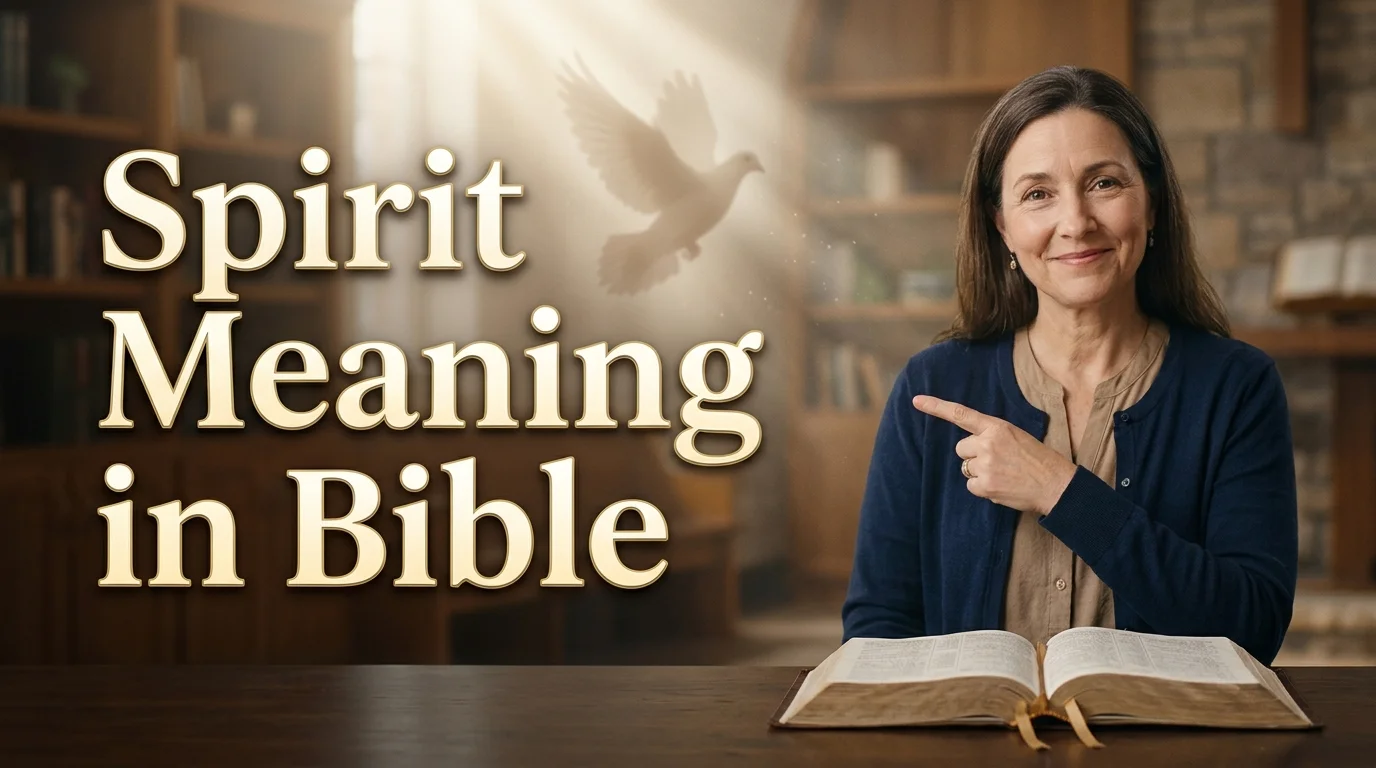
The word “spirit” has a deep and powerful meaning in the Bible, connecting to life, faith, God’s presence, and the unseen part of human existence. Throughout Scripture, the word appears in different contexts, sometimes referring to the human spirit, sometimes to spiritual beings, and often to the Holy Spirit, who is central to Christian belief. One of the most important biblical teachings about the Spirit is found in John 4:24, where Jesus explains that God is Spirit and that those who worship Him must worship in spirit and truth.
The Bible also describes the Holy Spirit as a helper, teacher, and guide who strengthens believers and helps them understand God’s truth. In John 14:26, Jesus tells His disciples that the Holy Spirit will teach them and remind them of His words. Another significant passage is Genesis 2:7, which describes God breathing the breath of life into Adam, showing the connection between God’s creative power and human life.
Understanding the spirit meaning in the Bible can help readers explore important questions about the soul, spiritual growth, prayer, worship, and the relationship between humanity and God. Although the words “spirit” and “soul” are sometimes used closely together, Scripture does not always treat them as identical terms.
What Does “Spirit” Mean in the Bible?
At its core, the spirit meaning in Bible usage refers to the invisible, life-giving, and immaterial part of a person or being. It’s the breath of life, the animating force that makes something alive rather than lifeless. But that’s just the starting point the word “spirit” is used in several distinct ways across the Old and New Testaments.
Broadly speaking, when the Bible talks about spirit, it can refer to:
- The Spirit of God (the Holy Spirit), a person of the Trinity
- The human spirit, the inner, non-physical part of a person
- Spiritual beings, such as angels or demons
- An attitude or disposition, like “a spirit of humility” or “a spirit of fear”
- Wind or breath, the literal meaning behind the original Hebrew and Greek words
This is why context matters so much when studying spirit in the Bible. The same word can describe God’s presence in one verse and someone’s emotional state in another. Understanding the original language helps clear up a lot of this confusion, so let’s look at that next.
The Hebrew Word Ruach: Spirit in the Old Testament
The Old Testament was originally written in Hebrew, and the word most often translated as “spirit” is ruach (רוּחַ). This word is fascinating because it doesn’t just mean “spirit” in the abstract, spiritual sense we often assume. Ruach literally means wind, breath, or air in motion.
Think about Genesis 1:2, where we’re told that the Spirit of God “was hovering over the waters.” The Hebrew word used there is ruach, painting a picture of God’s breath or wind moving across creation, bringing order out of chaos. This connects spirit directly to the idea of life and creative power.
Ruach shows up in several important ways throughout the Old Testament:
- The breath of life In Genesis 2:7, God breathes into Adam, and he becomes a living being. This breath is intimately tied to the concept of spirit.
- The Spirit of God empowering people Judges and leaders like Samson and Gideon were said to have the Spirit of the Lord come upon them, giving them supernatural strength or wisdom.
- Human emotion and will Phrases like “a troubled spirit” or “a willing spirit” describe someone’s inner disposition or mental state.
- Wind itself Sometimes ruach simply means literal wind, like the east wind that parted the Red Sea.
This flexibility is key. Ancient Hebrew thought didn’t separate the physical and spiritual quite the way modern Western thinking does. Breath, wind, and spirit were all connected ideas representing unseen but powerful forces.
The Greek Word Pneuma: Spirit in the New Testament
When we move into the New Testament, written in Greek, the word translated as “spirit” is pneuma (πνεῦμα). Just like ruach, pneuma also carries the underlying meaning of breath or wind. In fact, this is exactly why Jesus uses a wind analogy in John 3:8 when explaining spiritual rebirth to Nicodemus, saying that the Spirit is like the wind you can’t see it, but you can see its effects.
Pneuma is used in the New Testament to describe:
- The Holy Spirit, the third person of the Trinity, who indwells believers
- The human spirit, our inner being that connects with God
- Evil or unclean spirits, referring to demonic beings
- A spiritual attitude or quality, such as being “poor in spirit” (Matthew 5:3)
One of the most significant shifts between the Old and New Testaments is how the Spirit’s role expands. In the Old Testament, the Spirit of God would come upon specific individuals for specific purposes. In the New Testament, especially after Pentecost in Acts 2, the Holy Spirit is given to all believers permanently, marking a major turning point in how spirit meaning in Bible theology is understood.
Different Types of Spirit Mentioned in the Bible
To really grasp this topic, it helps to break down the different categories of “spirit” the Bible describes. Let’s look at four major types.
1. The Holy Spirit
The Holy Spirit is described as a distinct, personal being not just a force or influence, but a person with will, emotion, and intelligence. He is presented as fully God, equal with the Father and the Son. His roles include:
- Convicting people of sin (John 16:8)
- Comforting and counseling believers (John 14:26)
- Empowering believers for ministry and service (Acts 1:8)
- Producing spiritual fruit like love, joy, and peace (Galatians 5:22-23)
- Interceding in prayer on our behalf (Romans 8:26)
2. The Human Spirit
Every person is described as having a spirit the inner, non-physical part that allows us to think, feel, reason, and connect with God on a deeper level than just biology. Paul often distinguishes between body, soul, and spirit (1 Thessalonians 5:23), suggesting the spirit is the deepest part of who we are, the part capable of communing with the divine.
3. Evil or Unclean Spirits
The Bible also refers to spiritual beings opposed to God, often called demons, evil spirits, or unclean spirits. These appear frequently in the Gospels, where Jesus casts them out of afflicted individuals. This shows that “spirit” in biblical thought isn’t always good it can refer to malevolent, non-physical entities as well.
4. A Disposition or Attitude
Sometimes “spirit” describes an emotional or mental state rather than a literal being. Examples include:
- “A spirit of wisdom” (Isaiah 11:2)
- “A spirit of fear” (2 Timothy 1:7)
- “A gentle and quiet spirit” (1 Peter 3:4)
- “A broken and contrite spirit” (Psalm 51:17)
These expressions describe the tone, attitude, or inner condition of a person, and they’re some of the most practical, relatable uses of the word in everyday Christian living.
Spirit vs Soul vs Body: Understanding the Difference
One question that comes up constantly is how spirit differs from soul. The Bible sometimes uses these terms almost interchangeably, but there are subtle distinctions worth understanding.
- Body Your physical, material existence. The part of you that interacts with the physical world.
- Soul Often associated with your mind, will, and emotions. Your personality and sense of self.
- Spirit The deepest part of your being, the part that connects with God and exists beyond physical death.
Hebrews 4:12 famously says that God’s word is sharp enough to divide “soul and spirit,” suggesting these are closely related but not identical. Many theologians describe humans as tripartite beings body, soul, and spirit working together as one whole person, though this view isn’t universally agreed upon; some traditions see humans as simply body and soul, with “spirit” being another way of describing the soul’s God-connected dimension.
Regardless of which theological camp you land in, the practical takeaway is this: the Bible consistently teaches that we are more than just physical bodies. There’s an eternal, spiritual dimension to human existence that outlasts our earthly life.
Key Bible Verses About the Spirit and What They Mean
Let’s look at a few foundational verses that shape our understanding of spirit meaning in Bible teaching.
- Genesis 2:7 “The Lord God formed man from the dust of the ground and breathed into his nostrils the breath of life, and man became a living being.” This shows spirit as the life-giving breath from God.
- John 4:24 “God is spirit, and his worshipers must worship in the Spirit and in truth.” This tells us something profound about God’s nature He is not confined to a physical body.
- Romans 8:16 “The Spirit himself testifies with our spirit that we are God’s children.” This verse beautifully illustrates the relationship between the Holy Spirit and the human spirit working together.
- Galatians 5:25 “Since we live by the Spirit, let us keep in step with the Spirit.” This shows the practical, daily-life application of spiritual living.
- Ecclesiastes 12:7 “The dust returns to the ground it came from, and the spirit returns to God who gave it.” This verse addresses what happens to the spirit at death.
Each of these passages reveals a different facet of the same core idea: spirit represents life, connection to God, and the eternal part of our existence.
The Role and Work of the Holy Spirit in the Bible
Since the Holy Spirit is arguably the most significant “spirit” discussed in Scripture, it deserves its own deeper look. According to the New Testament, the Holy Spirit isn’t a vague energy field He’s an active, personal presence involved in nearly every part of the Christian life.
Here’s what the Bible says the Holy Spirit does:
- Regenerates believers Bringing about spiritual rebirth (Titus 3:5)
- Indwells every believer Making our bodies “temples of the Holy Spirit” (1 Corinthians 6:19)
- Guides and teaches Leading believers into truth (John 16:13)
- Gives spiritual gifts Equipping people for service to others (1 Corinthians 12:4-11)
- Produces godly character Cultivating the fruit of the Spirit (Galatians 5:22-23)
- Seals believers for eternity Acting as a guarantee of future inheritance (Ephesians 1:13-14)
This is a huge shift from Old Testament experiences of the Spirit, which were often temporary and given only to select individuals like prophets, priests, and kings. The New Testament promise is that every believer now has continual access to God’s Spirit a truth many consider one of the most encouraging aspects of the Christian faith.
Practical Applications: What Spirit Meaning Teaches Us Today
Understanding spirit meaning in Bible context isn’t just an academic exercise it has real, everyday implications. Here are a few practical takeaways:
- You are more than your body. Recognizing that you have a spirit reminds you that your worth and identity aren’t tied to physical appearance, health, or achievements.
- Your inner attitude matters to God. Terms like “a gentle and quiet spirit” or “a broken spirit” show that God cares deeply about our heart posture, not just our outward actions.
- You’re not alone in your spiritual journey. If you’re a believer, the idea that the Holy Spirit dwells within you offers real comfort during hard seasons.
- Spiritual discernment is real. Because the Bible acknowledges both good and evil spirits, believers are encouraged to “test the spirits” (1 John 4:1) rather than accept every spiritual experience at face value.
- Death isn’t the end. The biblical teaching that the spirit returns to God offers hope beyond physical death, a cornerstone of Christian hope in eternal life.
These aren’t abstract theological ideas they shape how millions of people understand their identity, purpose, and future.
FAQs
1. What is the simplest definition of spirit in the Bible?
In its simplest form, spirit refers to the invisible, life-giving, and non-physical part of a person or being closely tied to breath, life, and one’s connection to God.
2. What is the difference between spirit and soul in the Bible?
The soul is often linked to mind, will, and emotion, while the spirit is considered the deepest part of a person that connects with God. Some traditions use the terms interchangeably, while others distinguish them as separate but related aspects of a person.
3. What does it mean when the Bible says “God is spirit”?
This phrase, found in John 4:24, means God does not have a physical body and is not limited by space or matter. He is present everywhere and worshiped through sincere, heartfelt devotion rather than physical rituals alone.
4. What is the Holy Spirit’s role according to the Bible?
The Holy Spirit comforts, teaches, convicts of sin, empowers believers for service, and produces godly character. He is described as a person, not just a force, and is fully God alongside the Father and the Son.
5. Can a person have an evil spirit according to the Bible?
Yes, the Bible describes evil or unclean spirits, often called demons, that can oppress or influence people. Jesus and His disciples were shown casting these spirits out in several Gospel accounts.
6. What happens to the human spirit after death?
According to Ecclesiastes 12:7, the spirit returns to God who gave it, while the body returns to dust. This reflects the biblical hope that human existence continues beyond physical death.
7. What does “poor in spirit” mean in the Bible?
Found in Matthew 5:3, “poor in spirit” describes humility and a recognition of one’s spiritual need for God, rather than material poverty. It’s considered a foundational attitude for entering God’s kingdom.
Conclusion
The spirit meaning in Bible teaching is far richer than a single definition can capture. From the Hebrew ruach and Greek pneuma meaning breath and wind, to the Holy Spirit’s personal presence in believers’ lives, to the human spirit that connects us to God, and even the reality of evil spirits opposing His work Scripture presents spirit as something powerful, personal, and deeply woven into the fabric of human existence.
Whether you’re exploring your own faith, studying Scripture for the first time, or simply curious about what these ancient texts really mean, understanding spirit gives you a fuller picture of how the Bible views life, identity, and eternity. It reminds us that we are not just physical beings moving through a physical world there is an unseen, spiritual dimension to who we are that shapes everything from our daily attitudes to our eternal destiny.

Hi, I’m Daniel Foster, a writer at GrasePath.com. I enjoy exploring the deeper meanings of biblical words, names, symbols, and verses to help readers better understand Scripture. My goal is to present accurate, easy-to-read, and well-researched content that makes the Bible more accessible for everyone. Through every article, I strive to provide clear explanations, meaningful insights, and trustworthy information to support your faith and Bible study journey.