If you’ve ever been reading through the Old or New Testament and stumbled across the word “eunuch,” you’ve probably paused and thought, wait, what exactly does that mean here? You’re not alone. The eunuch meaning bible search is one of the most common Bible-word questions people type into Google, and for good reason.
The term shows up in some surprisingly important stories from royal courts in Persia to a life-changing conversation on a desert road in the book of Acts.
In this article, we’re going to unpack the eunuch meaning bible readers actually need: the historical background, the different ways the word is used across Scripture, and why it matters far more than a simple dictionary definition can capture.
What Does “Eunuch” Mean in the Bible?
At its most basic level, a eunuch in the ancient world was a man who had been castrated. Often to serve in a royal household. This wasn’t unique to Israel it was common practice across the ancient Near East, in Persia, Babylon. Egypt, and later in the Roman Empire. Castrated men were frequently trusted with sensitive palace duties, particularly overseeing harems or royal chambers. Because they couldn’t produce heirs and were therefore seen as less of a political threat to the ruling family.
But here’s where it gets interesting for Bible readers: the Hebrew word most often translated “eunuch” is saris (סָרִיס). And it doesn’t always refer to a physically castrated man. Sometimes it’s used more broadly to describe a court official. An officer, or a chamberlain someone who held an administrative or royal position, regardless of physical status. Context is everything.
In the New Testament, the Greek word is eunouchos (εὐνοῦχος). And it’s used a bit differently, especially in the teachings of Jesus. Where it takes on a symbolic and spiritual meaning alongside its literal one.
Old Testament
The Old Testament mentions eunuchs in several settings, mostly connected to royal courts and political power.
Royal officials and court servants
In many Old Testament passages, saris simply describes a high-ranking government official. These men served kings, managed households, delivered messages, and sometimes held military command. A few examples:
- Potiphar in Genesis 39:1 is called an officer (saris) of Pharaoh, and many scholars debate whether this term implies he was literally castrated or simply held a royal office especially notable since he was married.
- Officials in the Persian court appear throughout the book of Esther, managing the king’s harem and carrying out royal decrees.
- Ashpenaz, the chief eunuch mentioned in Daniel 1:3, was placed in charge of training young men including Daniel for service in the Babylonian court.
Eunuchs and exclusion from worship
One passage that often surprises readers is Deuteronomy 23:1, which states that a man whose reproductive organs were damaged could not enter the assembly of the Lord. On the surface, this looks like exclusion and historically, it was understood that way for centuries. Physically altered men were barred from certain aspects of temple worship and priestly service under the Mosaic law.
This exclusion makes what happens later in Isaiah all the more remarkable.
A stunning promise in Isaiah
Isaiah 56:3-5 completely reframes the eunuch’s place in God’s plan. God speaks directly to eunuchs who keep His covenant and declares that He will give them “a place and a name better than sons and daughters” an everlasting name that will not be cut off. This is a profound shift. Where the law once excluded, the prophet promises inclusion, honor, and permanence in God’s house.
Eunuchs in the New Testament
By the time we reach the New Testament, the word takes on new layers of meaning both literal and figurative.
Jesus’ Teaching on Eunuchs (Matthew 19)
In Matthew 19:12, after a conversation about marriage and divorce, Jesus makes a statement that has puzzled and inspired readers for two thousand years. He describes three categories of eunuchs:
- Those born eunuchs men who, from birth, were incapable of sexual relations or had a physical condition affecting reproduction.
- Those made eunuchs by others men who were castrated by human intervention, often for service in royal courts, as was historically common.
- Those who choose to become eunuchs for the kingdom of heaven this is the striking part. Jesus speaks of people who voluntarily forgo marriage and sexual relationships to devote themselves fully to God’s work.
That third category isn’t about literal castration. It’s a metaphor for total devotion a willingness to set aside a culturally expected path (marriage, family, legacy through children) in order to serve a higher calling. Many early Christian thinkers, missionaries, and monastics saw themselves reflected in this teaching, choosing lifelong singleness to pour themselves into ministry.
This passage is central to any honest discussion of eunuch meaning bible scholars and pastors return to again and again, because it shows Jesus taking a term loaded with cultural stigma and transforming it into a picture of spiritual commitment.
The Ethiopian Eunuch in Acts 8
Perhaps the most beloved eunuch story in Scripture is found in Acts 8:26-40. Here’s the short version:
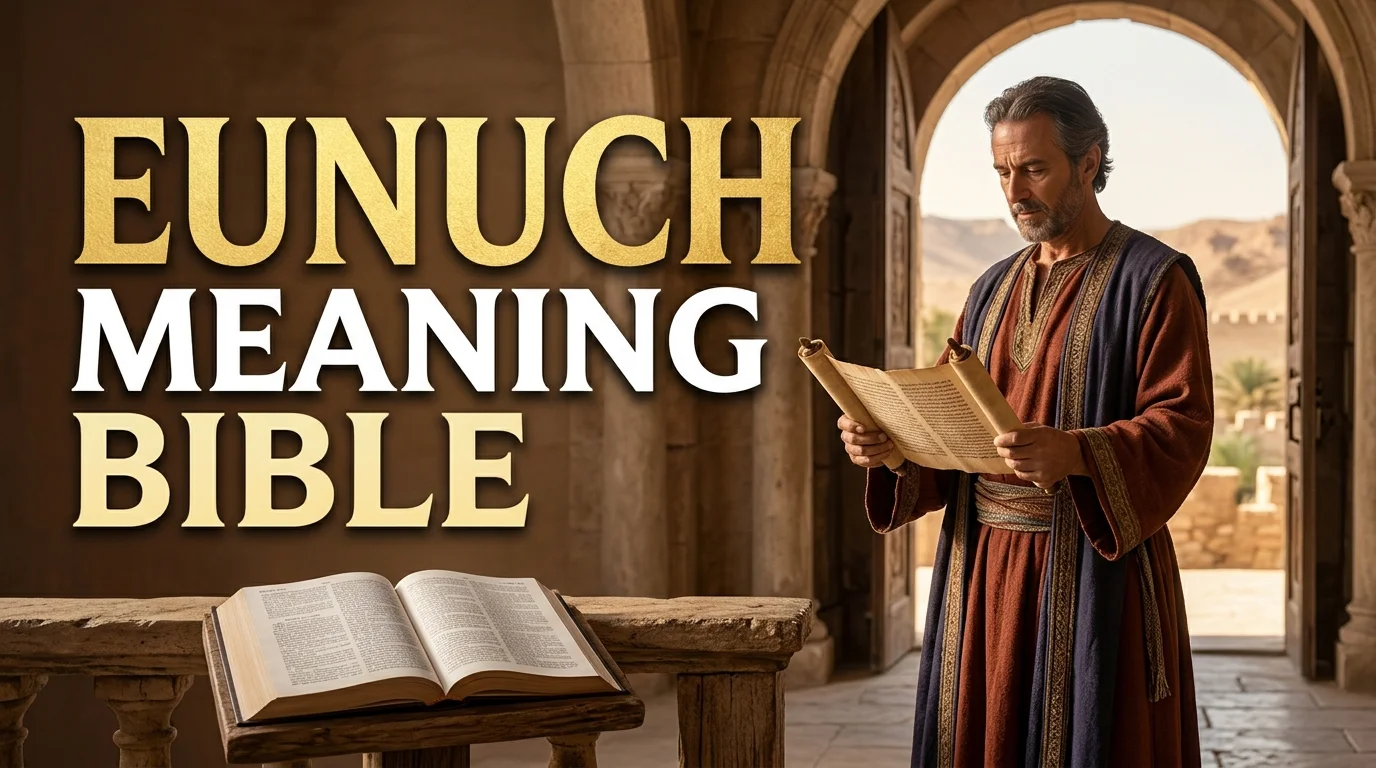
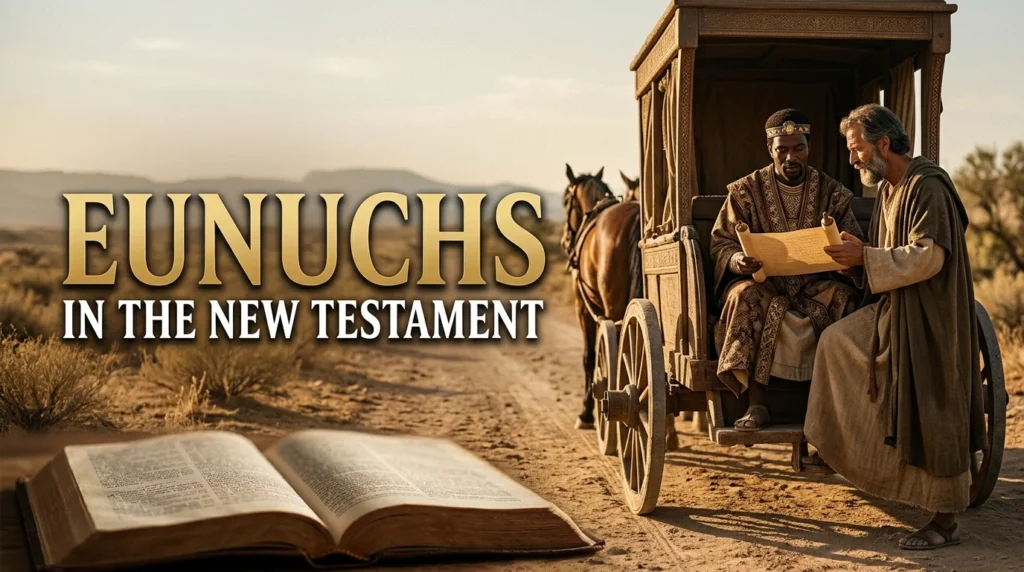
Philip, one of the early church’s evangelists, is led by an angel to a desert road where he encounters an Ethiopian court official described as a eunuch who served under Candace, queen of the Ethiopians, and was in charge of her entire treasury. This man had traveled to Jerusalem to worship and was now riding home in his chariot, reading aloud from the scroll of Isaiah.
Philip approaches, hears him reading, and asks if he understands what he’s reading. The eunuch admits he needs guidance, invites Philip up into the chariot, and Philip explains that the passage about a suffering servant led like a lamb to slaughter points to Jesus.
Why does this story matter so much? Think about who this man was:
- He was a foreigner, from a nation outside Israel.
- He held a position of enormous power and wealth as a treasury official.
- As a eunuch, under the old covenant law (Deuteronomy 23:1), he would have been barred from full participation in temple worship.
And yet in one of the earliest recorded conversions outside Jerusalem this eunuch becomes a full member of the new covenant community through faith and baptism, no exclusions attached. Many Bible teachers point directly to Isaiah 56’s promise as being fulfilled in real time through this encounter. It’s a beautiful, tangible picture of the gospel breaking down old barriers.
Why the Eunuch Meaning in the Bible Still Matters Today
It would be easy to read these passages as ancient history with no relevance to modern life. But the themes running through the eunuch narratives are timeless:
1. God includes the excluded. The eunuch’s journey from exclusion under the law to full inclusion in Isaiah’s prophecy and the book of Acts is one of the clearest pictures in Scripture of grace overturning rigid boundaries. Anyone who has ever felt “not enough” for religious community can find encouragement here.
2. Devotion can take unexpected forms. Jesus’ teaching about becoming a “eunuch for the kingdom” challenges the assumption that a meaningful life must follow one specific path marriage, children, a conventional family.
3. Position and power don’t guarantee peace. Many biblical eunuchs held enormous influence managing treasuries, running royal households, serving kings and queens. Yet true transformation, as seen with the Ethiopian eunuch, came not from status but from a personal encounter with truth and faith.
4. Bible interpretation requires context. The word “eunuch” is a great reminder that biblical language can carry multiple meanings depending on setting, era, and literary genre. Careful readers pay attention to context rather than assuming a single fixed definition every time a word appears.
Common Misunderstandings About Eunuchs in Scripture
Because the topic touches on sensitive subjects sexuality, physical body, ancient customs a few misconceptions tend to circulate. Let’s clear a few up:
- Not every “eunuch” in the Bible was castrated. As mentioned earlier, the Hebrew saris often just means “official” or “officer.” Context determines whether a literal or figurative meaning applies.
- Jesus was not commanding literal self-castration. Some early readers in church history tragically misapplied Matthew 19:12 literally. The overwhelming consensus among biblical scholars is that Jesus was speaking metaphorically about voluntary celibacy for the sake of ministry.
- The Ethiopian eunuch wasn’t a minor character. He was a high-ranking treasury official, comparable to a modern finance minister, which highlights just how significant his conversion was for the spread of the gospel beyond Jerusalem.
- Eunuchs weren’t always powerless victims. Many held real authority in royal courts a detail that adds depth to figures like Ashpenaz in Daniel or the officials in Esther’s story.
Key Bible Verses About Eunuchs (Quick Reference)
For easy study, here are some of the main passages worth reading in full:
- Deuteronomy 23:1 Old covenant restriction on eunuchs entering the assembly
- Isaiah 56:3-5 God’s promise of an everlasting name to faithful eunuchs
- Daniel 1:3 Ashpenaz, chief eunuch/official of the Babylonian court
- Esther 2:3, 4:4-5 Eunuchs serving in the Persian royal palace
- Matthew 19:11-12 Jesus’ teaching on eunuchs “for the kingdom of heaven”
- Acts 8:26-40 The conversion and baptism of the Ethiopian eunuch
Reading these together gives a much richer, fuller picture than any single verse could on its own.
FAQs
1. What is the simplest eunuch meaning in the Bible?
In its most basic sense, a eunuch was a castrated man, often serving in a royal court. However, the term is also used more broadly in Scripture to describe court officials or, in the New Testament, people who choose lifelong celibacy for spiritual devotion.
2. Why were eunuchs excluded from worship in the Old Testament?
Deuteronomy 23:1 barred men with damaged reproductive organs from entering the assembly of the Lord.
3. What did Jesus mean by “eunuchs for the kingdom of heaven”?
In Matthew 19:12, Jesus described people who voluntarily choose celibacy and singleness to fully devote their lives to God’s work, rather than pursuing marriage and family. It’s a metaphorical, not literal, use of the term.
4. Who was the eunuch in the book of Acts?
The Ethiopian eunuch in Acts 8 was a high-ranking treasury official serving Queen Candace of Ethiopia.
5. Does the Bible say eunuchs are welcomed by God?
Yes. Isaiah 56:3-5 promises faithful eunuchs an everlasting name and place in God’s house, better than sons and daughters. This promise is beautifully fulfilled when the Ethiopian eunuch is baptized in Acts 8.
6. Were all biblical eunuchs literally castrated?
No. The Hebrew word saris often simply meant “royal official” or “officer,” without implying physical castration. Figures like Potiphar are called eunuchs in some translations, yet the text also describes him as married.
7. Why is the eunuch meaning in the Bible important for modern readers?
It illustrates a powerful theme of inclusion, grace, and devotion. The eunuch’s story moves from exclusion under the law to full acceptance through faith, offering hope to anyone who has ever felt outside the boundaries of religious belonging.
Final Thoughts
So, what’s the real eunuch meaning bible readers should take away from all this? It’s not a single, narrow definition it’s a thread that runs through Scripture, touching on royal power, physical identity, spiritual devotion, and ultimately, radical grace. From the exclusion described in Deuteronomy to the astonishing promise in Isaiah, and from Jesus’ teaching on voluntary celibacy to the joyful baptism of the Ethiopian official in Acts, the eunuch’s story is really a story about how God’s kingdom welcomes those the world might overlook.
Next time you come across the word “eunuch” in your Bible reading, you won’t just skim past it wondering what it means. You’ll see the fuller picture a story of exclusion turned to belonging, and a reminder that no one is too far outside the lines for God’s grace to reach.

James Parker is a Bible writer at GrasePath.com who loves exploring the deeper meaning of Scripture. He shares clear, trustworthy insights about biblical names, symbols, dreams, and spiritual teachings in simple language. His mission is to help readers strengthen their faith and better understand God’s Word every day.