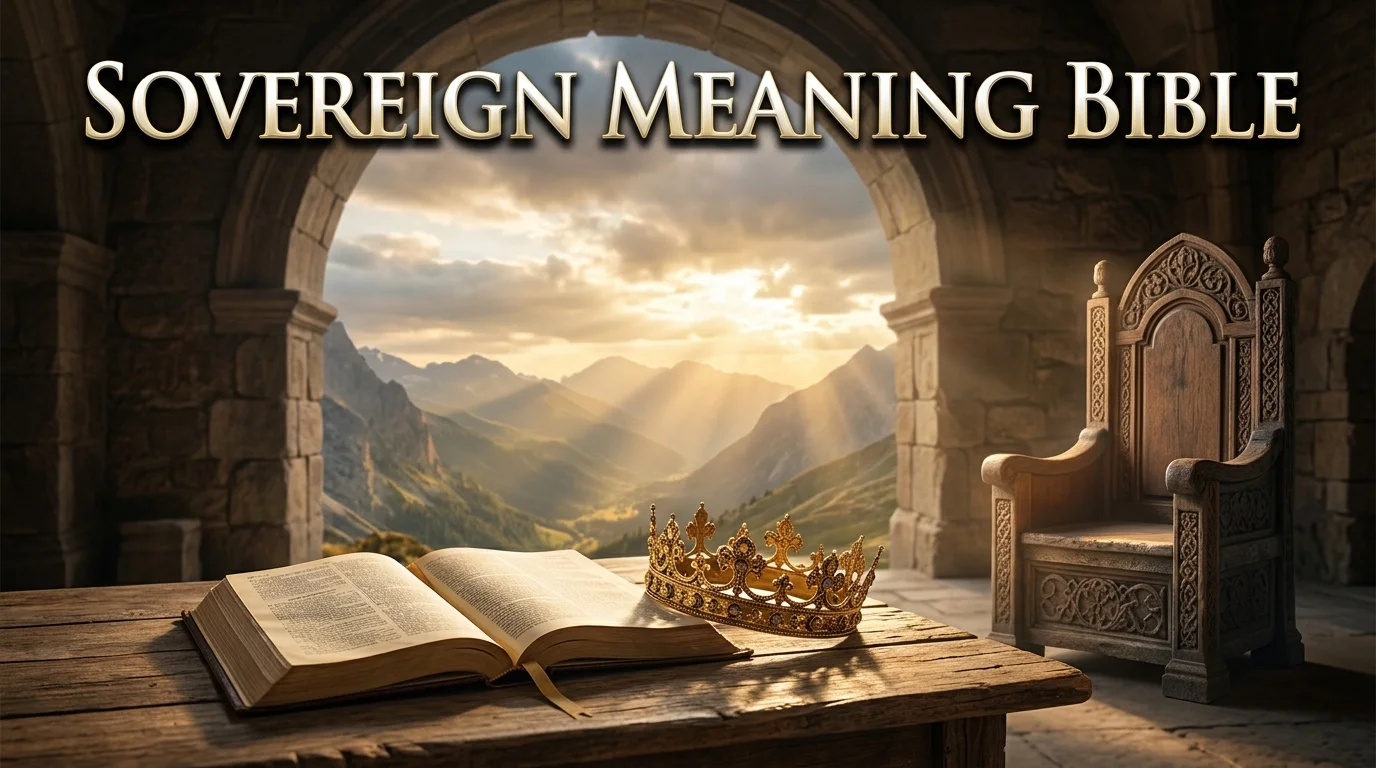
The word “sovereign” carries a powerful meaning in the Bible because it describes God’s supreme authority, unlimited power, and rule over all creation. When you read about God as sovereign, you discover an important biblical truth: He is not controlled by human decisions, earthly rulers, or the changing circumstances of life. Instead, Scripture presents Him as the ultimate King who governs the universe with wisdom, justice, and purpose.
For many readers, understanding the sovereign meaning in the Bible brings comfort during difficult seasons because it highlights God’s authority even when life feels uncertain. Verses such as Psalm 103:19 explain that the Lord has established His throne in heaven and rules over all things, while Daniel 4:35 emphasizes that no one can ultimately prevent His purposes.
However, God’s sovereignty does not mean that human choices are meaningless. The Bible also discusses human responsibility, obedience, and the consequences of our actions. Together, these teachings encourage believers to trust God while continuing to make wise and faithful decisions. Whether you encounter the word “sovereign” in a Bible passage, sermon, prayer, or Christian discussion, learning its meaning can deepen your understanding of God’s character.
What Does Sovereign Mean in Everyday Language and in the Bible?
Before we dig into the pages of Scripture, it helps to start with the basic definition. The English word “sovereign” comes from roots that mean “above” or “over.” As a noun, it refers to a monarch or supreme ruler. As an adjective, it describes something that has unlimited authority or is independent of outside control. Think of a sovereign nation that makes its own laws without answering to another country.
In the Bible, the word carries this same weight but focuses almost entirely on God. Different English translations handle it in slightly different ways. Some versions use “Sovereign Lord” frequently, especially when translating the Hebrew phrase Adonai Yahweh. Adonai means Lord or Masterthe one who has full rights over everythingwhile Yahweh is God’s personal covenant name. Put together, they form a powerful title that combines absolute authority with personal relationship. Other translations may simply say “Lord God” or “Lord,” but the idea of supreme rule remains.
The concept of sovereignty in the Bible goes far beyond a single English word. Scripture uses images of kingship, thrones, dominion, and rule to paint the picture. God sits on His throne in heaven, and His kingdom rules over all. He is the King of kings and Lord of lords. Nothing happens outside His knowledge or permission. This is the heart of the sovereign meaning Bible readers encounter again and again.
The Sovereign Meaning Bible Reveals Through Key Verses
Scripture doesn’t treat God’s sovereignty as a side note. It is a central theme that appears in stories, songs, prophecies, and letters. Let’s look at some of the clearest passages that unpack the sovereign meaning Bible teaches.
One of the strongest statements comes from the book of Daniel. After a dramatic period of pride and humbling, King Nebuchadnezzar declares: “His dominion is an eternal dominion; his kingdom endures from generation to generation. All the peoples of the earth are regarded as nothing. He does as he pleases with the powers of heaven and the peoples of the earth. No one can hold back his hand or say to him: ‘What have you done?’” (Daniel 4:34-35). Here we see absolute freedom, complete power, and zero accountability to any higher authority.
The Psalms echo the same truth. Psalm 115:3 says, “Our God is in heaven; he does whatever pleases him.” Psalm 135:6 adds, “The Lord does whatever pleases him, in the heavens and on the earth, in the seas and all their depths.” These are not poetic exaggerations. They are straightforward claims that God’s will is never frustrated.
Isaiah 46:9-10 drives the point home with God’s own words: “I am God, and there is no other; I am God, and there is none like me. I make known the end from the beginning, from ancient times, what is still to come. I say, ‘My purpose will stand, and I will do all that I please.’” God not only knows the futureHe declares it and brings it to pass.
In the New Testament, Ephesians 1:11 states that God “works out everything in conformity with the purpose of his will.” Acts 4:24 records the early church praying to the “Sovereign Lord” who made heaven and earth. Even the events surrounding Jesus’ death are described as happening according to God’s set purpose and foreknowledge (Acts 2:23).
These verses, and many more, form the foundation for understanding the sovereign meaning Bible presents. God is free. God is able. Cannot be opposed successfully. His rule covers creation, nations, individual lives, and even the smallest details.
How the Title “Sovereign Lord” Appears in Scripture
Many modern translations, such as the New International Version, use the phrase “Sovereign Lord” hundreds of times. It appears especially often in the prophetic books. Ezekiel alone uses it repeatedly as the prophet delivers messages of judgment and hope. The title reminds the people that the One speaking is not a local deity or a limited ruler. He is the Master who owns everything and the covenant God who keeps His promises.
Abraham used a similar form of address when he talked with God about the promise of a son (Genesis 15). Moses and the prophets called on the same authority. In the New Testament, the Greek word despotēs (master or absolute ruler) is sometimes translated “Sovereign Lord,” as in the prayer of Acts 4 and the cry of the martyrs in Revelation 6:10. The consistent message is clear: God holds the highest position of authority.
Why the Sovereign Meaning Bible Matters for Everyday Life
Knowing that God is sovereign is more than interesting information. It changes how we live. When life feels random or unfair, the truth of God’s rule brings deep comfort. Nothing that happens to you is outside His care. The same God who governs galaxies also numbers the hairs on your head and notices every sparrow that falls.
This truth also shapes how we respond to suffering. The Bible never claims that bad things do not happen. It claims that God is able to work even painful events for good purposes in the lives of those who love Him (Romans 8:28). Joseph’s story in Genesis is a classic example. Sold into slavery by his brothers, falsely accused, and forgotten in prison, Joseph later told his brothers, “You intended to harm me, but God intended it for good” (Genesis 50:20). God’s sovereignty did not erase the evil actions of people, but it overruled them for a larger plan.
Sovereignty also fuels prayer. If God were not in control, prayer would be little more than wishful thinking. Because He rules, we can bring every need to Him with confidence. We ask according to His will, trusting that He can accomplish what no human effort can.
At the same time, the Bible holds human responsibility together with divine sovereignty. We are called to obey, to choose wisely, to repent, and to believe. Scripture never uses God’s rule as an excuse for passivity or sin. The two truths sit side by side without contradiction in the mind of God, even if our limited understanding struggles to hold them together.
Practical Ways to Live Under God’s Sovereignty
Here are some everyday applications that flow from the sovereign meaning Bible teaches:
- When anxiety rises, remind yourself that God is already at work in the situation.
- When making decisions, seek His guidance knowing He can open or close doors.
- When facing injustice, trust that the Judge of all the earth will do right in His timing.
- When celebrating good gifts, give thanks to the Giver who rules over every blessing.
- When reading the news, remember that nations rise and fall under His ultimate authority.
These simple practices keep the doctrine from remaining abstract. They turn it into a source of daily strength.
Common Misunderstandings About God’s Sovereignty
Some people hear the word “sovereign” and assume it means God forces every action or that people are like puppets. That is not the picture Scripture paints. God is not the author of sin. Human beings make real choices and bear real responsibility for them. At the same time, no choice ever takes God by surprise or derails His ultimate purposes.
Others worry that sovereignty removes the need for evangelism or effort. The opposite is true. Because God is sovereign, our efforts in sharing the gospel, serving others, and pursuing holiness have meaning. He works through ordinary means to accomplish extraordinary ends.
Still others think sovereignty makes God distant or harsh. Yet the same God who rules with absolute power is the One who sent His Son to die for sinners. His sovereignty is exercised in perfect love, justice, and wisdom. The title “Sovereign Lord” itself joins supreme authority with covenant faithfulness.
The Sovereignty of God Across the Story of Scripture
From the opening chapters of Genesis, God speaks and creation obeys. He forms humanity and gives them dominion under His higher rule. When sin enters the world, God immediately begins a plan of redemption that no human failure can stop. The call of Abraham, the exodus from Egypt, the establishment of the monarchy, the exile and return, the coming of Christ, the birth of the church, and the promised return of Jesus all unfold under the same sovereign hand.
History itself is His story. Empires that seemed invincibleAssyria, Babylon, Romerose and fell according to His purposes. The same is true today. Political leaders, cultural movements, and global events all sit under the authority of the King who never loses control.
How Understanding Sovereign Meaning Bible Deepens Worship and Trust
When we grasp that God is truly sovereign, our worship grows richer. We stop treating Him as a helpful advisor and start relating to Him as the rightful Ruler of our lives. Songs of praise take on new weight. Prayers become more honest and more confident. We can rest even when we do not understand the details of His plan.
Trust also deepens. We no longer need to have every answer or control every outcome. We can say with Job, “I know that you can do all things; no purpose of yours can be thwarted” (Job 42:2). That kind of confidence is not naive optimism. It is faith rooted in the character of the Sovereign God revealed in the Bible.
Frequently Asked Questions About Sovereign Meaning Bible
What is the simple definition of sovereign in the Bible?
Sovereign in the Bible means that God holds the highest and unrestricted authority over everything. He rules as the supreme King, free to do whatever He wills, and no one can successfully oppose Him.
How many times does the word sovereign appear in the Bible?
The exact number depends on the English translation. Some versions use “Sovereign Lord” more than 300 times, especially when rendering the Hebrew Adonai Yahweh. The underlying idea of God’s supreme rule appears throughout both Old and New Testaments even when the specific English word is not used.
Is God’s sovereignty the same as fate or destiny?
No. Fate is impersonal and blind. God’s sovereignty is personal, wise, and purposeful. He acts according to His perfect character and for the good of those who love Him.
Does the sovereign meaning Bible teach that God causes evil?
Scripture is clear that God is holy and never the author of sin. He permits evil for reasons that serve His larger purposes, and He is able to bring good out of it without ever approving of the evil itself.
How should believers respond to God’s sovereignty?
The proper response is trust, obedience, prayer, and worship. We rest in His control while actively living out the responsibilities He has given us.
What is the difference between sovereignty and free will?
The Bible affirms both. God is fully sovereign, and human beings make real choices for which they are accountable. These two truths exist together without canceling each other out.
Why is the title Sovereign Lord important?
It combines God’s absolute authority (Adonai) with His personal covenant name (Yahweh). It reminds us that the One who rules the universe is also the God who has bound Himself in love to His people.
Conclusion:
The sovereign meaning bible presents is one of the most stabilizing truths a person can know. God is not struggling to keep the world together. He is not surprised by tomorrow. He is the Sovereign Lord who works all things according to the counsel of His will. From the smallest detail of daily life to the grand sweep of history, His rule is complete, wise, and good.
When we embrace this truth, fear loses its grip, prayer gains new power, and worship becomes a natural response. We can face uncertainty with quiet confidence because the One who holds the universe also holds us. Let the sovereign meaning Bible teaches shape your view of God, your response to hardship, and your hope for the future. He is in controland that changes everything.

Hi, I’m Daniel Foster, a writer at GrasePath.com. I enjoy exploring the deeper meanings of biblical words, names, symbols, and verses to help readers better understand Scripture. My goal is to present accurate, easy-to-read, and well-researched content that makes the Bible more accessible for everyone. Through every article, I strive to provide clear explanations, meaningful insights, and trustworthy information to support your faith and Bible study journey.