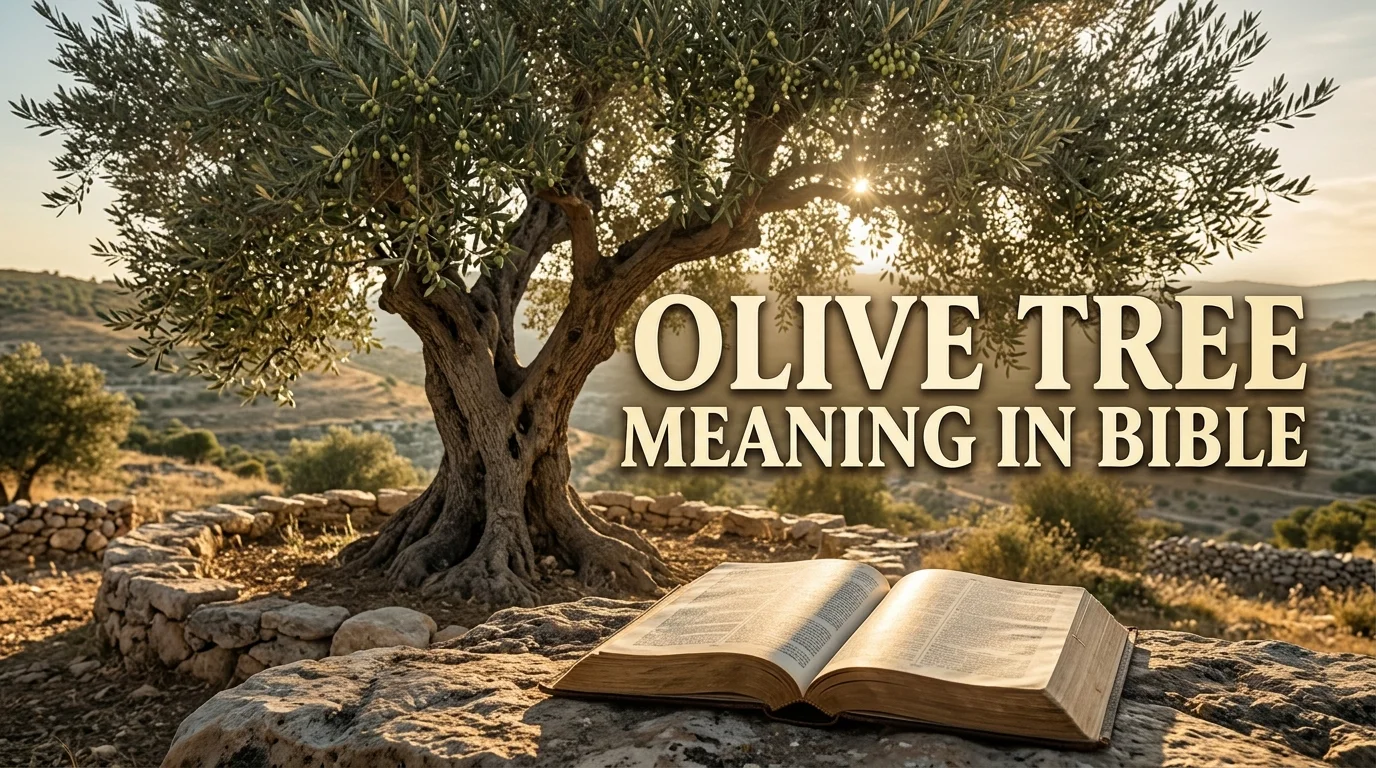
Throughout the Bible, the olive tree carries deep spiritual meaning, representing peace, blessing, fruitfulness, and God’s enduring promises. From the story of Noah to the teachings of the apostles, this tree appears in passages that help readers understand faith, hope, and a lasting relationship with God.
One of its most memorable appearances occurs in Genesis 8:11, when a dove returns to Noah’s ark carrying a freshly plucked olive leaf, signaling that the floodwaters have receded and new life is beginning.
This moment has made the olive branch a lasting symbol of peace and renewal. Elsewhere in Scripture, the olive tree represents prosperity and spiritual richness, while its oil is associated with anointing, worship, healing, and the setting apart of people for special purposes. Psalm 52:8 compares a faithful person to a flourishing olive tree in God’s house, highlighting trust in divine love. In Romans 11, the apostle Paul uses the image of an olive tree to explain the relationship between Israel and Gentile believers, emphasizing God’s work and the importance of faith.
What Does the Olive Tree Represent in Scripture?
The olive tree stands as one of the most valued plants in the biblical world. It thrives in rocky, dry soil where other trees struggle. It lives for centuries, sometimes over a thousand years, and keeps producing fruit long after its trunk becomes hollow. Ancient Israelites saw this resilience as a mirror of God’s enduring care.
Scripture presents the olive tree in several overlapping ways:
- A sign of peace and new beginnings
- A mark of prosperity and divine blessing in the Promised Land
- A picture of the righteous person who flourishes in God’s house
- A symbol of Israel itself
- A source of oil used for anointing, light, food, and healing
- An image of the Holy Spirit’s empowerment
- A metaphor for the unity of Jews and Gentiles in God’s family
These meanings are not random. They grow naturally out of how people actually lived with olive trees day after day.
The First Appearance: Noah’s Dove and the Olive Leaf
The story begins in Genesis 8:11. After the floodwaters start to recede, Noah releases a dove a second time. That evening the bird returns carrying “a freshly plucked olive leaf.” Noah knows the earth is becoming habitable again.
This moment is more than a weather report. The olive leaf signals that life has returned. Judgment has ended. Peace between God and humanity is possible once more. Later generations would look back on this scene and see the olive branch as a lasting emblem of reconciliation. Even today, when someone offers an “olive branch,” they are echoing this ancient biblical image of restored relationship.
Olive Tree Meaning in Bible as a Symbol of Blessing and Abundance
When God describes the land He is giving Israel, olive trees appear high on the list. Deuteronomy 8:8 calls it “a land of wheat and barley, of vines and fig trees and pomegranates, a land of olive oil and honey.” The people would inherit olive groves they had not planted already mature trees ready to produce oil and fruit (Deuteronomy 6:11).
That detail mattered. Olive trees take years to mature. A young sapling might not give a full harvest for a decade or more. Finding established trees meant immediate provision. Oil became a daily necessity: mixed into bread, burned in lamps, used to treat wounds, and poured out in sacred ceremonies.
A failed olive harvest, on the other hand, was a sign of hardship. Deuteronomy 28 warns that if the people turn away from God, their olive trees will drop their fruit before it ripens. The contrast is clear. Fruitful olive trees equal God’s favor. Empty branches equal the consequences of disobedience.
Beauty, Strength, and the Righteous Life
Psalm 52:8 paints a personal picture: “But I am like a green olive tree in the house of God; I trust in the steadfast love of God forever and ever.” The psalmist sees himself rooted in God’s presence, green and productive even when enemies surround him.
Hosea 14:6 continues the theme. God promises restored Israel that “his beauty shall be like the olive tree.” The tree’s silvery-green leaves and steady fruitfulness become a model for the person or nation that stays connected to the Lord.
Psalm 128:3 adds a family dimension. The children of those who fear the Lord are “like olive shoots around your table.” Olive trees send up young suckers from the base of the trunk. These shoots eventually become strong trees themselves, surrounding and protecting the parent. In the same way, godly children grow up to continue the family line of faith.
The Olive Tree and the Sacred Use of Oil
Olive oil was never ordinary. Pure beaten olive oil fueled the lamps in the tabernacle (Exodus 27:20). A special anointing oil, mixed with spices and based on olive oil, consecrated the priests, the furniture of the tent of meeting, and later the kings of Israel (Exodus 30:22-33).
When Samuel poured oil on David’s head, the Spirit of the Lord rushed upon him (1 Samuel 16:13). The same pattern appears with Saul and Solomon. Oil marked a person as set apart for God’s purpose. Over time, the oil itself became a picture of the Holy Spirit’s presence and power.
This connection reaches its peak in the New Testament. Jesus is the Anointed One the Messiah. The very name means “the one smeared with oil.” And the place where He wrestled in prayer the night before the cross is called Gethsemane, which means “olive press.” Just as olives are crushed to release their oil, Jesus was pressed under the weight of the world’s sin so that the Spirit could be poured out on all who believe.
Practical Everyday Uses That Shape the Symbolism
Beyond the sacred, olive products filled ordinary life:
- Food: Olives eaten at meals, oil mixed with grain or vegetables
- Light: Oil lamps that pushed back the darkness in every home
- Medicine: Oil poured on wounds (Luke 10:34) and used in prayer for the sick (James 5:14)
- Wood: Fine-grained olive wood carved into the cherubim and doors of Solomon’s temple (1 Kings 6)
Every time an Israelite lit a lamp, ate a meal, or watched a priest anoint someone, the olive tree reminded them of God’s provision and presence.
Olive Tree Meaning in Bible: Israel as God’s Cultivated Tree
Jeremiah 11:16 records a striking statement from the Lord: “The Lord once called you ‘a green olive tree, beautiful with good fruit.’” Israel was meant to be fruitful, beautiful, and a source of blessing to the nations. When the people turned to idols, the same chapter warns that the tree would be burned and its branches broken.
This image sets the stage for one of the most important New Testament passages about the olive tree.
The Grafting Illustration in Romans 11
Paul takes the olive tree picture and expands it dramatically. He describes Israel as a cultivated olive tree. Some natural branches (unbelieving Jews) have been broken off because of unbelief. Wild olive shoots (Gentile believers) have been grafted in and now share the rich root of the tree.
The illustration works against normal gardening practice. Usually a cultivated branch is grafted onto a wild rootstock. Paul reverses it to make a theological point: the Gentiles receive life only by being joined to the root that belongs to Israel’s covenant promises. At the same time, he warns the Gentile branches not to become proud. God is able to graft the natural branches back in again.
This passage remains one of the clearest pictures of unity between Jewish and Gentile believers. Both draw life from the same root. Both exist only by grace.
Prophetic Visions: Two Olive Trees and the Spirit’s Power
Zechariah 4 records a vision of a golden lampstand fed continually by two olive trees standing on either side. The trees supply a golden oil that keeps the lamps burning without human effort. The angel explains that these are “the two anointed ones who stand by the Lord of the whole earth.”
In context, the vision encourages Zerubbabel and Joshua, the governor and high priest of the returning exiles. Their work of rebuilding the temple will succeed “not by might, nor by power, but by my Spirit, says the Lord of hosts.” The olive trees picture continuous divine supply.
Revelation 11 picks up the same imagery. The two witnesses who prophesy during a time of great trouble are called “the two olive trees and the two lampstands that stand before the Lord of the earth.” Once again, the olive tree points to people empowered by the Spirit to bear witness no matter the cost.
The Mount of Olives and the Garden of Gethsemane
Geography itself carries meaning. The ridge east of Jerusalem is called the Mount of Olives because of the many olive groves that once covered its slopes. Jesus often retreated there. He taught from its heights about the end of the age. He entered Jerusalem from its western slope on Palm Sunday. And on the night of His arrest, He prayed in a garden called Gethsemane literally “the oil press.”
The location is no accident. The One who is the true olive tree, the source of the Spirit’s oil, is Himself pressed and crushed so that life can flow to others. Many of the ancient olive trees still standing in that garden today are centuries old. They stand as silent witnesses to the night when the weight of the world’s sin was borne by the Son of God.
Lessons for Daily Life from the Olive Tree
What can modern readers take from all this rich imagery?
- Root yourself deeply. The olive tree’s strength comes from a root system that reaches far for water. Spiritual life thrives the same way—through consistent time in God’s presence and Word.
- Expect fruit over time. Olive trees do not produce overnight. Neither does character. Patience and perseverance matter.
- Stay connected to the root. Whether you come from a long line of faith or are a “wild branch” grafted in, your life depends on remaining in Christ.
- Let the Spirit flow. Just as oil continuously feeds the lamps in Zechariah’s vision, the Holy Spirit supplies what we need for witness and endurance.
- Offer the olive branch. In a divided world, the biblical call to peace and reconciliation still stands. We can be people who bring hope instead of hostility.
- Remember longevity. Some olive trees outlive empires. God’s purposes outlast every temporary setback.
FAQ About the Olive Tree Meaning in Bible
What is the main olive tree meaning in Bible?
The primary meanings center on peace, divine blessing, spiritual anointing, the people of God, and the empowering presence of the Holy Spirit. The tree’s ability to thrive in hard conditions and produce valuable oil makes it a natural picture of resilience and provision.
Why did the dove bring an olive leaf to Noah?
The leaf showed that the floodwaters had receded enough for plant life to grow again. It became a lasting symbol of hope, new beginnings, and peace between God and humanity after judgment.
How does the olive tree relate to Jesus?
Jesus is the Anointed One. He prayed in Gethsemane, the olive press, the night before the cross. Just as olives are crushed for their oil, His suffering released the Holy Spirit for all who believe. He is the true source of the life the olive tree represents.
What does grafting wild olive branches mean in Romans 11?
It illustrates how Gentile believers are brought into the covenant blessings that began with Israel. The wild branch shares the rich root of the cultivated tree, showing both inclusion by grace and the ongoing place of Israel in God’s plan.
Why is olive oil used for anointing in the Bible?
Olive oil was pure, valuable, and readily available. Pouring it on someone set them apart for God’s service and symbolized the Holy Spirit coming upon them with power and authority.
Are there still ancient olive trees connected to biblical sites?
Yes. Some of the oldest living olive trees in the world grow in the area of the Garden of Gethsemane on the Mount of Olives. While exact dating varies, many are centuries old and stand near the places where Jesus walked and prayed.
How can the olive tree encourage believers today?
It reminds us that God brings beauty and fruit out of difficult soil, that His Spirit continually supplies what we need, and that He is able to graft in and restore even those who feel cut off. The tree’s long life also points to the lasting nature of God’s promises.
Conclusion:
The olive tree meaning in Bible weaves through the entire story of Scripture from a single leaf in a dove’s beak to the two witnesses who stand before the Lord of the earth. It speaks of peace after judgment, abundance in the land of promise, the anointing of kings and priests, the beauty of a righteous life, the unity of God’s people, and the continuous flow of the Holy Spirit.
Whether you see yourself as a natural branch or a wild shoot grafted in by grace, the invitation is the same: remain connected to the root. Let the oil of the Spirit keep your lamp burning. Bear fruit that lasts. And when conflict arises, be the one who offers the olive branch of reconciliation

James Parker is a Bible writer at GrasePath.com who loves exploring the deeper meaning of Scripture. He shares clear, trustworthy insights about biblical names, symbols, dreams, and spiritual teachings in simple language. His mission is to help readers strengthen their faith and better understand God’s Word every day.