Have you ever come across the word “yoke” while reading Scripture and paused to wonder what it actually means? You’re not alone. Many readers breeze past this small but mighty word without realizing just how much spiritual weight it carries. Understanding the yoke meaning bible teaches us opens up a whole new layer of insight into passages like Matthew 11:28-30, where Jesus invites us to take His yoke upon us.
This single image borrowed from ancient farming life becomes one of the most powerful metaphors for discipleship, submission, partnership, and rest found anywhere in Scripture.
In this article, we’re going to unpack everything you need to know about the yoke meaning bible scholars and theologians have studied for centuries. We’ll walk through its literal, historical roots, its symbolic uses throughout both the Old and New Testaments, and what it practically means for your walk of faith today. By the end, you’ll never read the word “yoke” the same way again.
What Is a Yoke? Understanding the Literal and Biblical Definition
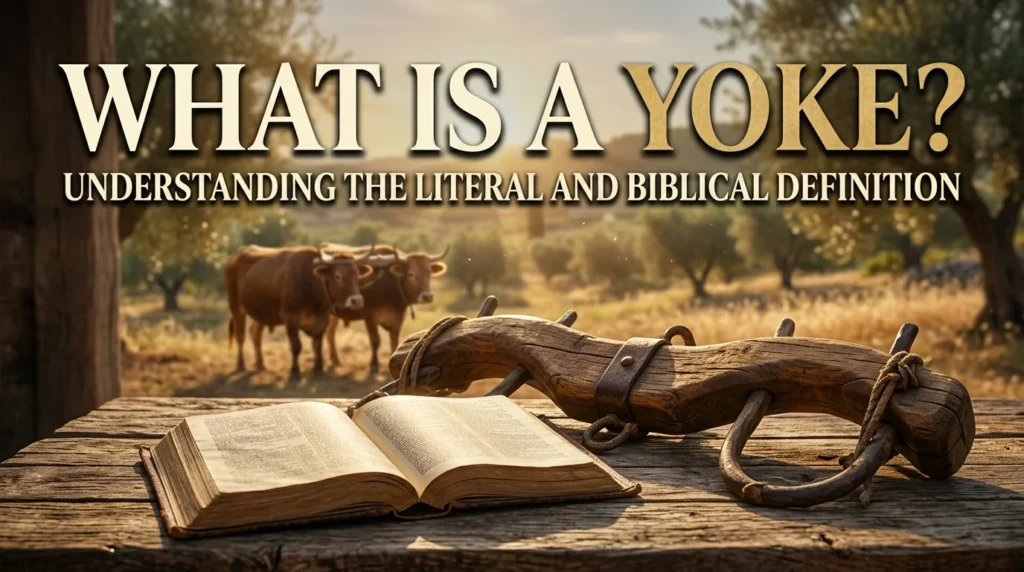
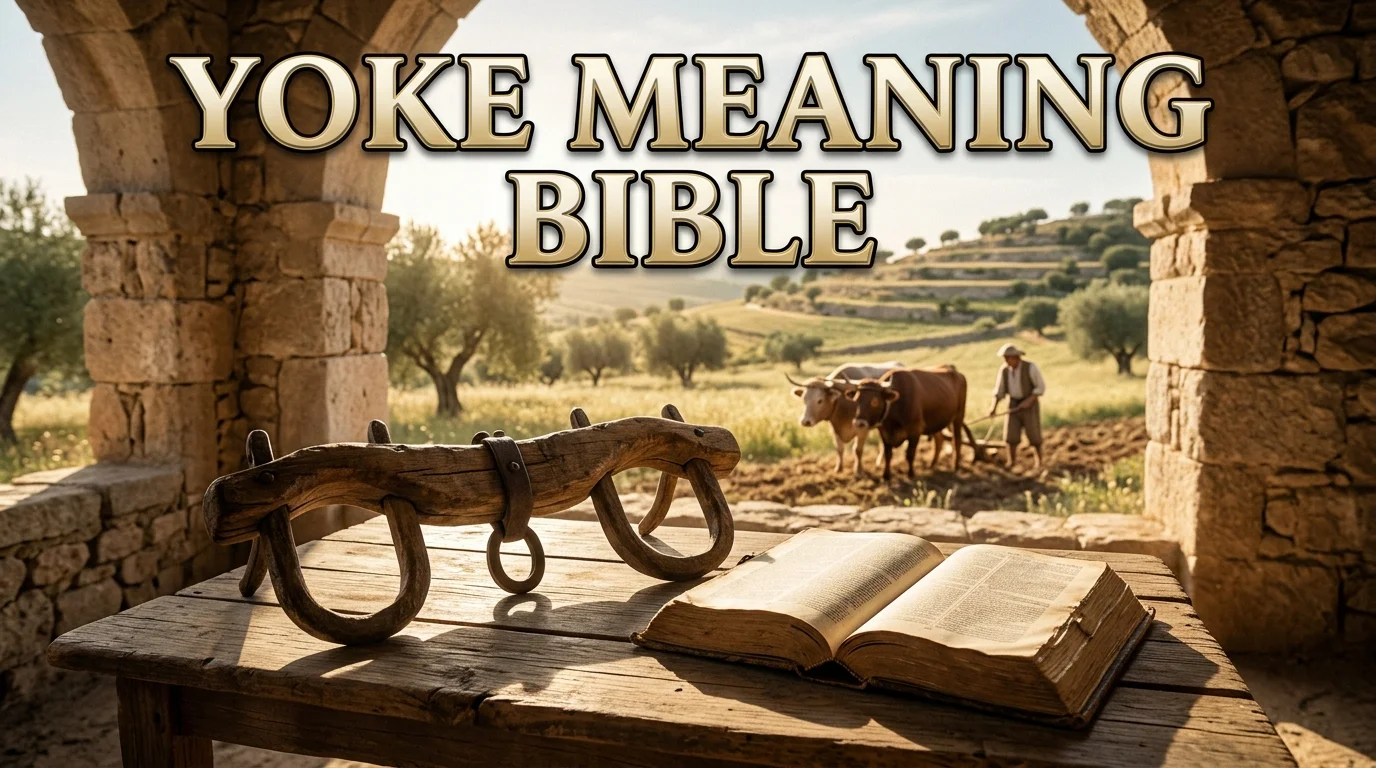
Before we dive into the spiritual symbolism, it helps to understand what a yoke physically was in biblical times. A yoke was a wooden crossbar or frame, carefully carved and fitted, that was placed over the necks of two oxen or other draft animals. Its purpose was simple but essential: to join the animals together so they could pull a plow, a cart, or some other heavy load as a single, coordinated unit.
Farmers in the ancient Near East relied heavily on yoked animals for survival. Without the yoke, plowing a field or transporting goods would have been nearly impossible for one animal alone. The yoke distributed weight evenly, allowed for shared effort, and made hard labor manageable. This everyday tool, so familiar to ancient audiences, became the perfect canvas for spiritual teaching.
The Hebrew and Greek Roots Behind the Word
To fully grasp the yoke meaning bible authors intended, it’s worth looking at the original languages:
- Hebrew: The word most often translated as “yoke” is ol (עֹל), which appears throughout the Old Testament. It carries connotations of burden, servitude, and sometimes oppression.
- Greek: In the New Testament, the word used is zygos (ζυγός). This term also referred to a physical yoke but was frequently used metaphorically to describe submission to a teacher, a law, or a way of life.
Both words share a common thread: connection and control. A yoke always implies that someone or something is directing the movement of whoever wears it. That’s exactly why biblical writers found it such a rich metaphor for spiritual submission whether to sin, to the law, or to Christ Himself.
The Yoke Meaning Bible Writers Used as a Symbol of Bondage
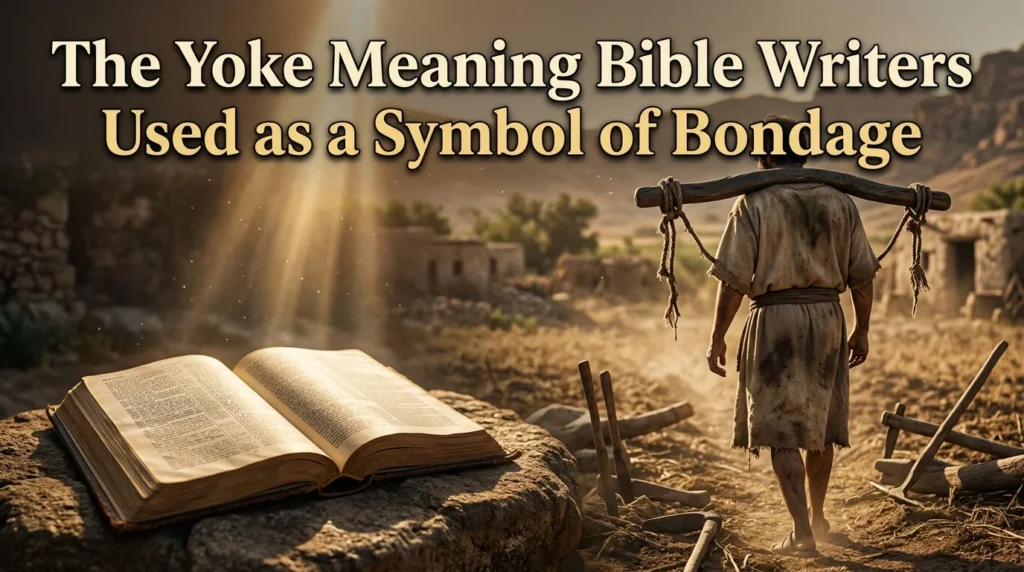
One of the most common uses of “yoke” in Scripture describes bondage, slavery, or oppressive burden. This negative symbolism appears frequently in the Old Testament, especially in contexts describing Israel’s suffering.
Examples of the Yoke as Burden in the Old Testament
- Exodus and Slavery in Egypt: Although the word “yoke” isn’t always used explicitly in Exodus, the imagery of forced labor under Pharaoh closely mirrors the yoke of servitude referenced elsewhere in Scripture.
- 1 Kings 12:4: The Israelites plead with King Rehoboam, saying his father Solomon “made our yoke heavy,” asking for relief from harsh taxation and forced labor.
- Isaiah 9:4: The prophet speaks of God breaking “the yoke of his burden,” a beautiful promise of liberation from oppression.
- Isaiah 58:6: God calls His people to “undo the heavy burdens” and “let the oppressed go free, and that ye break every yoke” a direct call to justice and freedom from exploitation.
- Jeremiah 28: The prophet Hananiah breaks a wooden yoke off Jeremiah’s neck as a symbolic (though false) prophecy that Babylon’s dominance would soon end.
In these passages, the yoke represents subjugation something heavy, unwanted, and imposed by force. This is a crucial part of understanding the full yoke meaning bible passages present, because it sets up a powerful contrast with how Jesus later redefines the concept in the New Testament.
The Yoke as a Symbol of Divine Discipline
Interestingly, the Old Testament also uses the yoke to describe God’s discipline and training of His people. Lamentations 3:27 says, “It is good for a man that he bear the yoke in his youth,” suggesting that hardship and discipline, when accepted with humility, can shape character and produce spiritual maturity. This shows that not every yoke in Scripture is purely negative some carry redemptive purpose, even when they feel heavy in the moment.
The Yoke Meaning Bible Teaches Through Jesus’s Words in Matthew 11
Now we arrive at perhaps the most beloved and quoted yoke passage in all of Scripture Matthew 11:28-30. Jesus says:
“Come unto me, all ye that labour and are heavy laden, and I will give you rest. Take my yoke upon you, and learn of me; for I am meek and lowly in heart: and ye shall find rest unto your souls. For my yoke is easy, and my burden is light.”
This is a radical reframing of the yoke symbol. Instead of representing oppression, Jesus’s yoke represents rest, partnership, and gentle guidance. Let’s break down why this passage carries such deep meaning.
Why Jesus Uses the Image of a Yoke
In first-century Jewish culture, the phrase “yoke of the law” or “yoke of the Torah” was a common rabbinic expression referring to the discipline of studying and obeying religious teachings. Rabbis would speak of taking on “the yoke of the kingdom of heaven” as a way of describing devotion to God’s commandments.
When Jesus invites His listeners to take His yoke instead, He’s making a bold claim: that following Him is a lighter, more life-giving alternative to the rigid religious legalism many people experienced under the Pharisees’ interpretation of the law. He’s not asking people to abandon spiritual discipline He’s offering a better, gentler way to walk it out.
The Double Yoke: A Picture of Partnership
Here’s something many people miss when studying the yoke meaning bible passages describe: a yoke was rarely designed for a single animal. It was built for two, joined side by side, sharing the load together. When Jesus says “take my yoke upon you,” He’s painting a picture of partnership Himself walking alongside the believer, sharing the weight rather than leaving us to carry it alone.
This detail transforms the whole metaphor. It’s not about Jesus watching from a distance while we struggle under pressure. It’s about Him being yoked right next to us, guiding our steps, absorbing the strain, and teaching us His pace as we go.
- The stronger ox in a pair would typically bear more of the weight and set the pace for the weaker one.
- In the same way, Christ takes on the greater portion of our burden, gently leading us forward.
- This imagery reassures believers that they are never truly walking through hardship alone.
Symbolic Meanings of the Yoke Throughout Scripture
Beyond the two major themes of bondage and partnership, the yoke shows up in several other symbolic contexts throughout the Bible. Understanding these variations gives a fuller picture of the yoke meaning bible authors intended across different books and eras.
1. The Yoke as a Symbol of Submission
Being “yoked” to something or someone implies submission to their direction. This is why Paul warns believers in 2 Corinthians 6:14 not to be “unequally yoked together with unbelievers.” He’s using the farming image to warn against spiritual partnerships particularly marriage or close alliances with those who don’t share the same values or faith commitments. Two animals of unequal strength or mismatched temperament yoked together would struggle, pull unevenly, and potentially injure each other. The same is true spiritually.
2. The Yoke as a Symbol of Discipleship
In ancient rabbinic tradition, taking on a teacher’s yoke meant committing to learn from them, follow their instruction, and adopt their way of interpreting Scripture. When Jesus says “learn of me” right after inviting people to take His yoke, He’s directly invoking this discipleship language. To be yoked to Christ means to become His student, shaping your life around His teaching and example.
3. The Yoke as a Symbol of Freedom from Oppression
As we saw in Isaiah, breaking a yoke symbolizes liberation. Galatians 5:1 echoes this theme in the New Testament: “Stand fast therefore in the liberty wherewith Christ hath made us free, and be not entangled again with the yoke of bondage.” Here, Paul is warning believers not to return to legalistic requirements (like circumcision under Mosaic law) after having been freed by grace through faith.
4. The Yoke as a Symbol of Shared Ministry
Philippians 4:3 refers to a “true yoke fellow,” suggesting a partner in ministry work. This shows that the yoke concept extended beyond just individual submission to God it also described collaborative relationships between believers working toward a shared spiritual purpose.
Practical Applications: What the Yoke Meaning Bible Concept Teaches Us Today
Understanding ancient agricultural tools is interesting, but the real value comes from applying these truths to everyday life. Here’s how the yoke metaphor speaks into modern faith and daily living.
Finding Rest in a Culture of Burnout
Many people today carry heavy emotional, financial, and spiritual burdens much like the “heavy laden” crowd Jesus addressed in Matthew 11. The invitation to take His yoke is still relevant. It’s a call to stop striving in our own strength and instead walk in step with Christ, trusting Him to carry the weight we were never meant to bear alone.
Choosing Healthy Partnerships
Paul’s warning about being unequally yoked applies far beyond marriage. Think about business partnerships, close friendships, or any collaborative relationship requiring shared direction and values. When two parties pull in different directions, both suffer. The yoke principle encourages believers to seek relationships built on shared values and mutual respect.
Embracing Discipline as Growth
Remember the Lamentations passage about bearing the yoke in youth? Life’s hardships when approached with humility and faith can shape character rather than simply causing pain. Instead of resenting difficult seasons, we can ask what God might be teaching us through them.
Walking in Community, Not Isolation
The double-yoke imagery reminds us that faith isn’t meant to be a solo journey. Whether it’s Christ walking beside us or fellow believers serving as “yoke fellows,” we’re designed for connection and shared effort. Isolation makes burdens heavier; partnership makes them lighter.
Common Misunderstandings About the Biblical Yoke
Let’s clear up a few misconceptions people often have when exploring the yoke meaning bible passages present.
- Misconception 1: A yoke always means something negative. As we’ve seen, while the Old Testament often uses it to describe oppression, Jesus completely redefines it as something gentle and restful.
- Misconception 2: Jesus’s yoke means no effort is required. Actually, wearing a yoke still involves work plowing, pulling, walking forward. The difference is that the burden is shared and the pace is set by a loving guide, not a harsh taskmaster.
- Misconception 3: “Unequally yoked” only applies to marriage. While marriage is the most common application, the principle extends to any close partnership requiring unity of purpose and values.
- Misconception 4: The yoke is purely symbolic with no historical basis. The yoke was a very real, tangible farming tool, and understanding its physical function makes the spiritual metaphor even richer.
Key Bible Verses About the Yoke Worth Memorizing
If you want to study this theme further, here are some of the most important yoke-related verses to explore:
- Matthew 11:29-30 Jesus’s invitation to take His easy yoke
- 2 Corinthians 6:14 The warning against being unequally yoked
- Galatians 5:1 Standing firm in freedom, avoiding the yoke of bondage
- Isaiah 9:4 The promise of a broken yoke of oppression
- Isaiah 58:6 The call to break every yoke of injustice
- Lamentations 3:27 The value of bearing the yoke in youth
- 1 Kings 12:4 The people’s plea for relief from a heavy yoke
- Jeremiah 27-28 The symbolic wooden yoke worn and broken by prophets
- Philippians 4:3 Reference to a “true yoke fellow” in ministry
Reading these passages together gives a fuller, richer understanding of how this single image carries so much theological weight across different books, authors, and centuries of biblical history.
FAQs About the Yoke Meaning in the Bible
What does the word “yoke” mean in the Bible?
In the Bible, a yoke refers to a wooden frame used to join two animals together for farm work. Spiritually, it symbolizes submission, partnership, burden, or discipline, depending on the context in which it’s used.
What does Jesus mean when He says “take my yoke upon you”?
Jesus is inviting people to become His disciples, walking alongside Him in a partnership of shared burden and guided rest. Unlike the heavy legalistic demands people experienced under strict religious law, His yoke represents gentle, life-giving guidance.
What does “unequally yoked” mean in the Bible?
This phrase, found in 2 Corinthians 6:14, warns against forming close partnerships especially marriage with people who don’t share the same faith or values. It’s based on the idea that two mismatched animals yoked together would struggle to work in harmony.
Is the yoke always a negative symbol in Scripture?
No. While the Old Testament frequently uses the yoke to represent oppression and slavery, the New Testament especially through Jesus’s words in Matthew 11 reframes it as a symbol of rest, discipleship, and shared burden.
What is the difference between the yoke of the law and the yoke of Christ?
The “yoke of the law” refers to strict adherence to religious rules and rituals, often experienced as heavy and burdensome. The “yoke of Christ” represents a relationship-based faith rooted in grace, gentleness, and partnership with Jesus Himself.
Why did farmers use yokes on oxen in biblical times?
Yokes allowed two animals to work together as a unit, distributing the weight of plowing or hauling loads evenly. This made farming more efficient and manageable than relying on a single animal alone.
What can Christians today learn from the biblical concept of the yoke?
Christians can learn the importance of surrendering burdens to God, choosing spiritually aligned partnerships, embracing discipline as growth, and walking in community rather than isolation. The yoke reminds believers that faith is a shared journey, not a solo struggle.
Final Thoughts
At its core, the yoke meaning bible passages reveal is far richer than a simple farming tool. It’s a metaphor that stretches across the entire narrative of Scripture from images of slavery and oppression in Egypt, to the burdens carried under strict religious law, all the way to Jesus’s tender invitation to walk beside Him in rest and partnership.
Whether you’re facing a heavy season of life, considering an important relationship, or simply seeking a deeper understanding of what it means to follow Christ, the yoke offers timeless wisdom. It teaches us that burdens are meant to be shared, that submission to the right guide brings freedom rather than restriction, and that true rest is found not in the absence of work, but in walking step by step with someone who carries the weight alongside us.

Hi, I’m Daniel Foster, a writer at GrasePath.com. I enjoy exploring the deeper meanings of biblical words, names, symbols, and verses to help readers better understand Scripture. My goal is to present accurate, easy-to-read, and well-researched content that makes the Bible more accessible for everyone. Through every article, I strive to provide clear explanations, meaningful insights, and trustworthy information to support your faith and Bible study journey.